








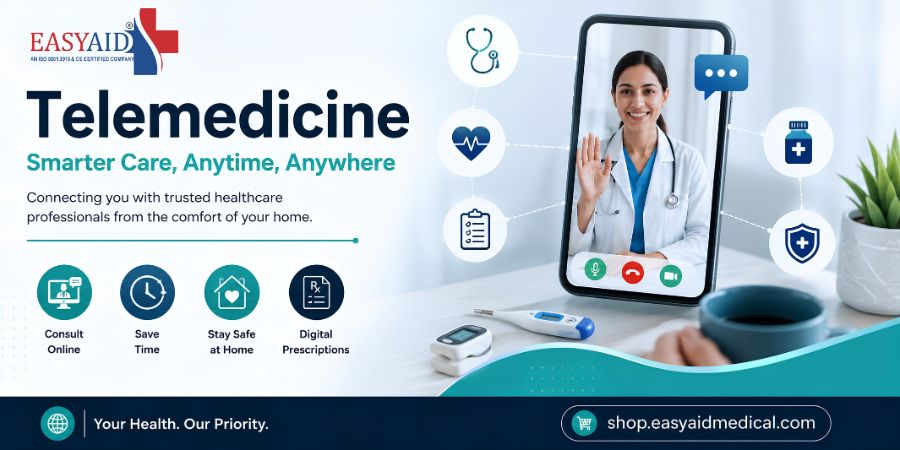
Telemedicine: Benefits and Limitations
Healthcare does not always require a trip to a clinic.
For many routine health concerns, follow-up appointments, medication discussions, or consultations, people can now speak with healthcare professionals through a phone, computer, or smartphone.
This is where telemedicine comes in.
Telemedicine allows healthcare professionals to provide certain services remotely using communication technology. Depending on the healthcare provider and the type of care required, this may involve video consultations, telephone calls, secure messaging, or other digital communication methods.
The growing usminimizee of telemedicine has made healthcare more convenient for many patients. It can reduce travel, make some appointments easier to fit into busy schedules, and help people connect with healthcare professionals when visiting a clinic is difficult.
However, telemedicine is not suitable for every medical situation.
A virtual consultation cannot replace every physical examination, diagnostic test, or emergency service. Understanding both the telemedicine benefits and its limitations is important before deciding whether virtual care is appropriate.
What is Telemedicine?
Telemedicine is the delivery of certain healthcare services remotely through telecommunications technology.
Instead of being physically present in the same location as the healthcare professional, a patient may communicate through:
- Video consultation
- Telephone consultation
- Secure online messaging
- Remote monitoring
- Digital health platforms
The exact services available depend on the healthcare provider, the patient’s condition, local regulations, and the technology being used.
Telemedicine can be particularly useful when a healthcare professional already knows a patient’s medical history or when the problem can be assessed without a physical examination.
The Centers for Disease Control and Prevention (CDC) describes telehealth as the use of electronic information and telecommunications technologies to support long-distance healthcare, health education, public health, and related services.
How does Telemedicine Work?
A typical telemedicine appointment is fairly straightforward.
First, the patient schedules an appointment with a healthcare provider that offers virtual consultations.
At the scheduled time, the patient connects through the platform selected by the provider. Depending on the appointment, the healthcare professional may ask about:
- Symptoms
- Medical history
- Current medications
- Recent test results
- Changes in health
- Lifestyle factors
- Other relevant concerns
The healthcare professional may then provide guidance, recommend testing, prescribe medication where legally and clinically appropriate, or decide that an in-person appointment is necessary.
The important thing to understand is that telemedicine does not remove the clinical decision-making process. It changes how the patient and healthcare professional communicate.
Key Telemedicine Benefits
There are several reasons telemedicine has become an important part of modern healthcare.
1. Convenience
Convenience is one of the most obvious telemedicine benefits.
Instead of travelling to a clinic, waiting in a reception area, and travelling home again, patients can attend certain appointments remotely.
For people with busy schedules, this can make healthcare easier to fit into everyday life.
A virtual appointment may be particularly convenient for routine follow-ups or discussions that do not require physical examination.
2. Less Travel
Healthcare appointments can involve significant travel, particularly for people who live far from specialists or medical facilities.
Telemedicine can reduce the need to travel for appointments that can safely be conducted remotely.
This can be useful for:
- People living in rural areas
- Older adults
- People with limited mobility
- Patients who have difficulty arranging transportation
- People seeking specialist consultations
However, access to telemedicine itself depends on having a suitable device, internet connection, and healthcare provider offering the service.
3. Easier Access to Healthcare Professionals
Telemedicine can make it easier for some patients to communicate with healthcare professionals without being physically present at a medical facility.
This can be particularly useful for follow-up care.
For example, a patient who has already received treatment may not need a full in-person appointment simply to discuss progress or ask questions.
Telemedicine may allow that conversation to happen remotely when clinically appropriate.
4. Useful for Follow-Up Appointments
Not every appointment requires a physical examination.
Telemedicine can be suitable for certain follow-ups where the healthcare professional mainly needs to discuss symptoms, treatment progress, medication use, or test results.
This can reduce unnecessary travel while still maintaining contact with the healthcare provider.
Whether a follow-up can be completed virtually depends on the patient’s individual situation.
5. Support for Chronic Condition Management
People managing long-term health conditions may need regular communication with healthcare professionals.
Telemedicine can provide another way to maintain those interactions.
For example, a healthcare professional may conduct a virtual follow-up, discuss symptoms, review available health information, or determine whether the patient needs an in-person assessment.
Remote monitoring technologies may also be used in some healthcare settings.
However, telemedicine should complement appropriate medical care rather than replace necessary examinations or testing.
6. Potentially Lower Time and Indirect Costs
A virtual appointment may reduce some indirect costs associated with healthcare visits.
Patients may spend less time traveling or waiting, and they may not need to take as much time away from work or other responsibilities.
The actual cost of telemedicine varies considerably depending on the healthcare provider, insurance or payment system, consultation type, and location.
Therefore, patients should check the cost before booking.
Telemedicine Pros and Cons
Telemedicine has clear advantages, but it also has limitations.
Understanding the telemedicine pros and cons helps patients decide when virtual care makes sense and when an in-person appointment is more appropriate.
Pros of Telemedicine
Convenient Access
Patients can attend certain appointments from home or another suitable location.
Reduced Travel
Virtual consultations can eliminate travel for some healthcare visits.
Time-Saving
Patients may spend less time travelling and waiting.
Easier Follow-Up
Routine discussions and follow-up consultations may be handled remotely when appropriate.
Access to Certain Specialists
Patients may be able to connect with healthcare professionals who are not located nearby, depending on availability and local rules.
Useful for Some Chronic Care
Regular virtual communication may support ongoing management of certain long-term conditions.
Limitations of Telemedicine
The advantages of telemedicine should not hide its limitations.
1. No Physical Examination
This is one of the biggest limitations.
During a video or telephone consultation, a healthcare professional may not be able to physically examine the patient.
Certain conditions require the following:
- Physical examination
- Listening to the heart or lungs
- Checking reflexes
- Examining the skin closely
- Measuring vital signs
- Collecting samples
- Performing diagnostic procedures
When these are necessary, an in-person appointment may be required.
2. Not Suitable for Emergencies
Telemedicine is not a replacement for emergency medical care.
Severe symptoms such as significant breathing difficulty, severe chest pain, loss of consciousness, serious injury, or other potentially life-threatening situations require immediate medical attention through appropriate emergency services.
Patients should not delay emergency care while trying to arrange a virtual consultation.
3. Technology Problems
Telemedicine depends on technology.
A poor internet connection, microphone problem, camera issue, software error, or lack of a suitable device can interrupt a consultation.
Technical difficulties can become particularly frustrating when the healthcare professional needs to see or hear the patient clearly.
4. Privacy Concerns
Telemedicine involves the transmission and storage of health information through digital systems.
Patients should understand how their healthcare provider handles personal and medical information.
Using a private location, a secure connection, and the official platform recommended by the healthcare provider can help protect sensitive conversations.
5. Not Everyone Has Equal Digital Access
Telemedicine depends on digital access.
Some patients may not have:
- Reliable internet
- A smartphone or computer
- Adequate digital skills
- A private space for consultation
- Access to appropriate healthcare platforms
This can create barriers for people who might otherwise benefit from virtual healthcare.
6. Some Diagnoses Require In-Person Testing
A healthcare professional may be able to discuss symptoms virtually, but certain diagnoses require tests that cannot be performed through a video call.
Depending on the situation, this could involve laboratory testing, imaging, physical measurements, or other clinical procedures.
A virtual consultation may therefore be only the first step.
The healthcare professional may recommend an in-person appointment or diagnostic test after the online consultation.
When is Telemedicine a Good Option?
Telemedicine can be useful for several types of healthcare interactions, depending on the patient’s circumstances.
Examples may include:
- Routine follow-up appointments
- Discussing certain test results
- Medication-related discussions
- Certain minor health concerns
- Mental health consultations where appropriate
- Chronic condition follow-ups
- General health consultations
- Specialist consultations where virtual assessment is appropriate
The healthcare provider should determine whether a particular condition can be safely managed remotely.
Patients should also be honest about their symptoms and provide as much relevant information as possible.
Also Read—Wearable Devices and Health Monitoring
When Should You Choose In-Person Care?
An in-person appointment may be more appropriate when the healthcare professional needs to examine the patient physically or perform tests.
This may include situations involving:
- Severe or worsening symptoms
- Unexplained physical changes
- Injuries requiring examination
- Symptoms requiring diagnostic testing
- Conditions requiring physical measurements
- Situations where the healthcare professional cannot safely assess the patient remotely
Sometimes the answer is not either telemedicine or in-person care.
A virtual appointment can be the starting point, followed by an in-person examination if needed.
That hybrid approach can allow the healthcare professional to decide what level of care is appropriate.
How to Get the Most From a Telemedicine Appointment
A little preparation can make a virtual consultation more useful.
Before the appointment:
Write Down Your Symptoms
Note when the symptoms started, how they have changed, and anything that makes them better or worse.
Keep Your Medication Information Ready
Have the names and doses of your current medications available.
Keep Recent Reports Nearby
If you have relevant laboratory reports, prescriptions, or previous medical records, keep them accessible.
Choose a Private Space
A quiet, private environment can make it easier to discuss sensitive health information.
Test Your Technology
Check your internet connection, camera, microphone, and device before the appointment.
Be Honest About Your Symptoms
Do not minimise or exaggerate symptoms. Clear information helps the healthcare professional make better decisions.
The Future of Telemedicine
Telemedicine is likely to remain part of the healthcare system, but it is unlikely to replace traditional healthcare completely.
Instead, healthcare may increasingly combine several methods:
In-person care + telemedicine + remote monitoring + digital health tools
This approach can give patients more flexibility while allowing healthcare professionals to use in-person examination and diagnostic testing whenever necessary.
The CDC continues to provide resources on telehealth and its role in healthcare delivery, including considerations around access, implementation, and patient care.
The future of telemedicine should therefore be about choosing the right method for the right situation rather than assuming that virtual care is always better.
Also Read—How AI Is Changing Preventive Healthcare
Conclusion
Telemedicine has changed the way many people access healthcare.
The biggest telemedicine benefits include convenience, reduced travel, easier follow-up, and improved access to certain healthcare professionals. For some patients, virtual consultations can make healthcare easier to fit into everyday life.
But telemedicine has real limitations.
It cannot provide every physical examination, perform every diagnostic test, or replace emergency care. Technology problems, privacy concerns, and unequal digital access can also affect the quality and availability of virtual healthcare.
The most practical approach is to view telemedicine as another way to access healthcare, not a complete replacement for in-person medical care.
When used for the right situations and combined with appropriate physical examinations, testing, and professional judgement, telemedicine can be a useful part of modern healthcare.
Frequently Asked Questions
1. What are the main benefits of telemedicine?
The main telemedicine benefits include convenience, reduced travel, easier access to certain healthcare professionals, time savings, and simpler follow-up appointments when an in-person examination is not required.
2. What are the disadvantages of telemedicine?
Telemedicine limitations include the inability to perform many physical examinations remotely, technology problems, privacy concerns, limited digital access, and the need for in-person testing for certain conditions.
3. Can telemedicine replace a doctor’s visit?
Not always. Some appointments can be conducted effectively online, but certain conditions require physical examination, diagnostic testing, or other in-person services. A healthcare professional can determine which type of appointment is appropriate.
4. Is telemedicine suitable for emergencies?
No. Telemedicine should not be used as a substitute for emergency medical care when someone has potentially life-threatening symptoms or a serious injury. Immediate emergency medical assistance should be sought when necessary.
5. Is telemedicine safe?
Telemedicine can be an appropriate way to receive certain healthcare services when provided through a suitable healthcare system. However, its safety and effectiveness depend on the patient’s condition, the quality of the technology, privacy protections, and whether the condition can be appropriately assessed remotely.
Authority Reference
Centers for Disease Control and Prevention (CDC) – CDC: Telehealth and Telemedicine Resources