







Lorem ipsum dolor sit amet, consectet eiusmod tempor incididunt ut labore e rem ipsum dolor sit amet. sum dolor sit amet, consectet eiusmod.

Visiting Hours

Gallery Posts

Tag: Easyaid

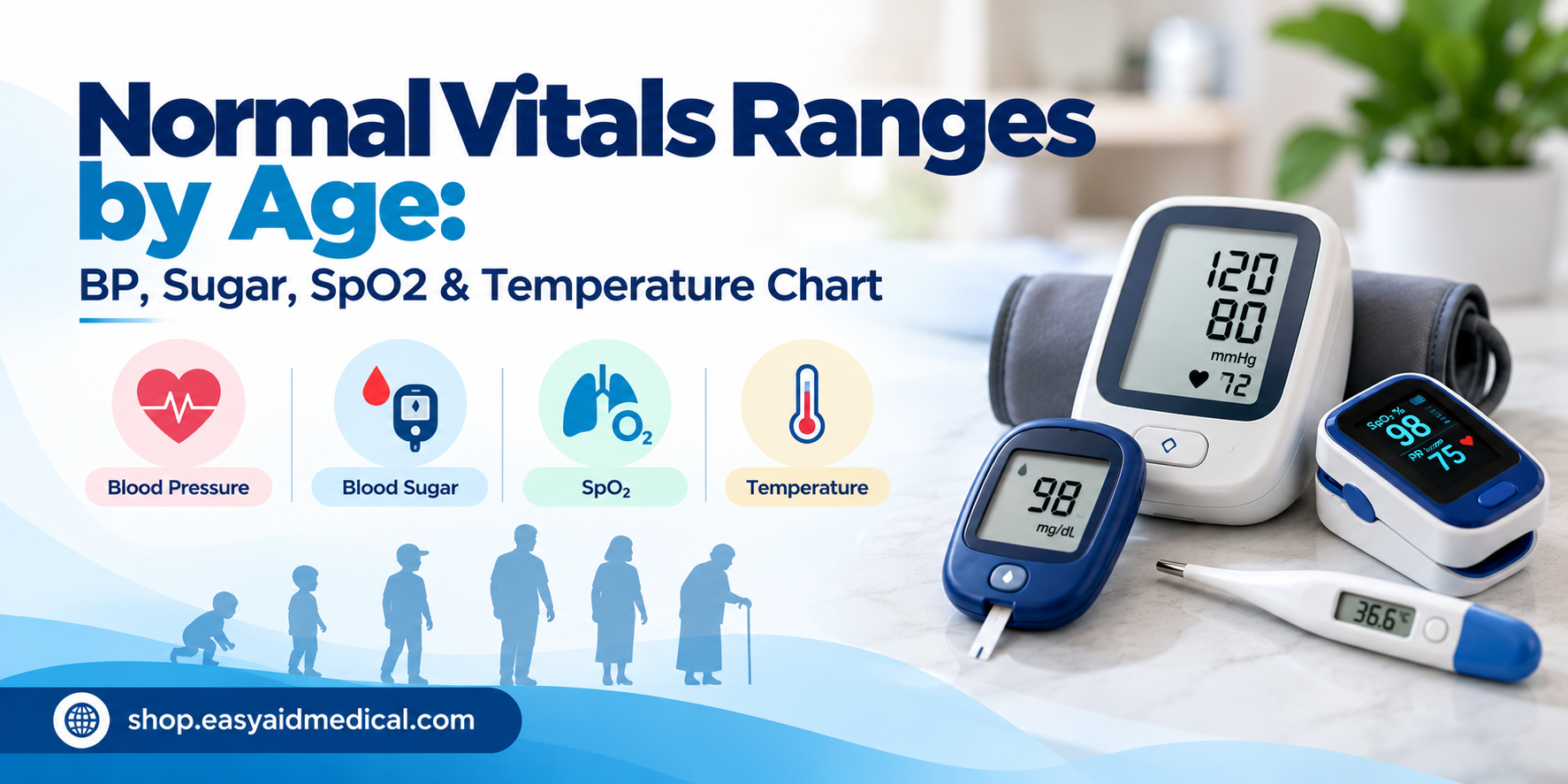
Knowing your basic vital signs can make everyday health monitoring easier. Blood pressure, blood sugar, oxygen saturation and body temperature are among the measurements people commonly check at home. A digital BP monitor, glucometer, pulse oximeter or thermometer can provide useful information within minutes. But there is one important thing to remember: there is no single “normal” number that applies to everyone. Age, health condition, activity, medication, pregnancy, altitude and the way a measurement is taken can all affect the result. Blood pressure in children, for example, is interpreted differently from blood pressure in adults. Blood sugar also needs to be interpreted according to whether the test was fasting, after a meal or taken at another time. So, this normal vital signs chart is designed as a practical reference, not a diagnostic tool. Quick Normal Vital Signs Chart Vital Sign General Reference for Healthy Adults What It Measures Blood Pressure Around 120/80 mmHg is commonly used as a reference; interpretation depends on the individual Pressure of blood against artery walls Fasting Blood Sugar Generally below 100 mg/dL is considered normal for standard adult fasting-glucose classification Blood glucose after fasting SpO₂ Usually around 95–100% at sea level Estimated oxygen saturation Body Temperature Approximately 36.1–37.2°C can be a typical adult range, with normal variation Body temperature These figures are general reference values, not personal targets. A reading outside a reference range does not automatically mean that you have a disease. Likewise, a reading inside the range does not guarantee that everything is fine. The measurement needs to be considered in context. Normal Blood Pressure by Age Blood pressure is written as two numbers. For example: 120/80 mmHg The first number is the systolic pressure, measured when the heart contracts. The second number is the diastolic pressure, measured when the heart relaxes between beats. Adults For adults, blood pressure is not usually assigned a different “normal” range simply because someone is 30, 50 or 70 years old. Instead, the reading is interpreted using adult blood-pressure categories and the person's overall health. WHO currently defines hypertension in adults as blood pressure of 140/90 mmHg or higher when measured on two different days. That does not mean that every reading below 140/90 is automatically ideal. Blood pressure can vary throughout the day, and individual targets may differ. Blood Pressure Reference Table for Adults Reading General Interpretation Below 120/80 mmHg Often considered a healthy reference range 120–139 systolic May be above the ideal range and should be interpreted in context 140/90 mmHg or higher Meets WHO's adult hypertension threshold when confirmed on two different days Very high reading with concerning symptoms Requires prompt medical assessment Do not diagnose hypertension from a single home reading. If your home readings are repeatedly high, discuss them with a healthcare professional. Blood Pressure in Children Children are different. A child's blood pressure is influenced by age, sex and height, so a simple adult-style chart should not be used to decide whether a child's BP is normal. This is particularly important for parents searching for “normal BP by age.” A seven-year-old and a seventeen-year-old should not be judged using the same fixed adult threshold. If you are checking a child's blood pressure at home, use the cuff size recommended for the child and ask a healthcare professional to interpret the result. Normal Blood Sugar Levels by Age Blood sugar, or blood glucose, changes naturally during the day. Your result can be different depending on whether you have: Been fasting Recently eaten Exercised Taken prescribed medicines Been unwell Experienced stress Because of this, a blood glucose reading should always be interpreted with the test timing. Fasting Blood Sugar For standard adult fasting-glucose classification, a fasting blood glucose level below 100 mg/dL is generally considered normal. A fasting result of 100–125 mg/dL falls into the impaired fasting glucose range, while 126 mg/dL or higher can meet a diagnostic threshold for diabetes when appropriately confirmed. A home glucometer result should not be used by itself to diagnose diabetes. If your readings are repeatedly higher than expected, speak with your healthcare professional about appropriate testing. Blood Sugar Reference Table Test General Reference Fasting glucose Below 100 mg/dL Fasting glucose 100–125 mg/dL Higher than normal; needs appropriate clinical evaluation Fasting glucose ≥126 mg/dL Can meet a diagnostic threshold when confirmed appropriately 2-hour glucose after 75 g OGTT Below 140 mg/dL is generally considered normal These values relate to diagnostic blood-glucose testing, not necessarily the target numbers a person with diagnosed diabetes should aim for every day. Someone who already has diabetes may have an individualized glucose target based on their treatment plan. Does Blood Sugar Have a Different Normal Range for Older Adults? Not in the simple way many online charts suggest. Age can influence diabetes risk and treatment goals, but it does not mean there is one universal “normal sugar level” for every 60-, 70- or 80-year-old. Older adults may have different health conditions, medicines and nutritional needs. Their glucose targets should therefore be individualized by their healthcare team. Normal SpO₂ by Age SpO₂ stands for oxygen saturation measured by pulse oximetry. A pulse oximeter usually clips onto a fingertip and estimates how much oxygen is being carried in the blood. For many healthy people at sea level, an SpO₂ reading around 95–100% is a common reference range. MoHFW describes pulse oximetry as a non-invasive method used to measure oxygen saturation and pulse rate. SpO₂ Reference Table SpO₂ Reading General Meaning 95–100% Common reference range for many healthy people at sea level 90–94% Lower than expected for many healthy people; repeat correctly and seek advice if it persists Below 90% Potentially serious low reading; prompt medical assessment may be required These numbers should not be treated as a diagnosis. People with certain lung, heart or other medical conditions may have individual oxygen targets. Altitude can also affect oxygen saturation. Does SpO₂ Change With Age? There is not a simple chart where oxygen saturation steadily decreases with age. Healthy older adults can still have readings in the usual range. If an older person's reading is unexpectedly lower than their usual level, check the measurement technique first. Cold fingers, movement, poor circulation and an incorrectly positioned device can affect the reading. If the low reading continues or occurs with breathing difficulty or other concerning symptoms, seek medical advice. Normal Body Temperature by Age Body temperature is another vital sign that naturally varies. A commonly used adult reference range is approximately 36.1°C to 37.2°C, but temperature can change depending on the person, time of day, activity and measurement method. For example, an oral reading may differ from an underarm reading. Temperature Reference Table Group General Reference Adults Around 36.1–37.2°C is a common reference range Children Can vary depending on age and measurement method Infants Temperature should be interpreted carefully, especially in very young babies There is no need to worry about a tiny difference from one measurement to another. Instead, consider the person's symptoms, the measurement method and whether the temperature is persistently abnormal. Why Does Temperature Change During the Day? Body temperature is not fixed at one number. It can vary naturally throughout the day and may be influenced by: Physical activity Weather Clothing Hormonal changes Food and drinks Illness Measurement method For this reason, comparing readings taken under similar conditions can be more useful than comparing completely different measurements. Normal BP, Sugar and Oxygen Levels by Age: What Actually Changes? Searches for “normal BP sugar oxygen levels by age” often produce charts with a different number for every age. That looks simple, but it can create confusion. Blood Pressure Children require age-, sex- and height-based interpretation. Adults are generally assessed using adult BP categories rather than a separate normal number for every age. Blood Sugar Fasting glucose is interpreted based on the test and diagnostic criteria. Age alone does not create a completely different normal fasting glucose range for each decade. Oxygen Saturation Healthy adults and children commonly have high oxygen saturation at sea level. Age does not automatically mean that a lower SpO₂ is normal. Temperature Temperature naturally varies with age, time of day and measurement method. Infants require more careful interpretation than healthy adults. The takeaway is simple: age matters, but it is not the only factor that determines whether a vital sign is normal. How to Measure Vital Signs Correctly at Home The number on the screen is only as useful as the measurement behind it. Measuring Blood Pressure For a more reliable home BP reading: Rest quietly before measuring. Sit with your back supported. Keep your feet supported. Place your arm in a comfortable supported position. Use the correct cuff size. Avoid talking during the measurement. Take repeat readings when your healthcare professional has advised it. MoHFW's hypertension guidance emphasizes standardized BP measurement and appropriate technique rather than relying on an isolated reading. Measuring Blood Sugar When using a glucometer: Wash and dry your hands. Use the correct test strip. Check that strips are within their expiry date. Follow the meter manufacturer's instructions. Record the reading and test timing when needed. Do not share lancets or blood-testing equipment. Remember that a glucometer is a monitoring tool. Repeated abnormal results should be discussed with a healthcare professional. Measuring SpO₂ For a pulse oximeter: Rest before measuring. Keep your hand warm. Place the device correctly on your fingertip. Keep your hand still. Wait for the reading to stabilise. Record the result if you are monitoring regularly. If a reading looks unexpectedly low, repeat the measurement correctly rather than immediately assuming the device is showing a medical emergency. Measuring Temperature Use the thermometer according to its instructions. Record the measurement method if you are tracking temperatures over several days. This makes comparisons easier because oral, ear, forehead and underarm measurements can produce different results. When Should You Be Concerned About a Vital Sign? A single unusual number does not always mean something is wrong. Before becoming alarmed, ask: Was the device used correctly? Was the person resting? Is the device working properly? Was the correct cuff or sensor used? Could recent exercise, food, stress or illness have affected the reading? Is the result very different from the person's usual level? Repeat the measurement when appropriate. However, do not ignore symptoms simply because a number looks normal. Seek prompt medical attention for symptoms such as: Severe difficulty breathing Chest pain or pressure Fainting Confusion Severe weakness Bluish lips or face A rapidly worsening condition A home monitoring device can provide useful information, but it cannot replace a clinical assessment. Why Tracking Trends Is Better Than Looking at One Number Vital signs naturally move up and down. For example, blood pressure can change after exercise, stress, caffeine or poor sleep. Temperature can change throughout the day. Blood sugar changes with meals and activity. That is why keeping a simple record can be helpful. You can create a table like this: Date BP Blood Sugar SpO₂ Temperature Notes Monday — — — — Morning Tuesday — — — — Before breakfast Wednesday — — — — Feeling unwell Thursday — — — — Evening You do not need to measure every vital sign every day unless your healthcare professional has recommended it. The purpose of a log is to make meaningful patterns easier to identify. Home Vital Monitoring Equipment Checklist A basic home monitoring kit may include: Digital BP Monitor Useful for people who have been advised to monitor blood pressure at home. Choose an upper-arm device with an appropriate cuff size and reliable validation. Glucometer Useful for people who have been advised to monitor blood glucose at home. Keep compatible test strips and lancets available. Pulse Oximeter Useful for checking SpO₂ and pulse rate when monitoring is appropriate. Digital Thermometer A simple thermometer is useful for routine temperature checks. Health Record Keep either a notebook or digital record of important readings. This can make doctor appointments more productive because you can show actual measurements instead of trying to remember them. Frequently Asked Questions 1. What is a normal vital signs chart? A normal vital signs chart is a quick reference for measurements such as blood pressure, blood sugar, oxygen saturation and body temperature. The ranges are general guides and should not be used to diagnose a medical condition. 2. What are normal BP, sugar and oxygen levels by age? There is no single universal set of numbers for every age. Adult BP is interpreted using adult categories, children's BP depends on factors such as age, sex and height, blood sugar depends on the type and timing of the test, and SpO₂ is generally high in healthy people at sea level. 3. Is 120/80 always the normal blood pressure? 120/80 mmHg is commonly used as a healthy reference value, but blood pressure naturally changes throughout the day. A single reading should not be used to diagnose hypertension. Repeated elevated readings should be discussed with a healthcare professional. 4. Is 95% oxygen saturation normal? For many healthy people at sea level, 95% is within the commonly used reference range. However, individual targets can differ. If your reading is lower than usual or you have breathing difficulty or other concerning symptoms, seek medical advice. 5. What is normal fasting blood sugar? For standard adult fasting-glucose classification, a fasting blood glucose level below 100 mg/dL is generally considered normal. Results of 100–125 mg/dL are above the normal range, while 126 mg/dL or higher can meet a diagnostic threshold when appropriately confirmed. A home glucometer reading alone should not be used to diagnose diabetes. Final Takeaway Vital signs give you useful information about the body, but they are not just numbers to compare against a chart. A normal vital signs chart can help you understand common reference ranges, but the correct interpretation depends on age, health history, symptoms, measurement technique and the type of test being used. For adults, a blood pressure around 120/80 mmHg is a commonly used reference, fasting blood glucose below 100 mg/dL is generally considered normal, SpO₂ is commonly around 95–100% at sea level, and body temperature often falls around 36.1–37.2°C. Children need more age-appropriate interpretation, especially for blood pressure. If you regularly monitor your health at home, keep your equipment ready, use it correctly and record important readings. More importantly, discuss persistent or unusual results with a qualified healthcare professional rather than trying to diagnose yourself from an online chart. Build Your Home Monitoring Kit With EasyAid Medical Keep essential monitoring equipment ready at home for everyday health tracking. Shop Digital BP Monitors Shop Glucometers Shop Pulse Oximeters Shop Digital Thermometers Explore Home Healthcare Equipment Medical Disclaimer: This article is for general educational purposes only. The ranges provided are reference values and are not intended to diagnose, treat or rule out any medical condition. Individual targets may differ. Always consult a qualified healthcare professional for interpretation of abnormal readings, especially in children, older adults, pregnant women and people with chronic health conditions.

Normal Vitals Ranges by Age: BP, Sugar, SpO2 & Temperature Chart

Knowing your basic vital signs can make everyday health monitoring easier. Blood pressure, blood sugar, oxygen saturation, and body temperature are among the measurements people commonly check at home. A digital

Read More
Managing Diabetes at Home Daily Monitoring Routine and Equipment Checklist

Managing Diabetes at Home: Daily Monitoring Routine and Equipment Checklist

Managing diabetes does not stop when you leave the doctor’s clinic. A large part of everyday diabetes care happens at home through regular habits, blood glucose monitoring when advised, balanced meals,

Read More
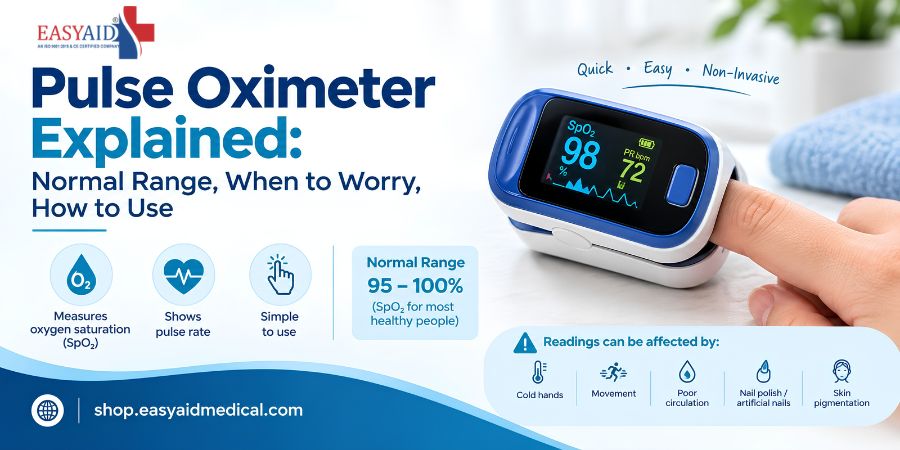
Pulse Oximeter Explained Normal Range, When to Worry, How to Use

Pulse Oximeter Explained: Normal Range, When to Worry, How to Use

A pulse oximeter is a small device that can give you two useful readings within seconds: blood oxygen saturation (SpO₂) and pulse rate. It is commonly used at home, in hospitals

Read More
Digital BP Monitor vs Manual Which One Should You Buy_

Digital BP Monitor vs Manual: Which One Should You Buy?

Checking blood pressure at home has become much easier with modern monitoring devices. A Digital BP Monitor can give a reading with the press of a button, while a manual blood

Read More
Glucometer Buying Guide ow to Choose and Use a Blood Sugar Monitor at Home

Glucometer Buying Guide: How to Choose and Use a Blood Sugar Monitor at Home

Managing blood sugar at home can become much easier with the right glucometer. A blood glucose meter, commonly called a glucometer, gives a blood sugar reading from a small sample of

Read More
Home Vitals Monitoring BP, Sugar, Oxygen & Temperature — Complete Guide 2026

Home Vitals Monitoring: BP, Sugar, Oxygen & Temperature—Complete Guide 2026

You don’t need a hospital to keep track of basic health measurements. Today, several home health monitoring devices can help families check blood pressure, blood glucose, oxygen saturation and body temperature

Read More
Antiseptic vs Antibiotic Ointment: What to Use for Minor Cuts and Wounds

Antiseptic vs Antibiotic Ointment: What to Use for Minor Cuts and Wounds

A small cut can happen while cooking, shaving, gardening, travelling, or doing everyday household work. Most minor cuts do not need complicated treatment. However, choosing what to put on the wound

Read More
Disposable Gloves Guide itrile vs Latex vs Vinyl for Home and Clinical Use

Disposable Gloves Guide: Nitrile vs Latex vs Vinyl for Home and Clinical Use

Disposable gloves are a simple part of first aid and healthcare, but choosing the right type isn’t always simple. Walk into a medical-supply store and you’ll usually find several options: nitrile,

Read More
Wound Care 101 leaning, Dressing, and When to See a Doctor

Wound Care 101: Cleaning, Dressing, and When to See a Doctor

A small cut while cooking. A scraped knee after a fall. A blister that has broken open. Minor wounds are part of everyday life, and knowing how to handle them can

Read More
How to Choose the Right Bandage Crepe vs Gauze vs Adhesive

How to Choose the Right Bandage: Crepe vs Gauze vs Adhesive

When someone gets a cut, scrape, sprain or minor injury, reaching for a bandage is often the first response. But open a medical supplies box and you may find several options:

Read More