








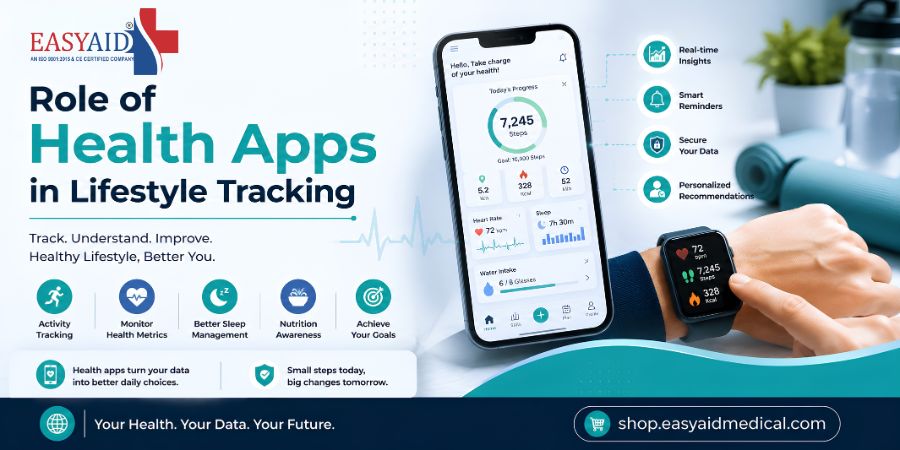
Role of Health Apps in Lifestyle Tracking
Keeping track of your health used to mean remembering what you ate, how much you exercised, or when you last checked your weight. Today, a smartphone can record much of this information automatically or with just a few taps.
This is where health apps for lifestyle tracking have become useful.
Depending on the app, people can record physical activity, food intake, sleep, water consumption, weight, medication schedules, mood, and other daily habits. Some apps can also connect with smartwatches, fitness trackers, or other health devices to collect information automatically.
The idea sounds simple: collect information, look at patterns, and use those patterns to make better everyday decisions.
But health apps are not magic health coaches. An app can record what happened, remind you about a goal, or show a trend. It cannot always explain why a particular change occurred, and its recommendations are not automatically medically appropriate.
That distinction matters.
The National Institutes of Health (NIH) supports research into mobile health technologies and their potential applications in health and behavior change. Research has found that some mobile health interventions can support physical activity, diet, and other lifestyle behaviors, although the quality and strength of evidence vary between interventions.
So, what exactly can health apps do, and how should people use the information they provide?
What are Health Apps?
Health apps are smartphone or tablet applications designed to support activities related to health, wellness, healthcare, or self-management.
They can serve very different purposes.
Some apps focus on one area, such as:
- Physical activity
- Nutrition
- Sleep
- Weight management
- Meditation
- Medication reminders
- Menstrual cycle tracking
- Blood glucose logging
- Blood pressure recording
Others combine several functions into one platform.
For lifestyle tracking, the main purpose is usually to help users record, understand, and manage everyday behaviors.
The information may be entered manually, collected automatically from a smartphone sensor, or imported from a connected wearable device.
For example, a person might enter meals manually while their smartwatch automatically records activity and heart rate.
Over time, the app can turn individual measurements into charts, summaries, reminders, or trends.
How Health Apps Support Lifestyle Tracking
The usefulness of a health app often comes from making invisible habits more visible.
Most people do not accurately remember everything they eat, how much they move, or how consistently they sleep.
Tracking creates a record.
For example, someone may believe they are physically active every day. After checking several weeks of data, they may discover that activity is concentrated on weekends while weekdays involve long periods of sitting.
That information does not diagnose a health problem.
But it can create awareness, which may be the first step toward changing a habit.
1. Physical Activity Tracking
Physical activity is one of the most common features of health and fitness apps.
Apps can track or record information such as:
- Steps
- Walking distance
- Exercise duration
- Running or cycling sessions
- Active minutes
- Workout frequency
- Estimated calories burned
Some applications use smartphone sensors, while others receive information from connected wearables.
The main benefit is visibility.
Instead of guessing how active you have been, you can look at your activity over a day, week, or month.
Research on mobile and digital health interventions has found improvements in measures such as daily steps and physical activity in some groups, although results vary depending on the intervention and study design.
2. Nutrition and Food Tracking
Nutrition apps can help users record meals, snacks, beverages, and sometimes specific nutrients.
Depending on the app, users may be able to monitor:
- Calories
- Protein
- Carbohydrates
- Fat
- Fibre
- Fruits and vegetables
- Water intake
- Meal timing
Food tracking can help people notice patterns they might otherwise overlook.
For example, a person may discover that they frequently skip breakfast, consume very little fibre, or snack more often during certain parts of the day.
However, nutrition tracking has an important limitation: the quality of the information depends on what the user enters and how accurately the app’s database represents the food.
Portion sizes can be difficult to estimate. Restaurant meals may contain more or less of a nutrient than the app assumes.
Therefore, food tracking should be treated as a useful estimate and awareness tool rather than a perfectly accurate measurement.
3. Sleep Tracking
Sleep is another area where health apps and connected devices are increasingly used.
A sleep-focused app may help users record:
- Bedtime
- Wake-up time
- Sleep duration
- Sleep consistency
- Night-time interruptions
Some apps use information from a connected wearable to estimate sleep patterns.
This can help users recognise habits.
For instance, someone might notice that they consistently sleep less on working days or that their sleep schedule changes considerably on weekends.
However, consumer sleep tracking should not be confused with a clinical sleep assessment.
A phone or wearable may estimate sleep using movement and other signals, but it generally does not provide the same type of information as a medical sleep study.
If someone has persistent sleep problems or concerning symptoms, professional medical evaluation may be appropriate.
4. Weight and Body Measurements
Many health apps allow users to record weight and other measurements.
Looking at a trend can sometimes be more useful than focusing on a single number.
For example, daily weight can naturally fluctuate because of hydration, food intake, timing, and other factors.
A longer-term record may provide a clearer picture than one measurement.
Still, users should avoid assuming that every change is meaningful or that a specific weight target is appropriate for everyone.
Health goals should take individual circumstances into account.
5. Water and Habit Tracking
Some apps focus on simple daily habits.
They may allow users to track:
- Water intake
- Medication reminders
- Exercise
- Stretching
- Meals
- Screen time
- Meditation
- Other personal goals
These features may seem basic, but reminders can make a difference for people who simply forget.
The value is not the notification itself. It is whether the reminder helps a person consistently follow a behaviour that is appropriate for them.
Also Read—Wearable Devices and Health Monitoring
Understanding the Benefits of Health Apps
The health apps benefits are not limited to collecting numbers.
Used properly, lifestyle apps can help users become more aware of their everyday behavior.
Better Self-Awareness
Tracking can make habits easier to see.
A person may realize that their activity level is lower than expected or that their sleep schedule is inconsistent.
That awareness can encourage practical changes.
Goal Setting
Many apps allow users to set goals.
These could include:
- Walking regularly
- Exercising several days per week
- Maintaining a consistent sleep schedule
- Drinking an appropriate amount of water
- Recording meals
Goals can give users something specific to work toward.
However, goals should be realistic and appropriate to the individual rather than copied from someone else’s routine.
Feedback
Seeing progress can provide useful feedback.
For example, a weekly activity summary may show whether someone has become more active compared with previous weeks.
This type of feedback can help people identify what is working and where they may need to adjust their routine.
Convenience
A smartphone is usually already with the user.
That makes lifestyle tracking easier than maintaining a separate paper diary.
Data can also be stored over longer periods, making it easier to look back at previous habits.
Supporting Communication With Healthcare Professionals
In some situations, lifestyle data may help during a healthcare consultation.
For example, someone managing a health condition may have several weeks of recorded activity, blood pressure readings, or other relevant information.
A healthcare professional can then decide whether the information is useful and how it should be interpreted.
Not every app-generated measurement is clinically reliable, so healthcare professionals should remain responsible for interpreting medical information.
Also Read—Digital Health Records and Patient Privacy
Health Apps and Behaviour Change
One of the biggest reasons people use health apps is to change habits.
An app may use features such as:
- Reminders
- Progress charts
- Goal setting
- Personal feedback
- Streaks
- Challenges
- Notifications
- Educational content
These features are designed to encourage users to take action.
Research has identified self-monitoring, feedback, goal setting, reminders, and tailored information as common features used in digital interventions aimed at changing health behaviors.
But downloading an app does not automatically change behavior.
The user still has to engage with it.
A person may enthusiastically track every meal for a week and then stop using the app completely.
In fact, maintaining engagement is one of the challenges researchers have identified with lifestyle apps. Factors such as usability, accessibility, motivation, design, and how intrusive the app feels can influence whether people continue using it.
What Health Apps Cannot Tell You
This is an important part of using health technology responsibly.
An app can show a number, but the number may not explain the reason behind it.
For example:
A sleep app may show less sleep.
It cannot necessarily tell you whether the cause is stress, caffeine, medication, a sleep disorder, or another factor.
A fitness app may show fewer steps.
It cannot determine whether this is due to illness, work demands, injury, weather, or simply a change in routine.
A food app may show high calorie intake.
It cannot automatically determine whether a particular diet is appropriate for your individual health needs.
Data requires context.
That context often comes from the person themselves and, when necessary, a qualified healthcare professional.
Accuracy: Are Health App Measurements Reliable?
Not every health app measures information in the same way.
Some data is entered directly by the user. Other information may come from phone sensors, wearable devices, or external databases.
This creates several possible sources of error.
Manual Entry Errors
Users can forget to record information or enter the wrong quantity.
Estimated Values
Calories burned, calorie intake, sleep stages, and similar measurements may be estimates.
Device Differences
Different phones and wearable devices may produce different measurements.
Algorithm Limitations
Apps may use algorithms to interpret raw data. These algorithms can have limitations and may not work equally well for every person or situation.
For this reason, users should avoid treating an app’s number as an exact medical measurement unless the specific product is intended and validated for that medical purpose.
Privacy and Health Apps
Lifestyle tracking can involve highly personal information.
Depending on the app, data may include:
- Weight
- Food choices
- Exercise habits
- Sleep patterns
- Location
- Heart rate
- Medication information
- Other health-related details
Before using an app, users should understand what information it collects and how that information is handled.
Important questions include:
- What data does the app collect?
- Why does it collect it?
- Is the information stored locally or online?
- Is data shared with third parties?
- Can the user delete their information?
- What permissions does the app request?
- Does the app need access to location, contacts, or other phone features?
A useful rule is simple:
Do not give an app more personal information or permissions than it reasonably needs.
How to Choose a Health App
There are thousands of health and fitness apps available, so choosing one can be difficult.
Before downloading an app, consider the following.
Check Who Developed It
Look for information about the developer or organisation behind the app.
A clearly identified developer is generally preferable to an app with little information about who operates it.
Look at the Privacy Policy
Understand what information is collected and how it may be used.
Check the App’s purpose.
An app designed for general fitness tracking is different from one designed to support a medical condition.
Do not assume that an app is medically reliable simply because it uses health-related language.
Avoid Unrealistic Claims
Be cautious about apps promising guaranteed weight loss, instant health improvements, disease prevention, or other results that sound too good to be true.
Check Reviews Carefully
User reviews can reveal usability problems, but they should not be treated as proof that an app is medically effective.
Look for Evidence
Where an app makes health claims, check whether those claims are supported by credible evidence.
Health Apps Should Support, Not Replace, Healthcare
A health app can be a useful lifestyle tool, but it should not become a substitute for medical care.
If someone has persistent symptoms, abnormal test results, or concerns about their health, they should seek appropriate professional advice.
This is especially important when an app provides a reassuring result.
For example, a fitness tracker showing a normal-looking heart-rate reading does not mean that a person with concerning symptoms should ignore those symptoms.
Similarly, a nutrition app cannot determine whether a specific diet is medically appropriate for someone with a particular condition.
Technology can support health awareness.
It cannot replace clinical judgment.
The Role of Health Apps in Preventive Health
Health apps can contribute to preventive health by helping people pay attention to everyday behaviours.
Regular physical activity, balanced nutrition, adequate sleep, and other healthy behaviours are important parts of maintaining health.
Digital tools can make these behaviours easier to monitor.
A recent systematic review and meta-meta-analysis covering hundreds of randomised controlled trials found that eHealth and mHealth interventions were associated with improvements in several lifestyle measures, including physical activity, dietary behaviours, body weight, and sleep outcomes. However, results varied across interventions, which means the findings should not be interpreted as proof that every health app is effective.
That distinction is important.
The technology itself is not the intervention’s entire value. The quality of the app, the type of guidance provided, user engagement, and the behaviour being targeted all matter.
What About Health Apps in India?
Smartphone-based healthcare tools can be particularly relevant in India because they can provide a convenient way for people to record health information and access digital health resources.
Research involving adults in urban and rural India has found that certain mobile health interventions were associated with improvements in weight, cardiometabolic measures, dietary behaviour, and physical activity. However, that study evaluated specific interventions in a defined population, so its findings should not be assumed to apply to every health app or every user.
For Indian users, other practical factors also matter, including language availability, internet access, affordability, digital literacy, and whether an app’s health information is appropriate for the local population.
How to Use Health Apps More Effectively
The best approach is to use an app as a tool for awareness rather than becoming dependent on every number it displays.
Track Consistently
If you want to understand a habit, track it regularly enough to identify a pattern.
Look at Trends
One unusual day usually tells you less than several weeks of information.
Set Realistic Goals
Choose goals that fit your health, schedule, and lifestyle.
Review Your Data
Do not collect information without ever looking at it. Use your records to identify practical changes.
Protect Your Privacy
Review permissions and privacy settings regularly.
Verify Important Health Information
If an app gives you information that could affect a medical decision, verify it with a reliable healthcare source or qualified professional.
Know When to Stop Self-Monitoring
If tracking becomes stressful, obsessive, or starts interfering with normal life, taking a break may be appropriate.
The Future of Health Apps and Lifestyle Tracking
Health apps are likely to become more connected with wearable devices, electronic health records, telemedicine platforms, and other digital health technologies.
This could allow users to collect information from several sources in one place.
For example:
Wearable → Health App → Lifestyle Data → Health Professional
In some healthcare systems, app-generated information is already being explored for integration with electronic health records. Research suggests that such integration can improve communication and self-management in some settings, although challenges include data quality, compatibility, security, accessibility, and the additional workload created for healthcare professionals.
The future should therefore focus not simply on collecting more data, but on making health information useful, understandable, secure, and clinically appropriate.
Conclusion
Health apps have made lifestyle tracking much easier.
They can help people monitor physical activity, nutrition, sleep, weight, and other daily habits. They can provide reminders, show trends, support goal setting, and encourage greater awareness of everyday behaviour.
These are some of the most practical health apps benefits.
But there are limits.
App data may be incomplete or estimated. Not every measurement is medically accurate, and not every recommendation is suitable for every person. Privacy is another important consideration because lifestyle tracking can involve highly sensitive personal information.
The best way to use health apps for lifestyle tracking is to treat them as tools for awareness and behaviour support.
Use the data to understand your habits. Look for longer-term patterns rather than worrying about every individual number. Protect your personal information. And when something raises a genuine health concern, involve a qualified healthcare professional.
Technology can make health tracking easier.
The decisions about your health should still be made with context, reliable information, and appropriate professional guidance.
Frequently Asked Questions
1. What are health apps used for?
Health apps can be used to track physical activity, nutrition, sleep, weight, water intake, medication reminders, and other lifestyle habits. Some apps also support specific health conditions or connect with healthcare professionals.
2. What are the main health apps benefits?
Common benefits include better awareness of daily habits, easier self-monitoring, goal setting, reminders, progress tracking, and convenient access to health-related information. However, the effectiveness of individual apps varies.
3. Can health apps improve lifestyle habits?
Some research suggests that mobile and digital health interventions can support improvements in physical activity, diet, sleep, and other lifestyle behaviours. However, results differ between apps and users, and simply downloading an app does not guarantee behaviour change.
4. Is health app data accurate?
Accuracy depends on the type of data, the app, the device collecting the information, and how the measurement is calculated. Some information is manually entered or estimated, so users should not automatically treat app data as a clinical measurement.
5. Is it safe to share personal information with health apps?
It depends on the app and how it handles data. Before using one, check its privacy policy, permissions, developer information, data-sharing practices, and deletion options. Avoid giving an app access to information it does not reasonably need.
Authority References
National Institutes of Health (NIH) / PubMed Central: Mobile Apps to Improve Health Parameters in Healthy Adults
Read the NIH-indexed systematic review
NIH / PubMed: Health App Research and Evidence
Explore NIH health-app research on PubMed
NIH / PubMed: Mobile Health Applications and Cardiometabolic Risk in India
Read the NIH-indexed India study