






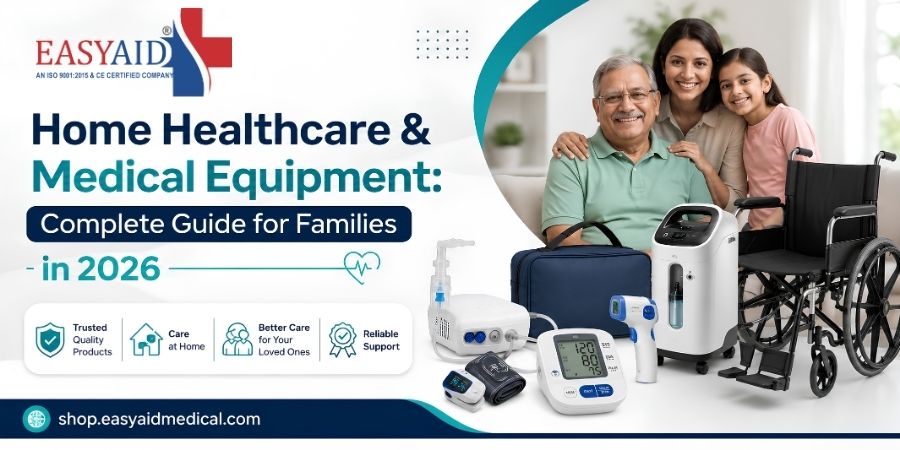
Home Healthcare & Medical Equipment: Complete Guide for Families in 2026
Healthcare is no longer limited to hospitals and clinics. For many families, especially those caring for older adults, people recovering from surgery, patients with long-term conditions, or individuals with mobility challenges, the home has become an important part of the care journey.
This is where home healthcare equipment can make everyday care safer, more comfortable, and manageable.
From a blood pressure monitor and pulse oximeter to wheelchairs, hospital beds, and oxygen-related equipment, the right products can help families monitor health, support mobility, and create a more suitable recovery environment at home.
However, choosing medical equipment is not simply about buying the most popular product or the one with the most features. The right choice depends on the patient’s condition, doctor’s advice, frequency of use, home environment, caregiver requirements and after-sales support.
This home medical equipment guide India is designed to help families understand the basics before making a purchase.
What is Home Healthcare Equipment?
Home healthcare equipment refers to medical and supportive devices designed to help patients receive care, monitor health or perform daily activities at home.
The range can include simple monitoring devices as well as larger equipment used for recovery, rehabilitation or long-term care.
According to the World Health Organization (WHO), medical devices can be used in different healthcare settings, including homes, and may support prevention, diagnosis, monitoring, treatment and rehabilitation.
Examples of commonly used home healthcare equipment include:
- Blood pressure monitors
- Pulse oximeters
- Digital thermometers
- Glucometers
- Nebulizers
- Wheelchairs
- Walking aids
- Patient beds
- Anti-decubitus mattresses
- Commode chairs
- Patient transfer equipment
- Oxygen therapy equipment
- Rehabilitation and physiotherapy equipment
Not every patient needs every type of equipment. Medical requirements should always be assessed according to the individual’s condition.
Why is Home Healthcare Equipment Important?
The right equipment can make home care more practical for both patients and caregivers.
1. Supports Regular Health Monitoring
Devices such as blood pressure monitors, thermometers, glucometers, and pulse oximeters can help families keep track of selected health measurements at home.
These readings can provide useful information to healthcare professionals, particularly when a patient is already under medical supervision.
However, home monitoring should not replace professional medical evaluation. An unusual reading, worsening symptoms or sudden change in the patient’s condition may require immediate medical attention.
2. Makes Daily Activities Easier
Mobility-related equipment can help people who have difficulty walking, standing or moving independently.
Wheelchairs, walkers, walking sticks, commode chairs and other assistive products can support daily activities and reduce dependence on caregivers.
WHO notes that assistive technology can help people maintain functioning and independence, particularly older adults and people living with disabilities or long-term health conditions.
3. Helps During Recovery
After surgery, an injury, or prolonged illness, patients may need additional support while recovering at home.
Depending on the situation, this may include a suitable patient bed, mobility aid, bathroom safety equipment, or rehabilitation products.
The equipment should be selected according to the patient’s actual recovery needs rather than purchased simply because it is commonly recommended online.
4. Supports Caregivers
Home care can be physically demanding for family members.
Suitable equipment can make tasks such as repositioning, transferring or assisting a patient easier and safer when used correctly.
WHO also highlights that appropriate assistive products can reduce the impact on carers and support people in living more independently.
Common Types of Home Healthcare Equipment
Understanding different categories can make the buying process easier.
Home Monitoring Equipment
These devices are generally used to monitor basic health parameters.
Common examples include:
- Blood pressure monitors
- Blood glucose meters
- Pulse oximeters
- Digital thermometers
The important consideration is not just the device itself but whether the patient or caregiver knows how to use it correctly and interpret the results appropriately.
Mobility Equipment
Mobility equipment is useful for people who have difficulty walking or moving around independently.
Common products include:
- Wheelchairs
- Walkers
- Walking sticks
- Crutches
- Rollators
- Transfer aids
The correct product depends on the patient’s balance, strength, mobility level and home layout.
For example, a wheelchair may be appropriate for one person but unnecessary or unsuitable for another person who can safely walk with a properly fitted walking aid.
Patient Care Equipment
Patients who spend significant time in bed may require equipment designed to improve comfort and make caregiving easier.
Depending on individual requirements, this may include:
- Manual or electric hospital beds
- Bedside tables
- Bed rails
- Overbed tables
- Patient lifting or transfer equipment
- Commode chairs
- Support cushions
For patients at risk of pressure injuries, an appropriate mattress or pressure-relieving surface may also be considered based on professional advice.
Respiratory Care Equipment
Some patients may require respiratory support or treatment at home.
Equipment may include:
- Nebulizers
- Oxygen concentrators
- Oxygen-related accessories
- Respiratory monitoring devices
Respiratory equipment requires particular care because incorrect selection or use can create safety risks. Oxygen therapy, in particular, should be used according to medical advice.
Rehabilitation Equipment
Recovery may continue long after a patient leaves the hospital.
Depending on the rehabilitation plan, families may use equipment for:
- Physiotherapy
- Strengthening exercises
- Mobility training
- Range-of-motion exercises
- Balance and functional rehabilitation
A physiotherapist or other qualified healthcare professional can help determine which equipment is appropriate and how it should be used.
How to Choose the Right Home Healthcare Equipment
Buying medical equipment should be treated as a healthcare decision, not simply a shopping decision.
Here are the key factors families should consider.
1. Start With the Patient’s Requirement
First identify what problem the equipment needs to solve.
Ask:
- Is the equipment for monitoring?
- Is it required for mobility?
- Is the patient recovering from surgery?
- Does the patient need long-term support?
- Will a caregiver need to operate the equipment?
- Has a doctor or therapist recommended a specific device?
This prevents unnecessary purchases.
2. Consider the Home Environment
A product that works well in a hospital may not always be practical at home.
Check:
- Available room space
- Door width
- Stair access
- Bathroom layout
- Floor type
- Power supply
- Storage space
For example, before purchasing a large patient bed or wheelchair, measure doorways and the area where the equipment will be used.
3. Prioritize Safety
Safety should come before appearance, extra features or price.
Look for appropriate product specifications, clear instructions and reliable construction.
For equipment requiring calibration, maintenance or user training, these factors become especially important. WHO specifically recognizes medical equipment as devices that may require calibration, maintenance, repair, training and proper management.
4. Check Ease of Use
The equipment should be manageable for the person who will actually operate it.
A technically advanced device is not necessarily the best choice if the patient or caregiver finds it difficult to operate.
Simple controls, clear displays, easy cleaning and understandable instructions can make a significant difference in daily use.
5. Consider Maintenance and After-Sales Support
Before buying, check:
- Warranty
- Service availability
- Replacement parts
- Consumables
- Maintenance requirements
- Installation support
- Customer assistance
This is particularly important for equipment that may be needed regularly or for a long period.
A low purchase price can become expensive if spare parts are unavailable or servicing is difficult.
Also Read – Role of Health Apps in Lifestyle Tracking
What Should Families Check Before Buying Medical Equipment in India?
India has a wide market for medical devices and home healthcare products, ranging from basic monitoring devices to complex equipment.
Medical devices in India are regulated under the applicable regulatory framework, including the Medical Devices Rules, 2017.
Families should therefore pay attention to the product’s intended use, manufacturer information, instructions, specifications and applicable regulatory requirements.
Before purchasing, it is sensible to check:
Product suitability: Is this actually appropriate for the patient’s requirement?
Manufacturer and seller: Is there clear information about who made and supplied the product?
Documentation: Are instructions and specifications provided?
Warranty: What happens if the equipment develops a problem?
Service: Is servicing available in your city or region?
Accessories: Are essential accessories and replacement parts available?
Training: Does the caregiver need training before operating it?
For equipment prescribed or recommended by a healthcare professional, families should follow that recommendation rather than substituting a different device based only on price or online reviews.
Home Healthcare Equipment Safety Tips
Correct use is just as important as choosing the correct product.
Keep Instructions Accessible
Store the user manual and important product information where caregivers can easily find them.
Clean Equipment Regularly
Follow the manufacturer’s cleaning instructions. Do not use unsuitable cleaning agents or methods that could damage the device.
Inspect Before Use
Check for:
- Damaged cables
- Cracked components
- Loose parts
- Battery problems
- Unusual sounds
- Signs of wear
Do not continue using equipment that appears damaged or unsafe.
Follow Medical Instructions
Equipment should be used for its intended purpose and according to professional guidance where applicable.
Do not change treatment settings, oxygen flow or other clinically important parameters without appropriate medical advice.
Keep Emergency Numbers Handy
For patients with serious or long-term conditions, families should know whom to contact if the patient’s condition suddenly worsens.
Home equipment is a support tool. It should never create a false sense that professional medical care is unnecessary.
Renting vs Buying Home Healthcare Equipment
One common question families face is whether to buy or rent equipment.
Buying May Make Sense When:
- The equipment will be used for a long period.
- Multiple family members may need it over time.
- The equipment is relatively affordable.
- Long-term ownership is more convenient.
Renting May Make Sense When:
- The equipment is required temporarily.
- The patient is recovering from an injury or surgery.
- A large piece of equipment is needed for only a few weeks or months.
- The family wants to avoid a large upfront expense.
For expensive or specialised equipment, compare the total rental cost, deposit, servicing terms, transportation charges and purchase price before deciding.
Home Healthcare for Older Adults
Older adults may require a combination of medical, mobility and assistive products rather than a single device.
For example, someone with mobility difficulties may need a walker and bathroom safety equipment, while another person recovering from illness may need monitoring equipment and temporary patient-care support.
India’s National Programme for Health Care of the Elderly includes home-based care as part of its broader approach to elderly healthcare. The programme also emphasizes accessible, affordable and comprehensive care for the ageing population.
The important point is to assess the person’s actual functional needs rather than focusing only on age.
Building a Practical Home Healthcare Setup
A useful home healthcare setup does not need to look like a hospital.
Start with the essentials based on the patient’s condition.
A simple approach is:
Step 1: Identify the care requirement
Understand the patient’s diagnosis, mobility, monitoring and daily-care needs.
Step 2: Speak to the healthcare professional
Ask what equipment is actually necessary.
Step 3: Measure the home
Check space, doors, stairs and bathroom access.
Step 4: Compare suitable products
Look at specifications, usability, warranty and service support.
Step 5: Learn how to use the equipment
The patient and caregiver should understand basic operation, cleaning and safety.
Step 6: Review the setup regularly
As the patient’s condition changes, equipment requirements may also change.
This approach can help families avoid both under-buying and purchasing equipment that is never used.
A Simple Home Medical Equipment Checklist
Before purchasing, families can use this checklist:
- Doctor or healthcare professional’s recommendation checked
- Patient’s exact requirement identified
- Product specifications reviewed
- Home dimensions checked
- Equipment is easy for the caregiver to operate
- Warranty confirmed
- Service support available
- Replacement parts/accessories available
- User manual provided
- Cleaning and maintenance requirements understood
- Safety instructions explained
- Rental option considered if the need is temporary
Final Thoughts
Choosing home healthcare equipment is ultimately about making care safer, more practical and more comfortable for the patient and the family.
The best equipment is not necessarily the most expensive or feature-rich option. It is the one that matches the patient’s needs, fits the home environment, can be used safely and has dependable support behind it.
For families in India, taking a little extra time to understand the equipment before buying can prevent unnecessary expenses and, more importantly, reduce avoidable risks.
Whether you are preparing your home for an elderly family member, supporting someone after surgery or managing long-term care, use medical equipment as part of a broader care plan rather than as a replacement for professional medical advice.
Frequently Asked Questions
1. What is home healthcare equipment?
Home healthcare equipment includes medical and supportive devices used at home for health monitoring, patient care, mobility, rehabilitation and other healthcare needs. Examples include blood pressure monitors, wheelchairs, patient beds, nebulizers and glucometers.
2. How do I choose the right home medical equipment in India?
Start by identifying the patient’s specific requirement and, where appropriate, getting professional medical advice. Then compare product specifications, ease of use, safety, warranty, maintenance, service support and suitability for your home.
3. Is it better to buy or rent home healthcare equipment?
It depends on how long the equipment will be required. Buying may be more practical for long-term use, while renting can make sense for temporary recovery or short-term patient care.
4. Can home healthcare equipment replace a doctor’s consultation?
No. Home equipment can support monitoring, mobility, rehabilitation or daily care, but it does not replace professional diagnosis or treatment. Any significant change in a patient’s condition should be discussed with an appropriate healthcare professional.
5. What medical equipment is commonly needed for elderly people at home?
The requirement varies from person to person. Depending on mobility and health needs, commonly used products may include blood pressure monitors, walking aids, wheelchairs, patient beds, bathroom safety equipment and other assistive products. A healthcare professional can help determine what is appropriate.