








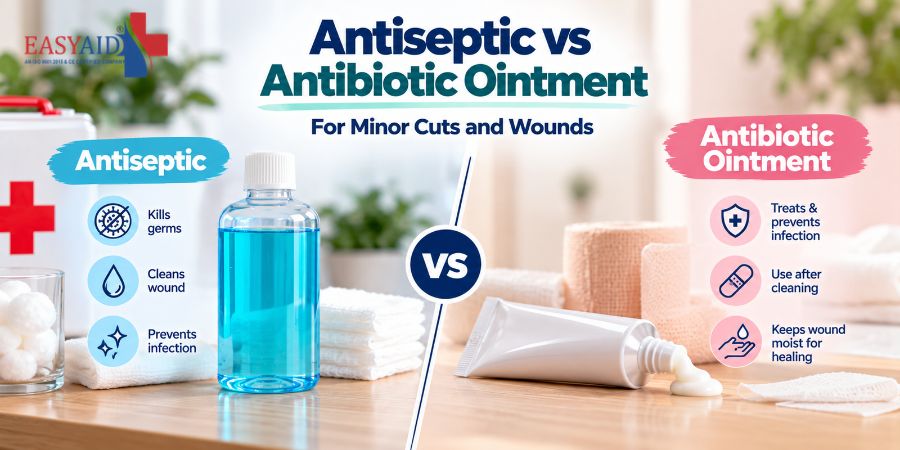
Antiseptic vs Antibiotic Ointment: What to Use for Minor Cuts and Wounds
A small cut can happen while cooking, shaving, gardening, travelling, or doing everyday household work. Most minor cuts do not need complicated treatment. However, choosing what to put on the wound can be confusing.
Many people reach for an antiseptic liquid or an antibiotic ointment. These products are not the same, and they do not serve the same purpose.
So, when comparing antiseptic vs antibiotic ointment, what should you know before using either one?
The first step is simple: clean and protect the wound. For a minor cut, proper wound cleaning and an appropriate dressing often matter more than applying multiple products.
This guide explains the difference between antiseptics and antibiotic ointments, when each type may be considered, what to avoid, and when a minor wound needs medical attention.
Medical note: This article provides general first-aid information. It does not replace medical advice or a doctor’s examination. Follow the instructions on any medical product and speak with a healthcare professional when you are unsure about a wound.
What Is an Antiseptic?
An antiseptic is a substance designed to reduce or control microorganisms on living tissue, such as skin.
You may find antiseptic products in different forms, including:
- Solutions
- Liquids
- Creams
- Sprays
- Wipes
However, the fact that a product is labelled “antiseptic” does not mean it should automatically go inside every open wound.
The type of antiseptic, its concentration, and its intended use all matter. Some products are designed mainly for intact skin or specific clinical situations.
WHO wound-care guidance warns that harsh antiseptics can damage delicate new cells and delay healing.
Therefore, always check the product label before applying an antiseptic to broken skin.
What Is an Antibiotic Ointment?
An antibiotic ointment contains an antibiotic intended to act against certain bacteria.
That makes it different from an ordinary antiseptic.
Antibiotic products are medicines. Their use should depend on the clinical situation rather than the assumption that every cut needs an antibiotic.
For example, India’s Ministry of Health and Family Welfare guidance states that clinically uninfected diabetic foot wounds should not receive antibiotic therapy.
WHO also highlights the wider problem of antimicrobial resistance. Unnecessary or inappropriate use of antibiotics can contribute to resistance, which can make bacterial infections harder to treat.
As a result, an antibiotic ointment should not become the automatic first choice for every minor cut.
Antiseptic vs Antibiotic Ointment: Key Difference
The easiest way to understand the difference is to look at their purpose.
| Feature | Antiseptic | Antibiotic Ointment |
|---|---|---|
| Main purpose | Reduces microorganisms on skin or tissue, depending on product | Targets susceptible bacteria |
| Product type | May be OTC depending on product | Medicine; some products require professional guidance |
| Common forms | Liquid, cream, spray, wipes | Cream or ointment |
| Used for every minor cut? | Not automatically | Not automatically |
| Main concern | Some products can irritate tissue | Unnecessary use can contribute to antibiotic resistance |
| Best approach | Follow the product’s intended use | Use only when clinically appropriate |
The key point is this: neither product should replace proper wound cleaning and dressing.
What Should You Do First for a Minor Cut?
Before thinking about ointments, deal with the wound itself.
1. Wash Your Hands
Clean your hands before touching the injured area.
If you are helping another person, disposable gloves can provide a useful barrier when blood or body fluids are present.
After removing the gloves, perform hand hygiene again.
2. Control the Bleeding
Use clean gauze or a clean dressing and apply steady, gentle pressure to a minor bleeding cut.
Most small cuts stop bleeding with appropriate pressure.
If the bleeding is heavy, continues despite pressure, or comes from a serious injury, seek urgent medical care.
3. Clean the Wound
Once bleeding is controlled, clean the wound.
For many minor cuts and scrapes, clean running water can help remove dirt and debris.
Avoid aggressive scrubbing. It can irritate the injured tissue.
WHO wound-care material advises against harsh antiseptics that can damage new cells and slow healing.
4. Cover the Wound
After cleaning, protect the area with an appropriate dressing.
Depending on the size and location, you may use:
- Adhesive bandage
- Sterile gauze
- Appropriate wound dressing
- Medical tape to secure gauze
A clean dressing can protect the wound from dirt and friction.
Do Minor Cuts Need Antibiotic Ointment?
Usually, you should not assume that a minor, clean cut needs an antibiotic ointment.
A simple wound may heal with proper cleaning, protection and monitoring.
The need for an antibiotic depends on factors such as the type of injury, signs of infection, the person’s health and a healthcare professional’s assessment.
Using an antibiotic just because a wound is open can expose the person to unnecessary medication.
WHO identifies inappropriate antimicrobial use as an important driver of antimicrobial resistance.
For that reason, avoid using leftover antibiotic ointments from an old prescription on a new wound unless a healthcare professional tells you to do so.
When Might an Antibiotic Ointment Be Considered?
Antibiotic treatment may have a role when a healthcare professional identifies or suspects a bacterial infection or another specific indication.
The decision depends on the wound and the person.
For example, increasing redness, swelling, warmth, pain, pus or fever may suggest that a wound needs medical assessment.
Do not try to diagnose an infection from one symptom alone.
A healthcare professional can assess the wound and decide whether an antibiotic is appropriate.
The Ministry of Health and Family Welfare publishes national treatment guidance for antimicrobial use in infectious diseases, reinforcing the need for appropriate antibiotic use rather than routine treatment of every wound.
What About Antiseptics for Minor Cuts?
This is where product labels matter.
Some antiseptic products are intended for skin preparation or specific wound-care situations. Others may have directions for use on minor wounds.
However, stronger does not mean better.
WHO wound-care guidance warns that harsh antiseptics can harm new cells and delay healing.
So, don’t pour a strong disinfectant or household chemical onto an open wound.
Instead, follow the instructions for the specific medical product you are using.
For general first aid, focus first on cleaning, bleeding control and wound protection.
What Is the Best Antiseptic for Minor Cuts?
People often search for the best antiseptic for minor cuts, but there is no single product that suits every wound.
The right choice depends on:
- The type of wound
- Whether the skin is intact or broken
- The product formulation
- The manufacturer’s instructions
- The person’s medical situation
- Whether professional treatment is required
A product that is suitable for cleaning intact skin may not be appropriate for an open wound.
Therefore, don’t choose an antiseptic simply because it is stronger, smells medicinal or kills more microorganisms in advertising claims.
Read the label carefully.
If you are uncertain, ask a pharmacist or healthcare professional before using it on an open wound.
Antiseptic vs Antibiotic Ointment: Which One Should You Choose?
For a small, clean and uncomplicated cut, start with basic wound care.
Step 1
Wash your hands.
Step 2
Control any bleeding with clean direct pressure.
Step 3
Clean the wound appropriately.
Step 4
Cover it with a suitable dressing.
Step 5
Monitor the wound.
An antibiotic ointment is not automatically necessary.
Likewise, an antiseptic should not automatically go inside an open wound.
Instead, choose products according to their intended use and the condition of the wound.
What Should You Not Put on a Wound?
Home remedies are common in India, but many are not suitable for open wounds.
Avoid putting substances such as:
- Toothpaste
- Cooking oil
- Chilli powder
- Ash
- Cosmetic creams
- Strong household disinfectants
- Unlabelled powders
- Random leftover medicines
These products may irritate tissue or contaminate the wound.
MoHFW guidance for wound management specifically warns against irritants such as chilli, oil, turmeric, lime and salt on wounds.
When in doubt, keep wound care simple and use products intended for medical use.
What About Povidone-Iodine?
Povidone-iodine is a commonly recognised antiseptic.
However, its use depends on the situation and the product instructions.
MoHFW guidance for certain wound exposures, such as animal bites, includes thorough wound washing followed by an appropriate antiseptic.
That does not mean every minor household cut requires povidone-iodine.
Different wounds need different approaches.
Therefore, follow the label and seek professional advice when the wound is deep, contaminated, infected-looking or otherwise concerning.
Antiseptic Cream vs Antibiotic Ointment
These terms can sound similar, but the products have different purposes.
An antiseptic cream contains an ingredient intended to reduce microorganisms according to its formulation and approved use.
An antibiotic ointment contains an antibiotic that targets susceptible bacteria.
The second category requires more caution because unnecessary antibiotic exposure can contribute to antimicrobial resistance.
WHO identifies antimicrobial resistance as a major health concern and links inappropriate antimicrobial use with the development and spread of resistant organisms.
For that reason, don’t treat antibiotic ointments like ordinary first-aid creams.
Signs That a Wound May Need Medical Attention
A minor cut should gradually improve.
However, certain signs deserve attention.
Contact a healthcare professional if you notice:
- Increasing redness around the wound
- Increasing swelling
- Worsening pain
- Pus or unusual discharge
- Fever
- Redness spreading from the wound
- Increasing warmth around the area
- The wound opening further
- Slow or poor healing
Also seek medical care if the wound is deep, heavily contaminated or caused by a serious accident.
Get Urgent Help for Heavy Bleeding
A first-aid kit cannot replace emergency treatment.
If bleeding is severe or does not stop with sustained direct pressure, seek urgent medical attention.
Likewise, get prompt medical care for deep wounds, serious burns, major crush injuries or wounds involving important structures such as the eye.
Be Extra Careful With Animal Bites
Animal bites need special attention.
Cleaning the wound promptly is important, but bites can carry infection and may also create a risk of rabies exposure.
MoHFW’s National Rabies Control Programme guidance recommends immediate and thorough wound washing and medical assessment after a potential rabies exposure.
Do not rely on an antiseptic or antibiotic ointment alone after an animal bite.
Seek professional care promptly.
What Should You Keep in a Home Wound-Care Kit?
A practical home first-aid kit can include:
Basic Wound Supplies
- Sterile gauze
- Adhesive bandages
- Crepe bandage
- Medical tape
- Disposable gloves
- Suitable wound dressings
- Scissors
- Digital thermometer
Why Gloves Matter
Disposable gloves can provide a barrier when helping someone with bleeding or an open wound.
Choose an appropriate glove size and follow the manufacturer’s instructions.
Why Dressings Matter
For many minor wounds, a suitable dressing provides protection while the wound heals.
Keep different sizes available for small cuts and larger superficial injuries.
For Clinics and B2B Buyers
Healthcare facilities need a more structured approach to wound-care products.
The right stock depends on the services provided, patient volume and clinical protocols.
B2B buyers should consider:
- Product intended use
- Pack size
- Sterile or non-sterile status
- Manufacturer information
- Expiry information
- Storage requirements
- Regulatory requirements
- Consistent supply
- Staff requirements
Antibiotic products require additional care.
A clinic should not treat topical antibiotics as general-purpose wound products. Instead, healthcare professionals should use them according to applicable clinical protocols.
For first-aid areas, it is often more useful to maintain a reliable supply of basic wound-care products such as gauze, dressings, bandages and gloves.
Common Mistakes to Avoid
Using Antibiotic Ointment on Every Cut
A clean minor cut does not automatically require an antibiotic.
Using Strong Antiseptics Without Checking the Label
A product designed for intact skin may not be suitable for an open wound.
Applying Household Remedies
Toothpaste, oil, chilli and other household substances can irritate or contaminate wounds.
Covering a Dirty Wound Without Cleaning It
A dressing should protect a wound after appropriate cleaning.
Ignoring Signs of Infection
If the wound looks worse instead of better, don’t simply apply another layer of ointment.
Sharing Ointment Tubes Carelessly
Avoid contaminating the opening of a topical product. Follow the product’s storage and hygiene instructions.
Quick Decision Guide
Use this simple checklist when dealing with a minor cut.
Is the wound small and uncomplicated?
→ Clean it, control bleeding and cover it.
Is an antiseptic being considered?
→ Check that the product is intended for the specific use and follow its instructions.
Are you thinking about an antibiotic ointment?
→ Don’t use one automatically. Consider professional advice, especially if infection is suspected.
Is the wound deep, heavily contaminated or severely bleeding?
→ Seek medical attention.
Was the injury caused by an animal bite?
→ Wash the wound promptly and seek medical assessment.
Is the wound becoming more painful, swollen or red?
→ Contact a healthcare professional.
FAQs
1. What is the difference between antiseptic and antibiotic ointment?
An antiseptic is intended to reduce microorganisms according to its formulation and intended use. An antibiotic ointment contains an antibiotic that acts against susceptible bacteria. Antibiotic products should not be used automatically for every minor cut.
2. What is the best antiseptic for minor cuts?
There is no single antiseptic that is best for every cut. The choice depends on the wound and the product’s intended use. For many minor wounds, proper cleaning and an appropriate dressing are the main first-aid steps.
3. Should I use antibiotic ointment on a small cut?
A small, clean cut does not automatically require an antibiotic ointment. If the wound shows signs of infection or has other concerning features, seek medical advice rather than self-treating with leftover antibiotics.
4. Can I use antiseptic liquid directly on an open wound?
It depends on the specific product. Some antiseptics are intended for particular wound-care uses, while others are intended mainly for intact skin. Always check the label and follow professional advice when needed. Harsh antiseptics can damage healing tissue.
5. When should I see a doctor for a minor cut?
Seek medical care if bleeding does not stop, the wound is deep or heavily contaminated, an object is embedded, the wound shows signs of infection, or the injury resulted from an animal bite or serious accident.
Final Thoughts
The choice between an antiseptic and an antibiotic ointment should start with the wound, not the product.
For a minor cut, basic care usually comes first: clean the wound, control bleeding, protect it with a suitable dressing and monitor how it changes.
An antiseptic may have a role in specific situations, but stronger products are not automatically better.
Antibiotic ointments require even more care. Unnecessary antibiotic use can contribute to antimicrobial resistance, so these medicines should not become a routine part of every home first-aid kit.
For everyday wound care, keeping reliable supplies such as sterile gauze, bandages, wound dressings and disposable gloves at home can make first aid easier.
Explore Easyaid Medical’s wound-care range to keep essential first-aid supplies ready for home, clinic and workplace use.
Medical Disclaimer: This article is for general health education and first-aid awareness. It does not replace diagnosis, treatment or advice from a qualified healthcare professional. Always read the label and follow the instructions for any medical product. Seek prompt medical attention for serious, worsening or infected wounds.