








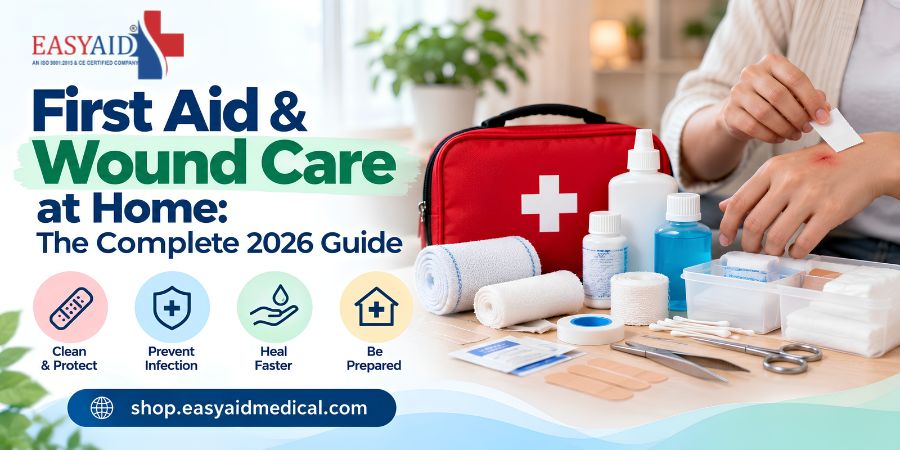
First Aid & Wound Care at Home: The Complete 2026 Guide
A small cut while cooking, a scraped knee, a minor burn or a sudden nosebleed can happen without warning. When it does, having basic first aid supplies at home can help you respond quickly while deciding whether medical attention is needed.
A good home first aid kit is not meant to replace a doctor or hospital. Its purpose is simple: help you manage minor injuries safely until they heal or until professional care is available.
This first aid guide home checklist explains what to keep at home, how to deal with common minor injuries, how to clean and cover wounds, and which situations should not be handled with home first aid alone.
For families in India, it is also useful to keep emergency contacts and information about the nearest healthcare facility alongside the kit.
Why Every Home Needs a First Aid Kit
You don’t need a large medical cabinet filled with products.
A practical first aid kit should contain basic supplies for:
- Minor cuts and scrapes
- Small wounds
- Minor burns
- Bleeding
- Blisters
- Sprains and minor strains
- Basic wound dressing
- Hand protection during first aid
The contents can be adjusted depending on the people in your household. A home with young children may need different supplies from one caring for an elderly person.
WHO’s first-aid guidance emphasises first making sure the environment is safe before helping an injured person. The first priority is to avoid becoming another casualty.
Home First Aid Kit Guide India: What Should You Keep?
A useful kit should contain products that are easy to identify and use.
1. Adhesive Bandages
Adhesive bandages are useful for small, superficial cuts and abrasions.
Keep several sizes available because a small finger cut and a larger scrape may require different coverage.
Choose clean, individually packaged products where possible.
2. Sterile Gauze
Sterile gauze is useful for covering wounds and absorbing blood or wound fluid.
Different sizes can be helpful.
Gauze should be stored in its original packaging until needed so it remains clean.
3. Roller Bandages
Roller bandages can help secure dressings or provide support where appropriate.
Do not wrap a bandage so tightly that it causes numbness, increasing pain, colour changes or circulation problems.
WHO first-aid guidance recommends using a bandage without making it excessively tight.
4. Medical Gloves
Disposable gloves create a barrier between the caregiver and blood or other body fluids.
Wear gloves when dealing with an open wound or bleeding.
If gloves are unavailable during an urgent situation, WHO guidance notes that a clean plastic barrier can be used to protect the hands temporarily.
Wash your hands before and after providing first aid whenever possible.
5. Antiseptic or Wound-Cleaning Supplies
Follow the instructions of the product you use and avoid applying unnecessary substances to open wounds.
For many minor wounds, clean running water is an important part of initial cleaning.
For specific injuries such as animal bites, the cleaning requirements can be more extensive. India’s National Centre for Disease Control recommends immediate, thorough washing and flushing of bite wounds with soap and running water and advises appropriate medical assessment for rabies and tetanus prevention.
6. Scissors and Tweezers
A pair of clean scissors can be useful for cutting tape, gauze or bandages.
Tweezers may be useful for removing a small superficial splinter when it can be removed easily and safely.
Do not use tweezers to dig deeply into a wound or attempt to remove an object that is embedded.
7. Medical Tape
Medical tape can secure gauze and other dressings.
Choose a product appropriate for skin contact and avoid wrapping it too tightly.
8. Digital Thermometer
A digital thermometer is a useful addition to a family first aid kit.
It can help you check temperature when someone develops a fever or feels unwell.
A thermometer does not identify the cause of a fever. Persistent or concerning symptoms require medical assessment.
How to Handle a Minor Cut or Scrape
For a small wound, start by making sure the surroundings are safe.
Step 1: Wash Your Hands
Clean your hands before touching the wound.
If available, wear disposable gloves.
Step 2: Control Bleeding
Apply gentle, direct pressure using clean gauze or another clean material.
For most minor cuts, bleeding should gradually stop with pressure.
Step 3: Clean the Wound
Once bleeding is controlled, rinse the wound with clean running water.
Clean the surrounding skin carefully.
Avoid putting household substances such as turmeric, toothpaste, oil, chilli powder or other irritants on an open wound.
For bite wounds, the Government of India’s NCDC specifically warns against applying irritants such as chilli, oil, turmeric, lime or salt and recommends thorough washing.
Step 4: Cover the Wound
Use a sterile dressing or adhesive bandage appropriate for the wound.
Change the dressing if it becomes wet or dirty.
Step 5: Monitor the Wound
Watch for:
- Increasing redness
- Swelling
- Worsening pain
- Pus or unusual discharge
- Fever
- Red streaks spreading from the wound
These can indicate infection and should be assessed by a healthcare professional.
What to Do for a Minor Burn
Burns commonly happen at home through hot liquids, hot surfaces, flames or other sources. WHO notes that burns occur frequently in homes and recommends appropriate first aid and medical assessment depending on severity.
For a minor thermal burn:
- Move away from the heat source.
- Remove clothing or jewellery near the affected area if it is not stuck to the skin.
- Cool the burn with cool running water.
- Protect the area with a clean covering.
- Seek medical advice if the burn is extensive, deep or in a sensitive location.
WHO specifically advises against putting ice, oil, turmeric, paste or raw cotton directly on a burn.
Do Not Break Blisters
If a blister forms, don’t deliberately pop it at home.
If the burn is large, deep, involves the face, hands, feet, genitals or major joints, or was caused by electricity or chemicals, seek medical attention promptly.
What to Do if a Wound Is Bleeding
Bleeding can look alarming, but the first step is usually straightforward.
Use a clean dressing or gauze and apply firm, direct pressure to the wound.
Keep pressure on the wound rather than repeatedly lifting the dressing to check whether bleeding has stopped.
WHO first-aid material recommends direct pressure for bleeding and referral when bleeding is not controlled.
Seek urgent medical help if:
- Bleeding is heavy
- Blood is spurting
- Bleeding does not stop with firm pressure
- The wound is deep or large
- There is a major crush injury
- The person becomes weak, faint or confused
- An object is embedded in the wound
If an object is deeply embedded, do not pull it out yourself.
Animal Bites and Human Bites Need Special Attention
A bite is different from a simple scratch.
Dog, cat, monkey, and other animal bites can carry infection and may create a risk of rabies depending on the animal and circumstances.
For a suspected rabies exposure, India’s NCDC recommends immediate wound washing with soap and running water and appropriate follow-up for post-exposure treatment.
After washing the wound:
- Seek medical evaluation promptly.
- Do not apply irritants such as chilli, turmeric, oil or lime.
- Ask about tetanus protection.
- Follow the recommended rabies post-exposure protocol when indicated.
Do not wait for symptoms before seeking care after a potentially risky animal bite.
First Aid for Sprains and Minor Injuries
A minor sprain may cause pain, swelling and difficulty moving the affected area.
Stop the activity that caused the injury and protect the affected area from further strain.
Depending on the injury and medical advice, supportive measures may include rest and appropriate cold therapy during the early period.
Do not force a painful joint to move.
Seek medical assessment if:
- The person cannot put weight on the limb
- There is significant swelling
- The joint looks deformed
- There is severe pain
- There is numbness
- You suspect a fracture
A first aid kit cannot determine whether an injury is a sprain or fracture.
Wound Care at Home: Do’s and Don’ts
Do:
- Wash your hands before handling a wound.
- Use clean or sterile dressing materials.
- Keep the wound appropriately covered.
- Change a dressing when it becomes wet or dirty.
- Monitor for signs of infection.
- Keep first aid supplies clean and organised.
- Follow professional advice for wounds requiring ongoing care.
Don’t:
- Put toothpaste, turmeric, coffee powder, ash or oil on wounds.
- Pour harsh chemicals into a wound.
- Repeatedly touch the wound unnecessarily.
- Use dirty cloths as dressings.
- Wrap bandages so tightly that circulation is affected.
- Ignore worsening pain, swelling or discharge.
WHO wound-management material recommends cleaning wounds and using clean dressings, while avoiding unnecessary creams or ointments during basic first aid.
When Is Home First Aid Not Enough?
Knowing when to stop treating an injury at home is just as important as knowing what to do.
Seek medical care for:
Deep or Large Wounds
A wound with significant tissue damage may need professional cleaning, closure or other treatment.
Uncontrolled Bleeding
If bleeding continues despite sustained direct pressure, seek urgent medical help.
Embedded Objects
Do not attempt to remove deeply embedded glass, metal or other objects yourself.
Severe Burns
Large, deep or specialised-location burns need medical assessment.
Animal Bites
Dog, cat, monkey and other animal bites should be assessed promptly because infection, tetanus and rabies may need to be considered.
Signs of Infection
Increasing redness, swelling, warmth, pain, pus or fever can require medical treatment.
Possible Fracture
Deformity, severe pain, inability to use the limb or significant swelling should be assessed.
Head or Neck Injury
A serious fall or blow to the head can require urgent evaluation, especially if there is loss of consciousness, vomiting, confusion, severe headache or unusual drowsiness.
How to Organise Your Home First Aid Kit
A first aid kit is useful only if you can find what you need quickly.
Keep frequently used supplies together.
A simple organisation system can include:
Wound Care
- Adhesive bandages
- Sterile gauze
- Medical tape
- Roller bandages
- Wound-cleaning supplies
Protection
- Disposable gloves
- Hand sanitiser
Tools
- Scissors
- Tweezers
- Digital thermometer
Emergency Information
- Family doctor’s contact
- Nearest hospital
- Emergency services number
- Important medical information for household members
Store the kit somewhere dry and easily accessible to adults, but away from young children’s reach.
Check Your First Aid Kit Regularly
Don’t wait until someone gets hurt to discover that your bandages expired three years ago.
Check the kit every few months.
Look for:
☐ Expired products
☐ Open or damaged sterile packaging
☐ Empty bandage packs
☐ Dried-out or damaged supplies
☐ Low glove stock
☐ Missing scissors or tape
☐ Non-working thermometer
☐ Outdated emergency contact information
Replace products as needed.
Keep medicines separate if possible and store them according to their individual instructions.
Build a Practical First Aid Kit for an Indian Home
For a basic home first aid kit guide India, start with the supplies most likely to be useful for everyday minor injuries.
Essential
- Adhesive bandages
- Sterile gauze
- Roller bandages
- Medical tape
- Disposable gloves
- Antiseptic/wound-cleaning supplies
- Digital thermometer
- Scissors
- Tweezers
Useful Additions
Depending on your household:
- Burn dressing or appropriate burn-care supplies
- Instant cold pack
- Elastic support bandage
- Eye-wash supplies where appropriate
- Extra protective gloves
- Disposable waste bags
The kit should reflect your household’s needs rather than simply containing the maximum number of products.
First Aid Supplies for Children and Older Adults
Children may be more likely to experience minor cuts, scrapes and falls.
Older adults may have additional concerns such as fragile skin, reduced sensation, balance problems or medicines that affect bleeding risk.
If an elderly family member takes blood-thinning medication, for example, even an apparently minor injury may deserve more attention depending on the circumstances.
Don’t make assumptions about an injury based only on how it looks.
If you are unsure, contact a healthcare professional.
How to Choose Bandages and Dressings
Different wounds need different types of coverage.
For a small superficial cut, an adhesive bandage may be enough.
For a larger wound, sterile gauze secured with medical tape or a suitable bandage may be more appropriate until professional assessment is available.
When choosing bandages, consider:
- Size
- Adhesive quality
- Skin sensitivity
- Breathability
- Sterility
- Intended use
Keep several sizes available rather than relying on one standard bandage.
Why Gloves Belong in Every First Aid Kit
Gloves are easy to overlook, but they are an important part of basic wound care.
They help create a barrier between the caregiver’s hands and blood or body fluids.
Choose disposable gloves that fit comfortably and keep them sealed in their packaging until needed.
After removing gloves, dispose of them appropriately and wash your hands.
Final First Aid Checklist
Before calling your home first aid kit complete, check:
☐ Adhesive bandages
☐ Sterile gauze
☐ Medical tape
☐ Roller bandage
☐ Disposable gloves
☐ Wound-cleaning supplies
☐ Digital thermometer
☐ Scissors
☐ Tweezers
☐ Burn-care supplies
☐ Cold pack
☐ Emergency contact information
☐ Regular expiry-date check
A well-prepared kit can help you respond to minor injuries without scrambling around the house looking for a clean bandage.
But preparation has limits. Serious injuries need professional medical care.
FAQs
1. What should be included in a home first aid kit?
A basic home kit can include adhesive bandages, sterile gauze, medical tape, roller bandages, disposable gloves, wound-cleaning supplies, a digital thermometer, scissors and tweezers. Depending on your family’s needs, you may also add burn-care supplies and cold packs.
2. How should I clean a minor wound at home?
Wash your hands first, control bleeding with gentle direct pressure and rinse the wound with clean running water. Cover it with an appropriate clean or sterile dressing. Avoid putting household substances such as turmeric, toothpaste or oil on an open wound.
3. Should I put turmeric or toothpaste on a burn or cut?
No. These household remedies are not recommended for open wounds or burns. WHO specifically advises against applying substances such as oil, turmeric, paste or raw cotton to burns.
4. When should I see a doctor for a wound?
Seek medical care for heavy or uncontrolled bleeding, deep or large wounds, embedded objects, serious burns, animal bites, possible fractures or signs of infection such as increasing redness, swelling, pus, worsening pain or fever.
5. How often should I check my home first aid kit?
Check it every few months and after using it. Replace expired, damaged or used supplies. Sterile products should remain sealed until needed, and equipment such as thermometers should be checked periodically to ensure they work properly.
Conclusion
A home first aid kit does not need to be complicated.
A small collection of reliable supplies such as bandages, sterile gauze, gloves, medical tape, wound-cleaning products and a thermometer can cover many everyday situations.
The most important part of first aid, however, is knowing the boundary between a minor injury and one that needs professional care.
Keep your supplies organised, learn basic first aid, avoid unsafe home remedies and seek medical attention when an injury is serious or getting worse.
For everyday wound-care preparation, you can explore Easyaid Medical’s Bandages and Gloves range and build a first aid kit around the needs of your household.
Shop Bandages →
Shop Disposable Gloves →
Medical Disclaimer: This article is for general health awareness and educational purposes. It does not replace professional medical advice, diagnosis or treatment. For serious injuries, uncontrolled bleeding, major burns, suspected fractures, animal bites or other emergencies, seek appropriate medical care immediately.