








Difference Between Acute and Chronic Conditions
Healthcare terms can often sound confusing, especially when doctors describe illnesses as “acute” or “chronic”. While these words are commonly used in medical conversations, many people are unsure what they actually mean.
Understanding the difference between acute vs chronic conditions is important because it helps patients better understand diagnoses, treatment plans, recovery timelines, and long-term health management.
This guide explains these terms in simple language, compares their characteristics, and highlights why recognising the difference matters for overall healthcare awareness.
What Is the Difference Between Acute and Chronic Conditions?
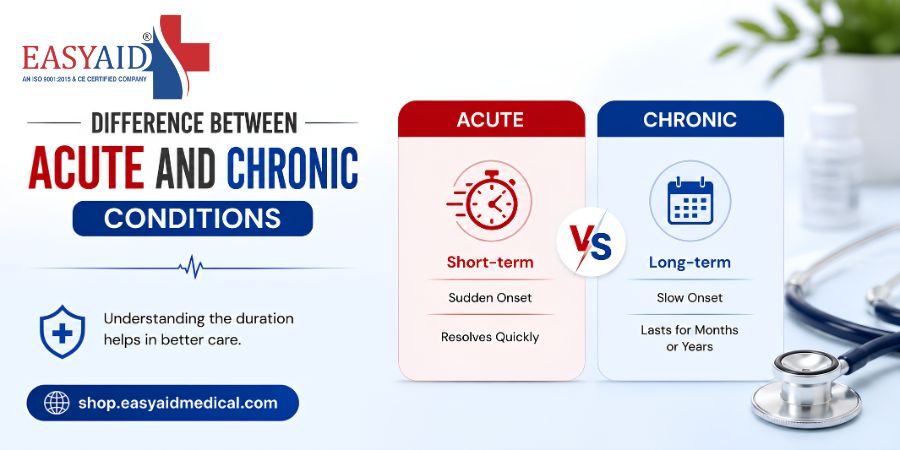
Acute conditions develop suddenly and last for a short period, while chronic conditions develop gradually and persist for months or years.
Simple Breakdown:
- Acute = Short-term and sudden
- Chronic = Long-term and ongoing
This distinction helps healthcare professionals decide the best treatment and management approach.
What Are Acute Conditions?
Acute conditions appear quickly and often require immediate attention.
Characteristics of Acute Conditions
- Sudden onset
- Short duration
- Symptoms are often intense
- May resolve completely with treatment
Examples:
- Flu or viral fever
- Sprained ankle
- Food poisoning
- Acute infections
Many acute conditions improve within days or weeks.
What Are Chronic Conditions?
Chronic conditions develop slowly and may require ongoing management.
Characteristics of Chronic Conditions
- Long-lasting
- Gradual progression
- Often require lifestyle adjustments
- May not have a complete cure
Examples:
- Diabetes
- Hypertension
- Asthma
- Arthritis
These conditions often need long-term monitoring and care.
Acute vs Chronic Conditions: Simple Comparison
| Factor | Acute Conditions | Chronic Conditions |
|---|---|---|
| Onset | Sudden | Gradual |
| Duration | Short-term | Long-term |
| Severity | Often intense | May vary over time |
| Treatment | Immediate care | Ongoing management |
| Recovery | Usually complete | Often managed long-term |
This comparison makes understanding acute vs chronic conditions easier.
Also Read – Understanding Common Medical Terms
Common Symptoms of Acute Conditions
Symptoms May Include:
- Sudden pain
- Fever
- Swelling
- Fatigue
- Rapid onset of discomfort
Symptoms often appear quickly and clearly.
Common Symptoms of Chronic Conditions
Symptoms May Include:
- Persistent fatigue
- Ongoing pain
- Breathing difficulties
- Blood sugar imbalance
- Long-term inflammation
Symptoms may fluctuate over time.
How Acute Conditions Can Become Chronic
Some acute conditions may turn chronic if not managed properly.
Examples:
- Repeated stress leading to chronic anxiety
- Untreated injuries causing long-term pain
- Persistent infections leading to complications
Early care and prevention are important.
Causes of Acute Conditions
Acute illnesses often result from:
- Infections
- Injuries
- Sudden environmental exposure
- Temporary stress or inflammation
They usually have a specific and identifiable trigger.
Causes of Chronic Conditions
Chronic conditions are often linked to:
- Genetics
- Lifestyle habits
- Long-term stress
- Poor diet and inactivity
These factors contribute gradually over time.
Treatment Approaches: Acute vs Chronic Conditions
Treatment for Acute Conditions
- Immediate medical attention
- Short-term medications
- Rest and recovery
Treatment for Chronic Conditions
- Long-term lifestyle management
- Regular monitoring
- Ongoing medical support
Treatment depends on the type and severity of the condition.
Lifestyle and Long-Term Health
Healthy lifestyle habits play a major role in preventing chronic diseases.
Important Factors:
- Balanced nutrition
- Physical activity
- Stress management
- Quality sleep
Why Understanding the Difference Matters
Knowing whether a condition is acute or chronic helps patients:
- Understand recovery expectations
- Follow treatment correctly
- Make informed health decisions
- Recognize when medical care is needed
Healthcare literacy improves overall well-being.
Acute vs Chronic Pain
Pain can also be categorised as acute or chronic.
| Type of Pain | Description |
|---|---|
| Acute Pain | Short-term pain after injury or illness |
| Chronic Pain | Pain lasting for months or longer |
Understanding pain type helps guide treatment.
Mental Health: Acute and Chronic Conditions
Mental health conditions can also be acute or chronic.
Examples:
- Acute stress reactions
- Chronic anxiety or depression
Early awareness and support are essential.
How Prevention Helps Reduce Chronic Conditions
Many chronic conditions can be reduced through:
- Regular health screenings
- Healthy habits
- Stress management
- Preventive healthcare awareness
Prevention is one of the most effective healthcare strategies.
When to Seek Medical Help
You should seek medical attention if symptoms are severe, persistent, or interfere with daily functioning.
Warning Signs Include:
- Severe pain
- Difficulty breathing
- Persistent fatigue
- Sudden worsening symptoms
Professional guidance ensures proper care.
Common Myths About Acute and Chronic Conditions
Myth 1: Acute Means Minor
Some acute conditions can be serious and require urgent care.
Myth 2: Chronic Conditions Always Worsen
Many chronic conditions can be managed effectively with proper care.
Conclusion
Understanding the difference between acute vs chronic conditions is an important part of healthcare awareness. Acute conditions are sudden and short-term, while chronic conditions develop gradually and require long-term management.
Recognising these differences helps individuals make informed health decisions, seek timely care, and adopt healthier lifestyle habits for long-term well-being.
FAQs (Optimized for Featured Snippets)
1. What is the difference between acute and chronic conditions?
Acute conditions are sudden and short-term, while chronic conditions last for a long time.
2. Can acute conditions become chronic?
Yes, some untreated acute conditions may develop into chronic problems.
3. What are examples of acute conditions?
Flu, injuries, and infections are common acute conditions.
4. What are examples of chronic conditions?
Diabetes, hypertension, and arthritis are chronic conditions.
5. Why is it important to understand acute vs chronic conditions?
It helps patients understand treatment, recovery expectations, and long-term health management.