








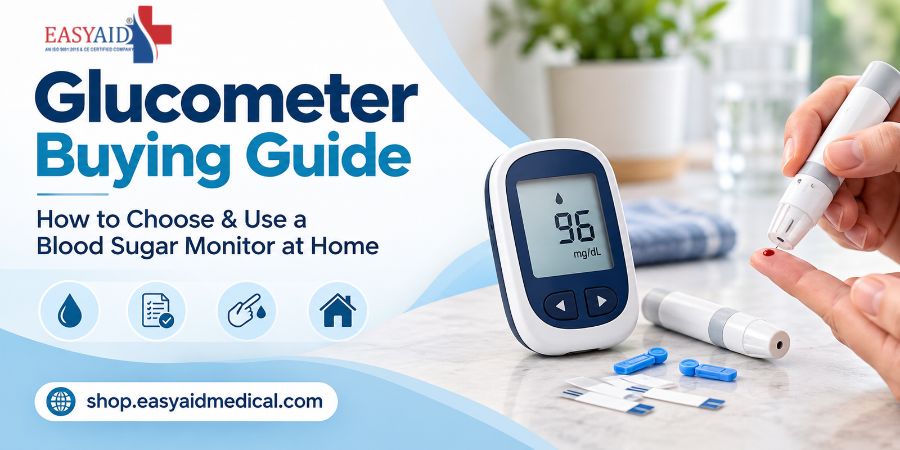
Glucometer Buying Guide: How to Choose and Use a Blood Sugar Monitor at Home
Managing blood sugar at home can become much easier with the right glucometer.
A blood glucose meter, commonly called a glucometer, gives a blood sugar reading from a small sample of blood. For people who have been advised to monitor their glucose, this information can help them follow their healthcare plan and share useful records with their doctor.
However, choosing a meter is not as simple as picking the cheapest device online.
You need to consider accuracy, test-strip availability, ease of use, sample size, display, storage and ongoing cost. The right device should also suit the person who will use it.
This glucometer buying guide explains what to look for before buying a blood sugar monitor, how to use one correctly and how to avoid common testing mistakes.
Medical note: This article is for general health education. It does not replace medical advice or an individual diabetes management plan. Follow your healthcare professional’s instructions for blood glucose testing.
What Is a Glucometer?
A glucometer is a portable device that measures blood glucose from a small blood sample.
Most home testing systems use three main components:
- Glucose meter
- Test strips
- Lancets or a lancing device
You place a test strip into the meter and obtain a small blood sample using the lancing device. The meter then displays the glucose result.
Modern meters may also offer features such as memory storage, Bluetooth connectivity, smartphone apps and averages of previous readings.
These features can be useful. Still, the basic job remains the same: providing a blood glucose reading for monitoring.
WHO recognises blood glucose meters and test strips as important medical devices for diabetes management and highlights the importance of access to quality-assured equipment.
Who May Need a Glucometer at Home?
A glucometer can be useful for people who have been advised to monitor blood glucose at home.
The need for self-monitoring depends on the person’s type of diabetes, treatment, health condition and medical plan.
For example, people using insulin may need regular self-monitoring. Some other patients may also need testing at particular times or during specific situations.
WHO recommends self-monitoring of blood glucose for people with type 1 and type 2 diabetes who use insulin, based on individual clinical need.
Indian guidance also discusses self-monitoring of blood glucose in people with diabetes, including people using insulin and those at risk of conditions such as recurrent hypoglycaemia.
Therefore, don’t assume that everyone with diabetes needs the same testing schedule.
Your healthcare professional can tell you when and how often to test.
How to Choose a Glucometer for Home Use
If you’re wondering how to choose a glucometer for home, start with practical features rather than advertisements.
1. Look for a Reliable and Quality-Assured Device
Accuracy is the first thing to consider.
A glucose meter is a medical device. Its reading can influence decisions about diabetes care, so quality matters.
Look for a product from a reputable manufacturer. Check the product information, instructions, applicable quality standards and regulatory details.
ICMR guidance notes that several types of glucometers are available and discusses differences in technology and accuracy.
Don’t select a meter simply because it has the largest display or the most smartphone features.
A reliable device with suitable ongoing support is more useful.
2. Check the Cost of Test Strips
This is one of the most important buying decisions.
The meter is usually a one-time purchase. Test strips, however, are recurring expenses.
Before buying, check:
- Price per strip
- Pack size
- Availability in your area
- Shelf life
- Storage instructions
- Whether the strips are easy to reorder
A low-cost glucometer can become expensive if its test strips cost significantly more.
Therefore, calculate the approximate monthly testing cost before making your decision.
3. Check the Required Blood Sample
Different meters may require different sample volumes.
A smaller required sample can make testing more comfortable, especially for people who test frequently.
Check the manufacturer’s instructions for the required sample size.
Don’t assume that every meter uses the same amount of blood.
4. Choose a Clear Display
A large, readable screen can make daily testing easier.
This matters even more for older adults or people with poor eyesight.
Look for:
- Large numbers
- Clear symbols
- Good screen contrast
- Simple buttons
- Easy-to-understand alerts
A complicated interface can discourage regular use.
5. Consider Memory and Data Storage
Many modern glucometers store previous readings.
This feature can help you review your results and discuss patterns with your healthcare professional.
Some devices can also:
- Store hundreds of readings
- Calculate averages
- Record testing times
- Connect to mobile apps
- Transfer data electronically
These features are helpful when they fit your routine.
They are not essential for everyone.
6. Check Whether Coding Is Required
Older glucose meters may require manual coding when you open a new strip batch.
Some modern meters do not require this step.
A no-coding system can reduce one possible user error.
ICMR guidance discusses coding and non-coding meters and notes that coding errors can affect readings.
If you want a simple device for regular home use, check whether the meter requires manual coding.
7. Check Warranty and Customer Support
Medical equipment should come with clear product information.
Before purchasing, check:
- Warranty period
- Customer support
- Availability of replacement accessories
- Instruction manual
- Service contact information
These details become important if the meter stops working or you have questions about its operation.
Glucometer Buying Checklist
Before ordering a blood glucose monitor, check these points:
☐ Reliable manufacturer
☐ Appropriate quality and regulatory information
☐ Affordable test strips
☐ Test strips easily available
☐ Suitable sample requirement
☐ Easy-to-read display
☐ Simple operation
☐ Memory function if required
☐ Clear instructions
☐ Warranty and customer support
☐ Lancets and accessories readily available
This checklist can help you compare products without getting distracted by unnecessary features.
What Comes in a Glucometer Kit?
A basic blood glucose monitoring kit may contain:
Blood Glucose Meter
This is the electronic device that reads the glucose level from the test strip.
Test Strips
The strip receives the blood sample and works with the meter.
Always use the strips recommended for your specific meter.
Lancets
Lancets are small, sterile needles designed for obtaining a blood sample.
Never share used lancets.
Lancing Device
This device holds the lancet and helps obtain the blood sample.
Carrying Case
A case can keep the meter and accessories together.
Some kits also include batteries, a control solution or other accessories.
Check the package contents before purchasing because kits can differ between manufacturers.
How to Use a Glucometer at Home
Correct technique matters.
Even a good device may produce an unreliable result if you use it incorrectly.
Step 1: Wash and Dry Your Hands
Wash your hands with soap and water.
Dry them properly before testing.
Food residue or moisture on your fingers can interfere with some glucose measurements.
Step 2: Prepare the Meter
Keep the meter, test strip and lancing device ready.
Check the test strip expiry date.
Don’t use damaged strips.
Step 3: Insert the Test Strip
Insert the strip according to the manufacturer’s instructions.
Some meters turn on automatically when the strip is inserted.
Step 4: Prepare the Lancing Device
Use a fresh lancet according to the device instructions.
Set the lancing device as recommended by the manufacturer.
Step 5: Obtain the Blood Sample
Use the recommended part of the fingertip or another approved site.
Apply the blood to the test strip as instructed.
Avoid excessive squeezing because technique can affect the sample.
Step 6: Wait for the Reading
The meter will display the result after processing the sample.
Record the result if your healthcare professional has asked you to maintain a glucose log.
Step 7: Dispose of the Lancet Safely
Place used lancets in an appropriate sharps container or follow local disposal guidance.
Do not leave used lancets loose where another person could accidentally touch them.
When Should You Check Blood Sugar?
There is no single testing schedule for every person.
Your healthcare professional may recommend testing:
- Before meals
- After meals
- At bedtime
- Before or after physical activity
- When you feel symptoms of low or high blood sugar
- During illness
- At other specific times based on your treatment plan
The schedule depends on the person’s condition and treatment.
ICMR guidance recommends self-monitoring in specific diabetes-management situations, while WHO also frames self-monitoring around individual clinical need.
Therefore, don’t copy someone else’s testing routine.
Follow the plan given to you.
How to Store Glucose Test Strips
Test strips need proper storage.
Keep them according to the manufacturer’s instructions.
In general:
- Keep the container closed.
- Protect strips from moisture.
- Avoid excessive heat.
- Check the expiry date.
- Don’t use damaged or discoloured strips.
- Don’t transfer strips to another container unless the manufacturer specifically allows it.
Poor storage can affect test-strip performance.
For this reason, read the storage instructions when you first open a new pack.
Common Glucometer Mistakes to Avoid
Even simple testing can go wrong when basic steps are skipped.
Testing With Wet Hands
Water or moisture can affect the sample.
Always dry your hands properly.
Testing Immediately After Handling Food
Food residue can affect the result.
Wash your hands before testing.
Using Expired Test Strips
An expired strip may not provide a reliable reading.
Always check the date.
Using the Wrong Strip
Test strips are generally designed for specific meters.
Use the correct strips for your device.
Reusing Lancets
A lancet is intended for single use.
Use a fresh one as instructed.
Sharing Lancets
Never share lancets between people.
This creates an infection risk.
Ignoring Unusual Results
Don’t automatically assume that an unexpected result is correct or incorrect.
If a result does not match how you feel, follow your healthcare professional’s instructions for repeating the test or seeking advice.
What Can Affect a Blood Glucose Reading?
Several factors can influence a glucose reading.
These may include:
- Food
- Physical activity
- Stress
- Illness
- Medication
- Timing of the test
- Testing technique
- Test-strip condition
- Device performance
For this reason, one reading should be interpreted in context.
If your results repeatedly differ from the range discussed with your healthcare professional, share the readings with them.
Glucometer vs CGM: What’s the Difference?
A glucometer and a continuous glucose monitor, or CGM, are different types of glucose-monitoring technology.
A glucometer measures blood glucose from a small blood sample at a particular time.
A CGM uses a sensor to track glucose continuously or at frequent intervals, depending on the system.
A glucometer may be suitable for people who need occasional or scheduled finger-stick testing.
A CGM may be useful for people who need more continuous glucose information.
The choice depends on medical needs, treatment, cost and professional advice.
WHO includes blood glucose meters and related supplies among medical devices used in diabetes care.
How Much Does a Glucometer Cost?
The purchase price is only one part of the total cost.
When comparing glucometers in India, consider:
Initial cost: Price of the meter and starter kit.
Test-strip cost: The biggest recurring expense for many users.
Lancet cost: Regular testing requires fresh lancets.
Accessories: Batteries, carrying cases and other accessories may add to the long-term cost.
Replacement: The device may eventually need replacement.
Therefore, compare the total cost of regular use rather than looking only at the meter price.
Can One Glucometer Be Used by the Whole Family?
The device itself may be used in a household according to the manufacturer’s instructions. However, blood-contact components require careful infection-control practices.
Never share used lancets.
Also follow the manufacturer’s instructions for cleaning and disinfecting the meter if more than one person uses it.
For people who require regular testing, having a personal meter can make routine monitoring simpler.
What Should You Record Along With Your Reading?
A glucose number becomes more useful when you know when and why it was taken.
Your record can include:
| Date | Time | Glucose Reading | Before/After Meal | Notes |
|---|---|---|---|---|
| ___ | ___ | ___ | ___ | ___ |
You may also record relevant details such as exercise, illness or symptoms when your healthcare professional recommends it.
A written notebook works.
A mobile app can work too.
Choose the method you will actually use consistently.
When Should You Contact a Healthcare Professional?
Your glucometer should support your diabetes-care plan.
Contact your healthcare professional if:
- Your readings repeatedly fall outside your personal target range.
- You notice a new pattern of unusual readings.
- You experience repeated symptoms of low or high blood sugar.
- You are unsure how to interpret your readings.
- Your meter repeatedly gives unexpected results.
- You have questions about changing medication based on readings.
Do not change diabetes medication or insulin doses on your own unless your healthcare professional has given you a specific action plan.
If someone has severe symptoms, confusion, loss of consciousness, difficulty breathing or another medical emergency, seek urgent medical care.
How to Buy a Glucometer Online
Online shopping gives you many choices.
Before placing an order, check the complete product information.
Look for:
Product Details
Confirm the meter model, included accessories and intended use.
Strip Compatibility
Check which test strips the meter requires.
Ongoing Availability
Make sure you can purchase compatible strips and lancets later.
Instructions
Look for a clear user manual and operating instructions.
Warranty
Check the warranty and customer-support information.
Seller Information
Buy from a reliable medical supplier or authorised source where possible.
This approach can help you avoid buying a meter that looks affordable initially but becomes difficult or expensive to maintain.
Why Test-Strip Availability Matters
Imagine buying a glucometer today and discovering a few months later that its compatible strips are difficult to find.
That can make regular monitoring frustrating.
Therefore, check strip availability before purchasing the meter.
For frequent users, recurring strip cost may matter more than the original device price.
WHO’s work on diabetes technologies also highlights the importance of availability and affordability of blood glucose meters and test strips.
Quick Glucometer Buying Guide for Indian Homes
If you want a simple decision process, start here.
Need regular blood glucose testing?
Choose a reliable meter with easily available strips.
Buying for an older adult?
Prioritise a large display and simple operation.
Testing frequently?
Compare the ongoing cost of strips and lancets.
Want digital records?
Consider memory, Bluetooth or app connectivity.
Sharing equipment within the family?
Follow cleaning instructions and never share used lancets.
Unsure which device or testing schedule is appropriate?
Ask your healthcare professional.
FAQs
1. Which glucometer is best for home use?
The best glucometer depends on the user’s needs. Look for a reliable device with clear instructions, suitable accuracy, affordable test strips, easy operation and good availability of supplies.
2. How do I choose a glucometer for home?
Compare the meter’s reliability, test-strip cost, sample requirement, display, memory, ease of use, warranty and availability of replacement strips. For regular users, ongoing strip cost is especially important.
3. How often should I check my blood sugar with a glucometer?
The frequency depends on your diabetes type, treatment and healthcare plan. Some people may need frequent testing, while others may need it at specific times. Follow the schedule given by your healthcare professional.
4. Can I use expired test strips?
It is best not to use expired test strips. Follow the manufacturer’s instructions and use strips within their stated expiry period and storage conditions.
5. Is a glucometer better than a CGM?
They serve different purposes. A glucometer provides a blood glucose reading at a particular time, while a CGM provides ongoing glucose information through a sensor. Your healthcare professional can help determine which option suits your needs.
Final Thoughts
A good glucometer should make blood sugar monitoring easier, not more complicated.
When buying one, look beyond the meter’s price.
Check the reliability of the device, test-strip availability, ongoing cost, display, ease of use and customer support. Most importantly, choose a system that fits the monitoring plan recommended by your healthcare professional.
Once you have the right equipment, learn the correct testing technique and keep your supplies stored properly.
Regular records can also make conversations with your doctor more useful.
If you’re looking for a blood sugar monitor for home use, explore EasyAid Medical’s glucose-monitoring range and choose the equipment that fits your testing needs.
Medical Disclaimer: This article is intended for general health education and awareness. It does not replace medical diagnosis, treatment or individual advice from a qualified healthcare professional. Do not change insulin, diabetes medication or your testing schedule without appropriate medical guidance.