








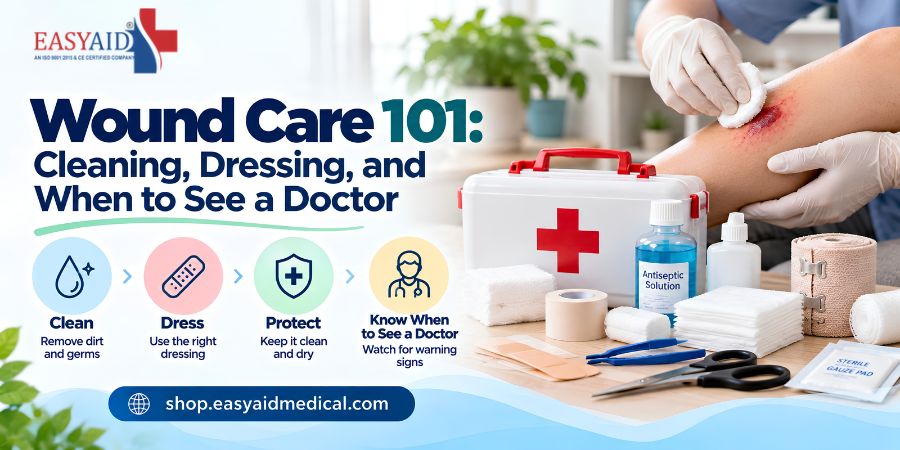
Wound Care 101: Cleaning, Dressing, and When to See a Doctor
A small cut while cooking. A scraped knee after a fall. A blister that has broken open. Minor wounds are part of everyday life, and knowing how to handle them can make home first aid much less stressful.
The basic goal of wound care is straightforward: control bleeding, clean the wound, protect it with an appropriate dressing, and watch for signs that it needs professional attention.
This wound dressing guide explains the basics of cleaning and covering minor wounds at home, what supplies to keep ready, common mistakes to avoid, and when you should stop treating a wound yourself and see a doctor.
WHO’s Basic Emergency Care guidance includes wound cleaning, bleeding control and appropriate dressing as part of initial wound management.
Important: This guide is for general first-aid awareness. It is not a substitute for medical examination, diagnosis or treatment. Deep wounds, severe bleeding, serious burns, animal bites and other significant injuries require professional medical care.
What is Wound Care?
Wound care means looking after an injured area of skin so it can remain clean and protected while it heals.
For a minor wound, this usually involves:
- Cleaning the wound
- Controlling bleeding
- Covering it with an appropriate dressing
- Keeping the dressing clean
- Monitoring the wound as it heals
A wound dressing can also protect an injured area from friction, dirt and further irritation.
WHO guidance describes cleaning as an important part of preventing wound infection and recommends appropriate dressings for wounds.
What Supplies Do You Need for Basic Wound Care?
You don’t need a huge medical cupboard for everyday minor injuries.
A practical home wound-care kit can include:
1. Sterile Gauze
Sterile gauze can be used to cover a wound and absorb blood or wound fluid.
Keep different sizes available for different situations.
2. Adhesive Bandages
Adhesive bandages are convenient for small cuts, scratches, and superficial wounds.
Keep different sizes because a fingertip injury may need a different size from a scrape on the knee.
3. Crepe Bandage
A crepe bandage can help secure a dressing or provide support where appropriate.
It should not be treated as a replacement for a wound dressing.
If a wound needs gauze, the gauze goes over the wound, and the crepe bandage may be used to secure it when suitable.
4. Disposable Gloves
Gloves provide a barrier between the caregiver’s hands and blood or body fluids.
Use them when appropriate while providing first aid.
5. Medical Tape
Medical tape can be used to secure gauze and other dressings.
Choose a product suitable for skin contact and follow its instructions.
6. Clean Water
For many minor wounds, clean running water is an important part of cleaning.
Keep in mind that the cleaning approach can change depending on the type and severity of the wound.
How to Dress a Wound at Home
If you’re wondering how to dress a wound at home, start with a simple sequence.
Step 1: Make Sure the Area Is Safe
Before helping someone, check the surroundings.
If there is broken glass, an electrical hazard, fire, chemicals or another danger, deal with the hazard or move to a safe location before providing first aid.
You don’t want to become injured while helping someone else.
WHO’s emergency-care guidance places safety and initial assessment at the beginning of first-aid care.
Step 2: Wash Your Hands
Wash your hands thoroughly with soap and clean water before touching the wound.
If appropriate, put on disposable gloves.
This simple step reduces unnecessary contamination during wound care.
Step 3: Control the Bleeding
For a minor bleeding wound, use clean gauze or another clean dressing and apply steady, direct pressure.
Don’t keep lifting the dressing every few seconds to check whether bleeding has stopped.
If blood continues to flow heavily or cannot be controlled with direct pressure, seek urgent medical attention.
WHO first-aid guidance recommends firm pressure for bleeding control and referral when bleeding cannot be controlled.
Step 4: Clean the Wound
Once bleeding is under control, clean the wound.
For many minor cuts and scrapes, clean running water can be used to flush away dirt and debris.
Be gentle.
Avoid aggressively scrubbing an open wound.
WHO materials identify wound cleaning as an important part of preventing infection.
What Should You Avoid Putting on a Wound?
Avoid experimenting with household remedies.
Don’t automatically apply:
- Toothpaste
- Turmeric
- Cooking oil
- Ash
- Powder
- Strong household chemicals
The aim is to clean and protect the wound rather than introduce substances that may irritate it.
WHO guidance for wound care advises against putting antiseptics directly into wounds in certain care settings, while recommending appropriate cleaning and dressing.
Step 5: Cover the Wound
Once the wound is cleaned, cover it with an appropriate dressing.
For a small superficial cut, an adhesive bandage may be enough.
For a larger wound, sterile gauze may provide better coverage.
The dressing should protect the wound without putting unnecessary pressure on it.
Step 6: Secure the Dressing
If you’re using gauze, you may need medical tape or a suitable bandage to keep it in place.
A crepe bandage can sometimes be used to secure a dressing, depending on the wound and body area.
Don’t wrap any bandage so tightly that it causes numbness, tingling, unusual colour changes or increasing discomfort.
Step 7: Keep an Eye on the Wound
Wound care doesn’t end when the dressing goes on.
Check the area regularly.
Look for changes such as:
- Increasing redness
- Increasing swelling
- Worsening pain
- Pus or unusual discharge
- Fever
- Redness spreading around the wound
- Worsening rather than improving appearance
If these signs appear, contact a healthcare professional.
Choosing the Right Wound Dressing
The dressing should match the wound.
Small Cut or Scratch
An adhesive bandage may be suitable if the wound is minor, clean and not heavily bleeding.
Larger Superficial Wound
Sterile gauze may be more practical because it provides greater coverage.
Wound With a Dressing That Needs Securing
Medical tape or an appropriate bandage can help hold the dressing in place.
Joint or Limb Requiring Support
A crepe bandage may be useful for support in some minor injuries when appropriate.
However, severe pain, major swelling, deformity or inability to use the limb should be assessed by a healthcare professional.
Gauze vs Adhesive Bandage: Which One Should You Use?
This is an easy distinction to remember.
Adhesive bandage: Best suited to smaller superficial wounds.
Gauze: Useful when you need more wound coverage or absorption.
Crepe bandage: Generally used to secure a dressing or provide support.
They can work together.
For example, sterile gauze may cover a larger wound while a suitable bandage secures it.
The right choice depends on the size, location and condition of the wound.
Also Read—How to Choose the Right Bandage: Crepe vs Gauze vs Adhesive
How Often Should You Change a Wound Dressing?
There isn’t one universal schedule for every wound.
A dressing may need to be changed when it becomes:
- Wet
- Dirty
- Loose
- Saturated with blood or wound fluid
The condition of the wound also matters.
WHO wound-management guidance notes that dressing requirements vary according to the wound and its level of exudate.
If a healthcare professional has given you specific dressing instructions, follow those instructions.
What If the Dressing Sticks to the Wound?
Don’t pull a stuck dressing away forcefully.
That can disturb healing tissue and cause unnecessary bleeding or pain.
Follow appropriate wound-care guidance and seek professional advice if the dressing cannot be removed comfortably.
For wounds requiring ongoing or specialised dressing care, professional guidance is preferable to experimenting at home.
Wound Care for Common Minor Injuries
Different injuries can require slightly different approaches.
Scrapes
Scrapes often contain dirt or debris.
Clean the area gently with clean water and remove visible superficial debris when it can be done safely.
Cover with an appropriate dressing.
Small Cuts
Control bleeding with direct pressure, clean the wound and cover it.
If the cut is deep, gaping or continues bleeding, seek medical attention.
Blisters
Avoid deliberately breaking a blister at home.
If a blister breaks naturally, keep the area clean and protected.
Minor Burns
Burns require different first-aid considerations from ordinary cuts.
WHO recommends cool running water as basic first aid for burns and advises against applying substances such as oil, turmeric or ice.
Large, deep, or serious burns need medical evaluation.
When Should You See a Doctor for a Wound?
This is one of the most important parts of wound care.
A first aid kit is useful for minor injuries. It should not delay professional care when the injury is serious.
Seek medical attention if:
The Bleeding Won’t Stop
If sustained direct pressure doesn’t control significant bleeding, seek urgent medical care.
The Wound is Deep or Gaping
A deep wound may involve structures beneath the skin and may require professional assessment.
Something is Embedded
Don’t try to dig out deeply embedded glass, metal or another object.
There is Severe Pain or Loss of Function
Difficulty moving a body part, significant weakness, severe pain or deformity may indicate a more serious injury.
There are Signs of Infection
Increasing redness, swelling, warmth, pus, fever or worsening pain should be assessed.
The Injury Came From an Animal Bite
Animal bites need prompt medical assessment because infection and rabies exposure may need to be considered.
For suspected rabies exposure, India’s National Rabies Control Programme advises immediate washing and flushing of the wound with soap or detergent and running water, followed by assessment at a healthcare facility.
The Wound Is Associated With a Major Accident
A wound from a road accident, serious fall, crush injury or other significant trauma may require more than basic first aid.
Wounds That Need Extra Caution
Some people may need earlier medical assessment even when an injury initially looks small.
This can include people with:
- Diabetes
- Poor circulation
- Reduced sensation
- Conditions affecting immune function
- A history of slow wound healing
A small wound on the foot, for example, may deserve particular attention in someone with diabetes because reduced sensation or circulation can make complications harder to notice.
When in doubt, contact a healthcare professional rather than relying solely on home wound care.
Common Wound-Care Mistakes to Avoid
1. Using Dirty Materials
A dirty cloth or reused dressing can introduce contamination.
Use clean or sterile wound-care products as appropriate.
2. Touching the Dressing Surface
Try not to touch the part of the dressing that will directly contact the wound.
3. Wrapping a Bandage Too Tightly
A dressing should protect the wound, not interfere with circulation.
4. Putting Random Home Remedies on the Wound
Toothpaste, turmeric, oil and other household substances aren’t substitutes for appropriate wound care.
5. Ignoring a Worsening Wound
A wound that is getting increasingly painful, swollen or red should not simply be covered again and forgotten.
6. Treating a Deep Wound Like a Small Cut
A deep wound may need professional cleaning, assessment or closure.
A bandage cannot fix an injury that requires medical treatment.
Building a Home Wound-Care Kit
You can keep a small wound-care section inside your home first aid kit.
Basic Supplies
☐ Sterile gauze
☐ Adhesive bandages
☐ Crepe bandage
☐ Medical tape
☐ Disposable gloves
☐ Clean wound-care supplies
☐ Scissors
☐ Tweezers
☐ Digital thermometer
You don’t need to buy every medical product available.
Focus on supplies that are appropriate for minor everyday injuries and keep them clean, sealed and within their expiry dates.
How to Store Wound-Care Supplies
Even good-quality medical supplies are of little use if they are damaged or impossible to find.
Keep wound-care products:
- In a clean, dry place
- Away from excessive heat and moisture
- In their original packaging when possible
- Away from young children’s reach
- In a clearly identified first-aid area
Check the kit periodically.
Replace products that have been used, damaged or expired.
Quick Wound Dressing Checklist
Before dressing a minor wound, remember:
☐ Is the area safe?
☐ Have I washed my hands?
☐ Do I need gloves?
☐ Has bleeding been controlled?
☐ Has the wound been cleaned?
☐ Do I have an appropriate dressing?
☐ Is the dressing clean or sterile as required?
☐ Is the bandage secure but not too tight?
☐ Does the wound need medical assessment?
This simple checklist can help prevent rushed mistakes.
FAQs
1. How do you dress a wound at home?
For a minor wound, wash your hands, control bleeding with clean direct pressure, clean the wound with clean water, and cover it with an appropriate dressing such as a suitable adhesive bandage or sterile gauze. Monitor the wound and seek medical care if it is serious or getting worse.
2. Should I use gauze directly on a wound?
Sterile gauze can be used as a wound dressing when appropriate. Choose a dressing suitable for the wound and avoid touching the part that will contact the wound. If the wound is deep, heavily contaminated or otherwise concerning, seek professional medical advice.
3. How often should I change a wound dressing?
There is no single schedule for every wound. A dressing generally needs attention when it becomes wet, dirty, loose or saturated. Follow any specific instructions given by your healthcare professional.
4. What should I put on a small cut?
For a minor cut, the basic approach is to control bleeding, clean the wound and cover it with an appropriate clean dressing. Avoid applying household substances such as toothpaste, oil or turmeric to an open wound.
5. When should I see a doctor for a wound?
Seek medical attention for heavy or uncontrolled bleeding, deep or gaping wounds, embedded objects, suspected fractures, serious burns, animal bites, signs of infection or wounds that are getting worse instead of improving.
Final Thoughts
Good wound care doesn’t have to be complicated.
For a minor injury, the basics are usually the same: clean your hands, control bleeding, clean the wound, use an appropriate dressing and monitor the area.
The more important skill is knowing when home first aid has reached its limit.
If a wound is deep, heavily bleeding, contaminated, infected-looking or associated with a serious injury, professional medical assessment should take priority.
For everyday wound-care preparation, Easyaid Medical offers essential supplies such as bandages, gauze, crepe bandages and disposable gloves that can help you keep a practical first-aid kit ready at home.
Medical Disclaimer: This article is intended for general health awareness and educational purposes. It does not replace professional medical advice, diagnosis or treatment. If you are dealing with a serious injury, uncontrolled bleeding, deep wound, severe burn, animal bite or other emergency, seek appropriate medical care promptly.