








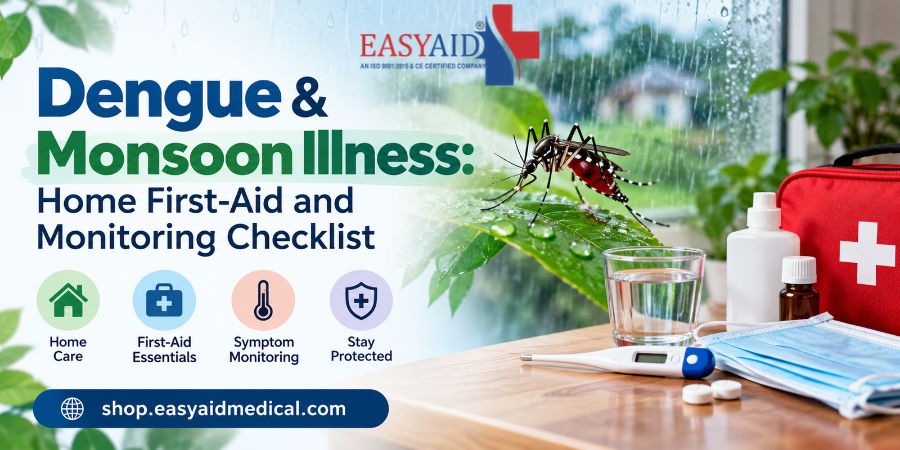
Dengue & Monsoon Illness: Home First-Aid and Monitoring Checklist
Monsoon brings relief from the heat, but it also creates conditions where mosquito-borne and other seasonal illnesses can become more common. Dengue is one of the health concerns families in India need to be prepared for during this season.
A high fever, body ache or weakness may initially look like a routine viral infection. Dengue can also begin with similar symptoms, which is why knowing what to monitor at home and when to seek medical attention is important.
A simple dengue home care kit can help you keep basic monitoring supplies within reach. However, home care should never replace medical evaluation. If dengue is suspected, speak with a doctor, especially if fever is high, persistent or accompanied by other concerning symptoms.
This guide explains what to keep at home, what to monitor, what to avoid and which warning signs should never be ignored.
Why Monsoon Needs Extra Attention
Dengue is transmitted by infected Aedes mosquitoes. These mosquitoes can breed in containers and other places where water collects around homes.
According to the World Health Organization (WHO), dengue commonly causes high fever, headache, pain behind the eyes, muscle and joint pain, nausea, vomiting and sometimes a rash. Most people recover within one to two weeks, but some cases can progress to severe dengue and require hospital care.
The rainy season can also bring other illnesses that cause fever, weakness, vomiting, diarrhoea, cough or body aches. Because symptoms can overlap, it is better to avoid self-diagnosis and keep track of changes in the person’s condition.
What Should a Dengue Home Care Kit Include?
A home kit does not treat dengue. Its purpose is to help you monitor symptoms, maintain basic comfort and stay prepared while following medical advice.
Here is a practical checklist:
1. Digital Thermometer
A reliable digital thermometer is useful for tracking temperature at regular intervals.
Instead of relying on memory, write down:
- Date and time
- Temperature
- Medicines taken, if prescribed
- Fluids consumed
- Urination
- New symptoms
- Any bleeding or unusual changes
A written record can also make it easier to explain the patient’s condition to a doctor.
2. Oral Rehydration Solution
Fever, vomiting and poor fluid intake can increase the risk of dehydration.
Keep ORS at home and use it according to the product instructions or your healthcare professional’s advice. Other fluids may also be recommended depending on the patient’s condition.
WHO guidance for dengue home care stresses adequate fluid intake and monitoring for signs of dehydration.
For infants, children, older adults and people with existing medical conditions, fluid requirements can differ. Follow medical advice rather than forcing large amounts of fluid.
3. Paracetamol, If Recommended
Paracetamol may be used for fever and pain when appropriate, but the correct dose depends on factors such as age, weight and medical history.
Do not start or change medicines simply because someone has a fever. Follow your doctor’s advice or the medicine’s appropriate dosing instructions.
Importantly, WHO advises avoiding aspirin and NSAIDs such as ibuprofen in dengue because they can increase the risk of bleeding.
4. Tissues, Clean Cloth and Basic Hygiene Supplies
Keep clean tissues, soft cloths and hand hygiene supplies available. If the patient vomits or experiences bleeding, proper hygiene becomes particularly important.
5. Mosquito Protection
If someone in the house has suspected or confirmed dengue, preventing further mosquito bites is important. An infected person can transmit the virus to mosquitoes that bite them, which can then spread dengue to other people.
Use measures such as:
- Mosquito nets
- Window and door screens
- Appropriate mosquito repellents
- Full-length clothing
- Removal of stagnant water around the house
WHO recommends mosquito-bite prevention as part of dengue control.
Monsoon First Aid Checklist India: What to Monitor at Home
If a family member has a fever during the monsoon, don’t focus only on the temperature. Watch the person’s overall condition.
Check 1: Temperature
Record the temperature rather than checking randomly throughout the day.
A temperature log can help identify whether fever is continuing, returning or decreasing.
Remember that a fall in fever does not always mean the illness is over. In dengue, warning signs can appear around the time the fever decreases, particularly during the critical phase of illness.
Check 2: Fluid Intake
Ask:
- Is the person drinking normally?
- Are they vomiting repeatedly?
- Are they able to keep fluids down?
- Are they showing signs of dehydration?
Reduced urination can be an important warning sign.
Check 3: Urination
Keep track of how frequently the person is passing urine.
Very little or no urine for several hours, particularly when combined with other symptoms, requires prompt medical attention. WHO guidance identifies reduced or absent urine output as a warning sign.
Check 4: Bleeding
Look for unusual bleeding, including:
- Bleeding from the nose
- Bleeding gums
- Blood in vomit
- Blood in stool
- Black-coloured stool
- Unusual skin spots or patches
- Excessive menstrual bleeding
The Government of India’s National Centre for Vector Borne Diseases Control lists bleeding and other symptoms among signs requiring attention in dengue.
Check 5: Abdominal Pain and Vomiting
Severe abdominal pain or persistent vomiting should not be dismissed as a normal part of fever.
These are recognised warning signs of severe dengue and require urgent medical evaluation.
Check 6: Breathing and Alertness
Pay attention to:
- Difficulty breathing
- Rapid breathing
- Unusual sleepiness
- Restlessness
- Confusion
- Sudden weakness
- Pale, cold or clammy skin
These symptoms can indicate deterioration and should be assessed urgently.
Dengue Warning Signs: When Home Care Is Not Enough
One of the most important parts of a monsoon first aid checklist in India is knowing when to stop monitoring at home and seek immediate medical care.
Seek urgent medical attention if the patient develops:
- Severe abdominal pain
- Persistent vomiting
- Bleeding from the nose or gums
- Blood in vomit or stool
- Black stools
- Difficulty breathing
- Extreme weakness or unusual restlessness
- Pale, cold or clammy skin
- Very little or no urine
- Confusion or significant drowsiness
- Sudden worsening as fever decreases
WHO recommends immediate medical attention when warning signs of severe dengue appear.
The Government of India’s dengue guidance also emphasises early reporting, diagnosis and recognition of warning signs.
Also Blog-Telemedicine: Benefits and Limitations
Do not wait until the next morning if serious warning signs appear.
What Not to Do During Suspected Dengue
Home care becomes safer when families also know what to avoid.
Don’t self-medicate with aspirin or ibuprofen
These medicines can increase bleeding risk in people with dengue. WHO specifically recommends avoiding aspirin and ibuprofen.
Don’t assume that every monsoon fever is dengue
Dengue shares symptoms with several other infections. A healthcare professional may recommend testing based on symptoms, timing and local circumstances.
Don’t ignore the patient after the fever drops
A decrease in temperature can occur around the critical phase of dengue. Continue monitoring for warning signs.
Don’t rely on home remedies as treatment
Fluids, rest and symptom management can support recovery, but they do not replace medical evaluation or treatment when required.
Don’t ignore mosquito control.
Mosquitoes can continue spreading infection within a household. Remove standing water and protect the patient from mosquito bites.
How to Prepare Your Home Before Monsoon
You don’t have to wait until someone develops a fever to prepare.
Keep these basics available:
Home Monitoring
- Digital thermometer
- Notebook or symptom tracking sheet
- Working a weighing scale, if advised by a healthcare professional
Hydration
- ORS
- Clean drinking water
- Suitable fluids recommended for the patient
First Aid
- Clean tissues and cloths
- Basic hygiene supplies
- Any regular medicines prescribed for family members
Mosquito Protection
- Mosquito net
- Repellent
- Window screens where possible
Emergency Information
- Family doctor’s contact number
- Nearest hospital details
- Emergency contact numbers
A little preparation can make it easier to respond calmly when someone develops a sudden fever.
A Simple Daily Dengue Monitoring Sheet
If your doctor has advised home monitoring, you can maintain a simple record like this:
| What to Monitor | Morning | Afternoon | Evening |
|---|---|---|---|
| Temperature | ___ °C | ___ °C | ___ °C |
| Fluids taken | ___ | ___ | ___ |
| Urination | ___ | ___ | ___ |
| Vomiting | Yes / No | Yes / No | Yes / No |
| Abdominal pain | Yes / No | Yes / No | Yes / No |
| Bleeding | Yes / No | Yes / No | Yes / No |
| Energy/alertness | Normal / Low | Normal / Low | Normal / Low |
| Medicines taken | ___ | ___ | ___ |
This is not a substitute for clinical monitoring or laboratory testing. Use it as a practical record to share with your healthcare provider.
When Should You Contact a Doctor?
Contact a healthcare professional when dengue is suspected, particularly if fever is accompanied by headache, body pain, nausea, vomiting, rash or other dengue-like symptoms.
The WHO recommends medical assessment when dengue is suspected, with diagnosis based on clinical evaluation and appropriate testing.
People who are more vulnerable to complications may need closer medical supervision. This can include young children, older adults, pregnant women and people with certain underlying health conditions.
Your doctor may decide whether blood tests, repeat testing or additional monitoring are needed. Do not interpret platelet counts or other laboratory values on your own without considering the patient’s overall clinical condition.
Preventing Dengue at Home
Treatment starts with medical care, but prevention starts around the home.
Check your surroundings regularly for places where rainwater can collect.
Pay attention to:
- Plant pots and trays
- Buckets
- Coolers
- Open water tanks
- Discarded tyres
- Bottles and containers
- Drainage areas
- Any unused item capable of collecting rainwater
The Government of India’s NCVBDC advises removing water from coolers and small containers regularly and taking measures to prevent mosquito breeding.
WHO also recommends covering, emptying and cleaning domestic water-storage containers and removing artificial habitats that can hold water.
Final Dengue Home Care Checklist
Before monsoon season, make sure your home is ready with:
☐ Digital thermometer
☐ ORS and suitable fluids
☐ Doctor-recommended medicines
☐ Mosquito net or repellent
☐ Basic first-aid and hygiene supplies
☐ Emergency contact numbers
☐ A simple temperature and symptom log
☐ Clean surroundings without stagnant water
Most importantly, know the warning signs.
A dengue home care kit is useful for monitoring and preparedness, but it should never create a false sense of security. Dengue can become serious, and early medical attention matters when warning signs appear.
If someone at home develops a high fever during monsoon, monitor their condition carefully, follow medical advice and seek urgent care if concerning symptoms develop.
FAQs
1. What should be included in a dengue home care kit?
A basic dengue home care kit can include a digital thermometer, ORS, clean tissues or cloth, mosquito protection such as a net or repellent, hygiene supplies and a symptom-monitoring sheet. Medicines should be used only as advised by a healthcare professional.
2. Can dengue be managed at home?
Some people with dengue can be managed at home under medical guidance if they have no warning signs and can maintain adequate fluid intake. However, their condition should be monitored carefully. Warning signs such as severe abdominal pain, persistent vomiting, bleeding or breathing difficulty require immediate medical attention.
3. Can I take ibuprofen for dengue fever?
WHO advises against ibuprofen and aspirin when dengue is suspected because these medicines can increase the risk of bleeding. Paracetamol may be used for fever or pain when appropriate and according to medical advice.
4. Does lower fever mean dengue is getting better?
Not necessarily. Warning signs of severe dengue can appear as the fever decreases, often around the critical phase of illness. Continue monitoring the patient even when the temperature comes down.
5. When should I go to the hospital for dengue?
Seek urgent medical care for severe abdominal pain, persistent vomiting, bleeding, difficulty breathing, unusual drowsiness or restlessness, pale or cold skin, very little or no urine, or other sudden deterioration.
Medical Disclaimer: This article is intended for general health awareness and does not replace professional medical advice, diagnosis or treatment. If you or a family member has suspected dengue or worsening symptoms, consult a qualified healthcare professional promptly.