








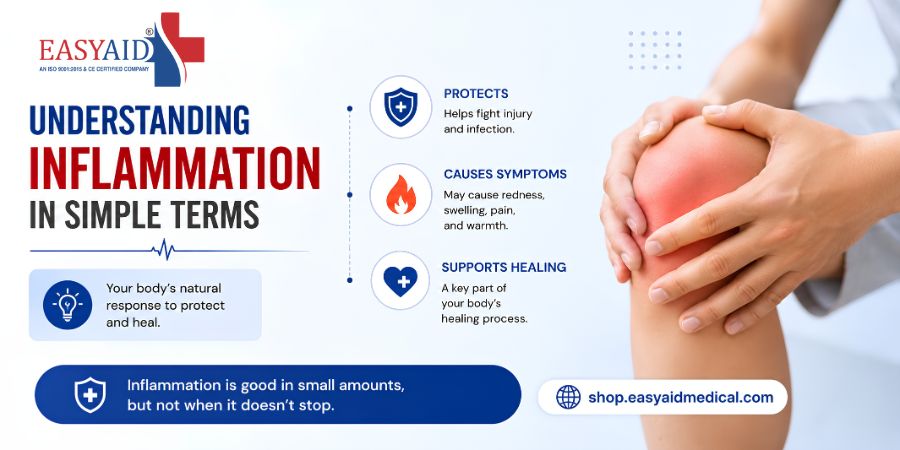
Understanding Inflammation in Simple Terms
Inflammation is a word commonly used in healthcare discussions, but many people are unsure what it actually means. Some associate inflammation only with swelling or pain, while others hear about “chronic inflammation” linked to modern lifestyle diseases.
In reality, inflammation is a natural defence mechanism that helps the body heal and protect itself. However, when inflammation becomes long-term, it can negatively affect overall health.
This guide on inflammation explained breaks down the topic in simple language, helping you understand how inflammation works, why it happens, and how healthy lifestyle choices can help manage it.
What is inflammation?
Inflammation is the body’s natural response to injury, infection, or harmful stimuli, designed to protect and heal tissues.
It is part of the immune system’s defence process and helps the following:
- Fight infections
- Repair damaged tissue
- Protect the body from harm
Inflammation itself is not always harmful—it becomes a problem when it persists for long periods.
How Inflammation Works
When the body detects injury or infection, the immune system activates a protective response.
Step-by-Step Process
1. Detection
The body identifies harmful stimuli such as bacteria, viruses, or injury.
2. Immune Activation
White blood cells and chemicals are released to protect the area.
3. Increased Blood Flow
More blood reaches the affected tissue.
4. Healing Response
The body repairs damaged cells and tissues.
This process helps the body recover naturally.
Simple Inflammation Cycle Diagram
Injury or Infection
          ↓
Immune System Activation
          ↓
Inflammation Response
          ↓
Healing and Recovery
Types of Inflammation
Inflammation is generally divided into two categories.
1. Acute Inflammation
Acute inflammation is short-term and usually beneficial.
Characteristics
- Sudden onset
- Temporary response
- Helps healing
Examples
- Swelling after injury
- Fever during infection
2. Chronic Inflammation
Chronic inflammation lasts for months or years.
Characteristics
- Persistent immune activity
- Ongoing tissue stress
- May contribute to chronic diseases
Examples
- Arthritis
- Chronic stress-related inflammation
Acute vs Chronic Inflammation
| Factor | Acute Inflammation | Chronic Inflammation |
|---|---|---|
| Duration | Short-term | Long-term |
| Purpose | Healing response | Persistent immune activity |
| Symptoms | Redness, swelling | Fatigue, ongoing discomfort |
| Impact | Usually beneficial | Can harm health over time |
This comparison helps simplify inflammation explanations for better understanding.
Common Signs of Inflammation
Typical symptoms include the following:
- Redness
- Swelling
- Pain or discomfort
- Warmth in affected areas
- Fatigue
These signs are part of the body’s protective response.
What Causes Inflammation?
Several factors can trigger inflammation.
Common Causes
- Infections
- Injuries
- Poor diet
- Chronic stress
- Lack of exercise
- Smoking and pollution
Modern lifestyle habits can significantly influence inflammation levels.
How Chronic Inflammation Affects Health
Long-term inflammation is associated with several health conditions.
Potential Effects
- Joint problems
- Heart-related issues
- Digestive disorders
- Metabolic imbalance
- Reduced immunity
This is why chronic inflammation is often discussed in preventive healthcare.
The Connection Between Lifestyle and Inflammation
Lifestyle plays a major role in managing inflammation.
Key Factors Include:
- Nutrition
- Physical activity
- Sleep quality
- Stress management
Poor lifestyle habits may increase inflammatory responses in the body.
Also Read – Understanding Common Medical Terms
Foods That May Support Healthy Inflammation Response
Helpful Foods
- Fruits and vegetables
- Nuts and seeds
- Omega-3 rich foods
- Whole grains
Foods to Limit
- Excess processed foods
- Excess sugar
- Deep-fried foods
Balanced nutrition supports overall wellness.
Stress and Inflammation
Chronic stress can influence immune function and inflammatory activity.
Effects of Stress
- Increased cortisol imbalance
- Reduced recovery
- Higher risk of long-term inflammation
Managing stress is important for both mental and physical health.
Role of Exercise in Managing Inflammation
Regular physical activity supports healthy immune function.
Benefits Include:
- Better circulation
- Improved metabolism
- Reduced stress levels
Moderate exercise is generally beneficial for overall health.
How Sleep Affects Inflammation
Poor sleep may increase inflammatory responses in the body.
Why Sleep Matters
- Supports recovery
- Regulates immune activity
- Improves stress management
Consistent sleep habits support long-term wellness.
Lifestyle Habits That Support Overall Health
Healthy daily routines can help maintain balance in the body.
Focus On:
- Balanced diet
- Exercise
- Stress management
- Proper hydration
Also Read – Difference Between Acute and Chronic Conditions
Common Myths About Inflammation
Myth 1: All Inflammation Is Bad
Inflammation is necessary for healing and protection.
Myth 2: Inflammation Only Means Swelling
It can also affect energy levels, recovery, and internal health.
Myth 3: Only Older Adults Experience Inflammation
Lifestyle-related inflammation can affect people of all ages.
When to Seek Medical Attention
You should seek medical advice if inflammation symptoms are severe, persistent, or interfere with daily life.
Warning Signs Include:
- Ongoing pain
- Persistent swelling
- Fever
- Difficulty functioning normally
Professional evaluation helps identify underlying causes.
Why Understanding Inflammation Matters
Understanding inflammation helps people:
- Recognize early warning signs
- Improve lifestyle choices
- Support long-term health awareness
Healthcare literacy empowers better preventive care.
Conclusion
This guide on inflammation highlights how inflammation is a natural and essential part of the body’s defence system. While short-term inflammation supports healing, chronic inflammation can negatively affect long-term health if not managed properly.
By adopting healthy habits, reducing stress, and improving lifestyle choices, individuals can better support overall wellness and maintain a healthier balance in the body.
FAQs
1. What is inflammation in simple terms?
Inflammation is the body’s natural response to injury, infection, or harmful stimuli to support healing.
2. What is the difference between acute and chronic inflammation?
Acute inflammation is short-term and protective, while chronic inflammation lasts longer and may affect health negatively.
3. What are common signs of inflammation?
Redness, swelling, pain, warmth, and fatigue are common signs.
4. Can lifestyle affect inflammation?
Yes, diet, stress, exercise, and sleep all influence inflammation levels.
5. When should I see a doctor for inflammation?
Seek medical advice if symptoms persist, worsen, or interfere with daily activities.