








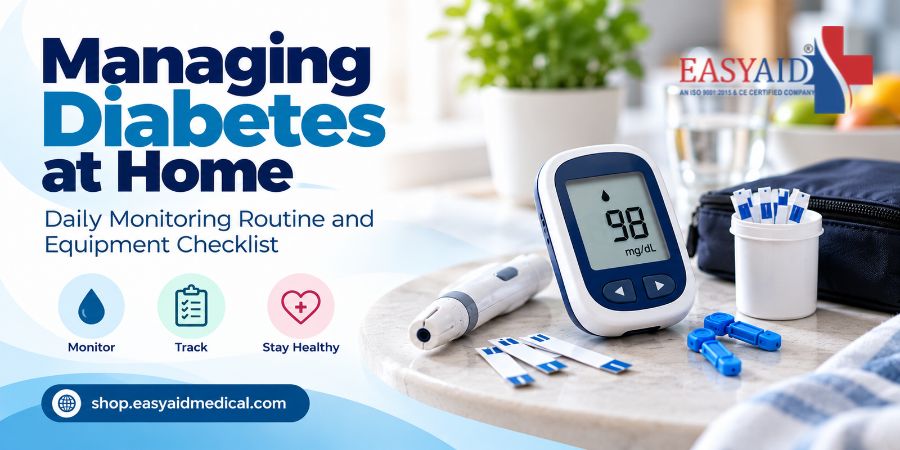
Managing Diabetes at Home: Daily Monitoring Routine and Equipment Checklist
Managing diabetes does not stop when you leave the doctor’s clinic. A large part of everyday diabetes care happens at home through regular habits, blood glucose monitoring when advised, balanced meals, physical activity, and keeping track of changes.
For many people, the hardest part is not knowing what diabetes is. It is building a routine that is practical enough to follow every day.
A diabetes home management routine does not need to be complicated. The goal is to create a few repeatable habits and use the right equipment when needed.
A glucometer can help you check blood glucose at home when self-monitoring is part of your care plan. At the same time, your food choices, activity, sleep and other health habits can influence your overall diabetes management.
This guide explains how to create a simple daily routine, what equipment you may need and what to include in a daily diabetes monitoring checklist.
Why Daily Diabetes Management Matters
Diabetes is a long-term condition that requires ongoing care. Blood glucose is only one part of that care.
Healthy eating, regular physical activity, blood glucose monitoring when appropriate, prescribed medicines when required, and regular health check-ups can all be part of diabetes management.
WHO also recommends regular screening for diabetes-related complications, including checks involving the eyes, kidneys, nerves and feet. These checks are different from daily home monitoring, but they are an important part of long-term care.
The good news is that home monitoring does not have to become an exhausting task. A simple routine can make it easier to notice patterns and share useful information with your healthcare professional.
What Should a Diabetes Home Management Routine Include?
A practical routine can be divided into five areas:
- Blood glucose monitoring when advised
- Balanced meals and sensible portions
- Regular physical activity
- Daily health and foot awareness
- Recording and reviewing important information
Not everyone needs to check blood glucose at the same times or with the same frequency. Your monitoring plan can depend on the type of diabetes you have, your treatment plan and your healthcare professional’s advice.
The purpose of home monitoring is to collect useful information, not to chase a particular number throughout the day.
Diabetes Equipment Checklist for Home
Before creating your routine, make sure the basic supplies are available and stored properly.
1. Glucometer
A glucometer, also called a blood glucose meter, is a small device used to measure blood glucose from a small blood sample.
For people who have been advised to monitor glucose at home, it can make regular monitoring more convenient.
When choosing a glucometer, look at:
- Easy-to-read display
- Simple operation
- Suitable sample requirements
- Test strip availability
- Memory or reading-storage features
- Clear instructions
- Warranty and customer support
A reliable meter is useful only when it is used correctly.
2. Blood Glucose Test Strips
Test strips are designed for use with a particular meter.
Do not assume that every test strip works with every glucometer. Check the manufacturer’s instructions and use the correct strips for your device.
Also check the expiry date and storage instructions. Poorly stored or expired strips may affect the reliability of a reading.
3. Lancets
Lancets are small sterile devices used to obtain the blood sample needed for many glucometer tests.
Use a fresh lancet according to the manufacturer’s instructions. Do not share lancets with another person.
4. Sharps Disposal Container
Used lancets should be disposed of safely.
A proper sharps container is preferable to leaving used lancets loose in a drawer, bag or household waste where someone could accidentally come into contact with them.
Follow local disposal guidance and the instructions provided with your healthcare supplies.
5. Diabetes Record Book or Digital Log
A simple record can be surprisingly useful.
Depending on your care plan, you may record:
- Date
- Time
- Blood glucose reading
- Meal or activity context
- Symptoms, if any
- Notes about anything unusual
Some glucometers store readings automatically. Even then, adding relevant context can make the record more useful.
6. Digital BP Monitor
Blood pressure is another important health measure for many people with diabetes.
A home blood pressure monitor may be useful when your healthcare professional has advised regular BP monitoring.
Choose a validated upper-arm monitor with the correct cuff size rather than selecting a device based only on price or appearance.
7. Thermometer
A digital thermometer can be useful for general home health monitoring, particularly when someone is unwell.
It is not a diabetes-specific device, but keeping one in a basic home healthcare kit can be practical.
How Often Should You Check Blood Glucose?
This is one of the most common questions about home diabetes care.
There is no single testing schedule that suits every person.
Some people may be advised to check at particular times around meals or other activities. Others may have a different schedule based on their treatment and individual health needs.
For this reason, do not create a testing routine simply because someone else checks their glucose at a certain time.
Instead, ask your healthcare professional:
- How often should I check?
- Should I check before or after meals?
- Do I need to check at a particular time of day?
- What should I record with each reading?
- When should I contact you about an unusual result?
This approach keeps your monitoring routine relevant to your individual care plan.
A Simple Morning Routine
Your morning routine can be short and consistent.
Step 1: Start With Your Usual Morning Habits
Take time to wake up, hydrate and prepare for the day.
If your healthcare professional has included morning blood glucose monitoring in your plan, take the reading according to their instructions.
Step 2: Record the Reading
Write down the result or make sure it has been saved in your glucose meter or monitoring app.
Avoid relying on memory.
Step 3: Have a Balanced Breakfast
Try to build meals around a variety of nutritious foods rather than focusing only on avoiding sugar.
Whole grains, vegetables, pulses, protein-rich foods and other minimally processed foods can form part of a balanced eating pattern.
The exact meal plan should reflect your individual nutritional needs, preferences and any other health conditions.
Step 4: Take Medicines Only as Prescribed
If you have been prescribed diabetes medication, follow the instructions given by your healthcare professional.
Do not increase, reduce or stop a medicine based only on one home glucose reading.
Building Better Meals During the Day
Diet is an important part of a diabetes home management routine, but healthy eating does not mean that every meal has to be complicated.
WHO recommends a healthy diet based on principles such as balance, moderation, diversity and adequate nutrition.
For everyday meals, think about the overall composition of your plate.
Include More Often
Depending on your individual diet plan, meals can include:
- Vegetables
- Pulses and legumes
- Whole grains
- Nuts and seeds in suitable portions
- Protein-rich foods
- Fresh fruits in appropriate portions
- Minimally processed foods
Be Mindful of
It is useful to limit frequent intake of foods and drinks high in free sugars, unhealthy fats and excess calories.
Sugary drinks are particularly easy to overlook because they may add a significant amount of sugar without making you feel as full as a meal.
Portion size also matters. A food does not automatically become unsuitable simply because it contains carbohydrates. The overall meal pattern and your individual nutritional needs are important.
Create a Food and Glucose Connection
One useful habit is to record what you ate alongside your glucose reading when your monitoring plan makes this relevant.
For example:
8:00 AM: Glucose reading
8:30 AM: Breakfast
1:30 PM: Lunch
4:30 PM: Snack
8:30 PM: Dinner
You do not need to write a detailed food diary forever.
The purpose is to notice patterns that can be discussed with your healthcare professional.
For example, if you repeatedly notice changes after a particular type of meal, that information may be worth discussing rather than making sudden dietary changes on your own.
Physical Activity as Part of the Routine
Regular physical activity is another important part of diabetes self-management.
Walking, cycling, swimming or other activities can be included depending on your fitness level, preferences and medical situation.
The best routine is usually one that you can maintain consistently.
If you have not been active for a long time, have mobility limitations or have other health concerns, ask a healthcare professional what level of activity is appropriate for you.
Avoid turning exercise into a punishment for eating a particular food or getting a particular glucose reading.
Think of movement as a regular part of looking after your health.
Check Your Feet Every Day
Foot care is easy to overlook.
Diabetes can affect nerves and blood circulation, increasing the risk of foot problems for some people. Regular professional foot checks are important, but simple daily awareness at home can also be useful.
Look for:
- Cuts
- Blisters
- Redness
- Swelling
- Skin changes
- Sores that are not healing normally
Do not ignore a new or worsening foot problem. Contact your healthcare professional if you notice something concerning.
Avoid treating a significant foot wound yourself simply because you have diabetes supplies at home.
Keep a Daily Diabetes Monitoring Checklist
A checklist can make the routine easier to follow.
Daily Checklist
Morning
- ☐ Follow your prescribed monitoring schedule
- ☐ Record blood glucose when testing is advised
- ☐ Have a balanced breakfast
- ☐ Follow your prescribed medication routine
- ☐ Check how you are feeling
During the Day
- ☐ Eat regular, balanced meals according to your meal plan
- ☐ Stay physically active as appropriate
- ☐ Drink fluids according to your normal needs
- ☐ Record relevant glucose readings
- ☐ Pay attention to unusual symptoms
Evening
- ☐ Follow your evening monitoring schedule if advised
- ☐ Record relevant readings
- ☐ Check your feet if this is part of your routine
- ☐ Prepare your glucose meter and supplies for the next day
- ☐ Review anything unusual that should be discussed with your healthcare professional
This checklist should support your care plan, not replace it.
Common Glucometer Mistakes to Avoid
Even a good glucometer cannot compensate for poor testing technique.
Using the Wrong Test Strips
Always use strips designed for your meter.
Touching the Test Area
Follow the manufacturer’s instructions when handling strips. Contamination can affect testing.
Using Expired Strips
Check the expiry date before use.
Storing Strips Incorrectly
Test strips often need specific storage conditions. Keep them according to the manufacturer’s instructions and close the container properly if applicable.
Skipping Hand Hygiene
Wash and dry your hands before testing according to the device instructions. Residue from food or other substances on the fingers can interfere with some readings.
Sharing Testing Equipment
Do not share lancets or other blood-contaminated equipment.
Recording Only the Number
A glucose reading without context may tell you less than a reading recorded with its time, meal or activity information.
What Should You Do With Your Glucose Records?
Your records are most useful when you review them with your healthcare professional.
Instead of focusing on one unusual reading, look for patterns over time.
You may want to bring your records to appointments and discuss:
- Repeatedly unusual readings
- Changes from your usual pattern
- Readings associated with symptoms
- Questions about meal patterns
- Changes in physical activity
- Problems using your glucometer
Do not change medication doses based solely on a home reading unless your healthcare professional has specifically provided a plan for doing so.
When Should You Contact a Healthcare Professional?
Home monitoring is not meant to replace professional care.
Contact your healthcare professional if you notice repeated readings outside the range they have advised for you, especially when the change is unexpected or associated with symptoms.
Seek urgent medical attention for severe or rapidly worsening symptoms, confusion, loss of consciousness, severe weakness, difficulty breathing or other signs of a medical emergency.
If you are unsure whether a symptom or glucose result is urgent, it is safer to seek professional medical advice rather than trying to manage the situation only with a glucometer.
Weekly Diabetes Management Check
Daily habits are important, but a weekly review can also help.
Once a week, check whether:
- Your testing supplies are available
- Test strips are within their expiry date
- Your glucometer is working properly
- Your records are up to date
- You are following your meal plan
- You have been physically active as appropriate
- You have noticed any new symptoms
- You have upcoming medical appointments or tests
This small check can prevent last-minute problems when you need your equipment.
Diabetes Home Monitoring Equipment: Quick Checklist
For a basic home setup, consider:
| Equipment | Why It May Be Useful |
|---|---|
| Glucometer | Home blood glucose monitoring when advised |
| Test strips | Required for compatible glucose meters |
| Lancets | Obtaining a blood sample |
| Sharps container | Safer disposal of used lancets |
| Diabetes logbook/app | Recording readings and relevant patterns |
| Digital BP monitor | Blood pressure monitoring when advised |
| Digital thermometer | General illness monitoring |
| Basic foot-care supplies | Supporting everyday foot care, as appropriate |
You do not necessarily need every item. Build your home kit around your healthcare professional’s recommendations and your family’s actual needs.
Frequently Asked Questions
1. What is a diabetes home management routine?
A diabetes home management routine is a set of regular habits used to support diabetes care. It can include blood glucose monitoring when advised, balanced meals, physical activity, prescribed medicines, foot awareness, record keeping and regular medical follow-up.
2. How often should I use a glucometer?
The frequency depends on your individual diabetes care plan. Some people may need more frequent monitoring than others. Follow the schedule recommended by your healthcare professional rather than copying another person’s testing routine.
3. What should I keep in a home diabetes kit?
A basic kit may include a glucometer, compatible test strips, lancets, a safe sharps disposal container and a record book or app. Depending on your needs, you may also keep a blood pressure monitor and thermometer at home.
4. Can diet alone manage diabetes?
Diabetes management differs from person to person. Healthy eating is an important part of diabetes care, but some people also need medicines, insulin or other forms of medical care. Do not stop or change prescribed treatment because of dietary changes or home glucose readings.
5. Should I record what I eat along with my glucose readings?
It can be useful to record meals or other relevant information alongside glucose readings, particularly when your healthcare professional has asked you to monitor patterns. These records can help you discuss your routine and recurring changes during medical appointments.
Final Takeaway
A good diabetes home management routine does not have to be complicated.
Start with a few consistent habits: use your glucometer according to your monitoring plan, keep your equipment ready, choose balanced meals, stay physically active when appropriate and record information that can help you and your healthcare professional understand your routine.
A daily diabetes monitoring checklist can make these habits easier to remember.
Most importantly, home monitoring is there to support professional diabetes care, not replace it. Your glucose readings are useful pieces of information, but they should be considered alongside your symptoms, health history and medical advice.
Build Your Home Diabetes Monitoring Kit
Easyaid Medical offers home healthcare and monitoring products designed to make everyday health management more convenient.
Medical Disclaimer: This article is intended for general educational purposes only. It does not diagnose, treat or replace advice from a qualified healthcare professional. Diabetes management and blood glucose monitoring schedules vary between individuals. Always follow the care plan provided by your doctor or healthcare team.