








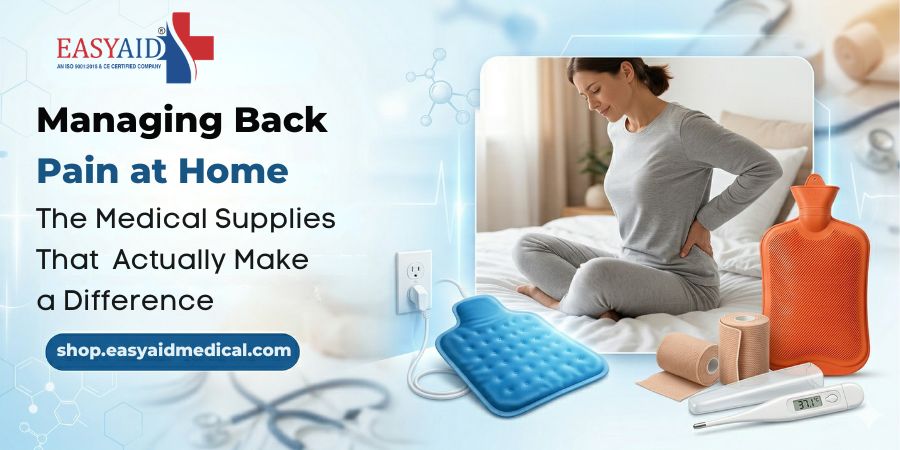
Managing Back Pain at Home: The Medical Supplies That Actually Make a Difference
Back pain is the leading cause of disability worldwide. According to the Global Burden of Disease Study 2021, around 628.8 million people were living with lower back pain globally. That is an increase of over 60% since 1990. In most cases, though, the condition is not serious. Up to 80% of adults will experience back pain in their lifetime, and most cases resolve with proper home care within a few weeks.
The difference between a fast recovery and weeks of unnecessary suffering often comes down to having the right supplies and using them correctly. Here is what actually works.
Why Most Back Pain Can Be Managed at Home
The majority of back pain episodes are classified as non-specific, meaning no identifiable structural cause such as a fracture, tumour, or nerve compression is responsible. Muscle strain, ligament sprain, poor posture, and prolonged sitting are the usual culprits. For these cases, evidence consistently supports a combination of heat therapy, appropriate support, light movement, and monitoring for warning signs.
The worst thing you can do is complete bed rest. Research published by the National Institutes of Health (nih.gov) has shown that staying active, even with mild discomfort, shortens recovery time by several weeks. The goal is to manage the pain enough to keep moving, not to eliminate it entirely by staying still.
1. Hot Water Bag: The Oldest and Most Reliable Tool
Heat therapy is one of the most widely used and evidence-backed treatments for musculoskeletal pain. A 2024 study in the Journal of Bodywork and Movement Therapies surveyed European clinical experts. It found that 92% of low back pain patients receive heat therapy, and 86.5% of clinicians actively recommend it.
Heat works by increasing blood flow to the painful area, relaxing tense muscles, reducing stiffness, and blocking pain signals from reaching the brain. A quality hot water bag delivers consistent, gradual warmth that is easy to control and apply.
How to use it safely:
- Fill with hot water at around 50 to 60 degrees Celsius, not boiling
- Always wrap in a thin cloth or towel before placing on skin
- Apply for 15 to 20 minutes, two to three times per day
- Never use while sleeping or on broken skin
Important: Heat is appropriate for chronic stiffness and muscle spasm. For the first 48 to 72 hours after an acute injury involving swelling or bruising, cold therapy should come first, followed by heat once the acute phase has passed.
2. Electric Gel Pad: For Consistent Daily Therapy
For people dealing with recurring or chronic back pain, an electric gel pad offers a more convenient alternative to a hot water bag. The key advantage is precise, adjustable temperature that remains constant throughout the session.
A 2024 review published in PMC compared heat and cold therapy across 32 randomised controlled trials. The findings showed that sustained heat therapy produced more long-lasting pain relief than cold therapy, with benefits extending beyond 24 hours.
When choosing an electric gel pad, look for auto shut-off functionality and a model that distributes heat evenly across the lower back rather than a single concentrated point.
3. Cotton Crepe Bandage and Elastic Adhesive Bandage: Targeted Compression Support
Compression bandages are typically associated with ankle sprains, but they also work well for lumbar support. A lightly applied crepe or elastic bandage around the lower back can reduce the micro-movements that aggravate strained muscle fibres during lifting, bending, or extended walking.
Key points on correct use:
- Apply snugly but not tightly. You should be able to breathe comfortably
- Remove compression wrapping during rest periods
- Never use as a long-term solution. This is a short-term aid during activity only
- If the bandage causes increased pain, tingling, or numbness, remove it immediately
4. Digital Thermometer: The Warning Sign You Cannot Ignore
This one surprises people, but it matters. Back pain combined with fever is one of the clearest red flags for a serious underlying condition. It may point to a spinal or kidney infection, which requires prompt medical attention and cannot be treated at home.
Also Read – Digital Thermometer – Frequently Asked Questions
A 2025 review from Mount Nittany Health confirmed that back pain with fever, chills, or night sweats may point to a spinal infection. This is especially true for people who have recently had surgery or are immunocompromised.
Check your temperature if your back pain is accompanied by:
- Fever above 38 degrees Celsius (100.4°F)
- Unusual fatigue or chills
- Urinary symptoms such as burning or frequent urination
- Pain that keeps getting worse rather than better over 72 hours
5. Movement: The Most Underused Treatment
No supply replaces movement. Gentle stretching and low-impact activity, started early in the recovery process, consistently outperform bed rest in clinical research. The Cleveland Clinic emphasises that movement reduces inflammation, prevents muscle tightening, maintains flexibility, and promotes blood flow to healing tissue.
Simple exercises like pelvic tilts, cat-cow stretches, and knee-to-chest holds are safe for most non-specific back pain. Morning stretching is particularly effective for relieving the overnight stiffness that makes the first hour of the day the most painful.
For a step-by-step guide to the best morning movements for lower back relief, see: Best Morning Stretches for Easing Lower Back Pain
For desk workers whose pain comes from prolonged sitting, a targeted stretching routine makes a real difference: Stretches for Back Pain from Sitting All Day.
When Home Treatment Is Not Enough
Home management is appropriate for mild to moderate non-specific back pain. Stop and seek medical attention immediately if you experience any of the following:
- Pain radiating down one or both legs (possible sciatica or nerve compression)
- Numbness, tingling, or weakness in the legs or feet
- Loss of bladder or bowel control (medical emergency, can indicate cauda equina syndrome)
- Back pain after a fall, accident, or trauma
- Fever alongside back pain
- Pain that wakes you consistently from sleep
- Back pain in someone over 50 with no prior history of the condition
- Significant, unexplained weight loss alongside back pain
A Simple Home Protocol
Days 1 to 2 (acute phase): Rest from aggravating activity, apply cold for 15 minutes several times per day, and take over-the-counter anti-inflammatories if suitable.
From day 3 onwards: Switch to heat therapy with a hot water bag or electric gel pad twice daily. Begin gentle stretching. Use a compression bandage only during necessary physical tasks. Monitor temperature with a digital thermometer if any systemic symptoms appear.
Week 2: Gradually return to normal activity. Focus on strengthening the core and correcting the root cause, whether that is posture, footwear, workstation setup, or lifting mechanics.
Most people recover fully within two to six weeks with this approach. The supplies listed here are affordable, widely available, and supported by clinical evidence when used correctly.
If your pain is severe, worsening, or accompanied by any of the red flags listed above, always consult a healthcare professional before continuing home treatment.
About the Author
Maria is a health and wellness writer at justhealthlife.com, a daily health and wellness resource covering pain management, nutrition, fitness, and evidence-based home health advice.