








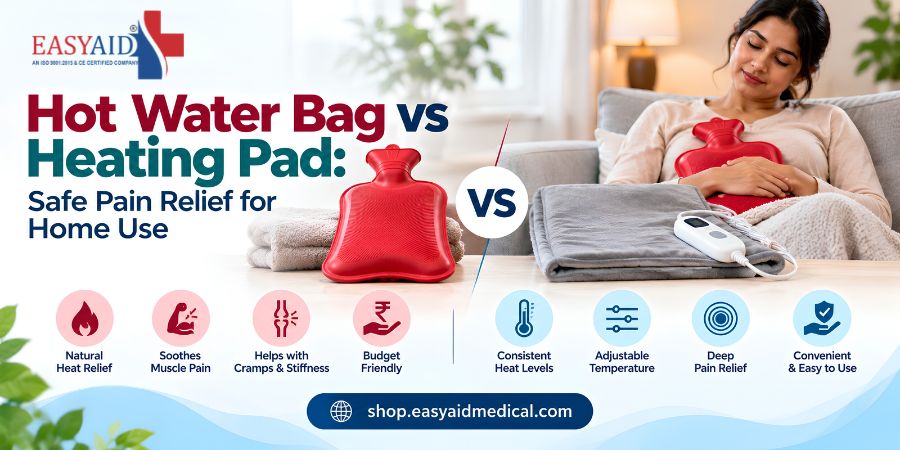
Hot Water Bag vs Heating Pad: Safe Pain Relief for Home Use
A warm compress is one of the simplest ways to get temporary relief from muscle stiffness, minor aches and period cramps at home. But when you start looking for a product, one question often comes up: hot water bag vs heating pad — which one should you choose?
Both products provide heat, but they work differently.
A hot water bag uses warm or hot water stored inside a flexible container. A heating pad uses an electrical heating element to produce warmth.
The right option depends on how you plan to use it, how much control you need over the temperature, whether electricity is available and what feels comfortable for you.
Heat can provide temporary relief from certain types of pain and muscle stiffness, but it is not suitable for every injury or medical condition. If pain is severe, persistent or unexplained, consult a healthcare professional instead of relying on heat therapy alone.
This guide explains the difference between hot water bags and heating pads, how to use them safely and what to consider before buying one for home use.
Hot Water Bag vs Heating Pad: What’s the Difference?
The basic purpose is the same: provide local warmth.
The main difference is how the heat is produced and maintained.
| Feature | Hot Water Bag | Heating Pad |
|---|---|---|
| Heat source | Hot/warm water | Electrical heating element |
| Temperature control | Depends on water temperature | Usually adjustable |
| Electricity required | No | Yes |
| Portability | Easy to carry | Depends on model |
| Heat duration | Gradually cools | Can maintain warmth while powered |
| Setup | Fill with water | Plug in and select setting |
| Main safety concern | Burns/leaks | Burns/electrical safety |
Neither option is automatically better for everyone.
The choice should depend on the user’s needs and how the product will be used.
What is a hot water bag?
A hot water bag is a flexible container designed to hold warm or hot water.
It is commonly used for temporary warmth around areas such as:
- Lower back
- Abdomen
- Shoulders
- Neck
- Legs
- Muscles affected by stiffness
Some people also use hot water bags for menstrual cramps.
The bag gradually loses heat as the water cools, so it does not require electricity during use.
That makes it convenient when travelling, during power cuts or when you want a simple heat source without a cable.
However, the temperature of the water needs to be controlled carefully.
Advantages of a Hot Water Bag
No Electricity Required
A hot water bag can be used without a power outlet.
Simple to Carry
It can be stored easily and used in different rooms.
Gradual Cooling
The temperature naturally decreases over time rather than staying at one level.
Useful for Targeted Warmth
The flexible design allows the bag to rest against areas such as the back or abdomen.
Things to Consider
A hot water bag requires handling hot water, which creates a burn risk.
There is also a risk of leakage if the bag is damaged, overfilled or the stopper is not secured properly.
That is why knowing the safe use of hot water bag matters as much as choosing the product itself.
What is a Heating Pad?
A heating pad is an electrically powered device designed to provide controlled warmth.
Depending on the model, it may have:
- Multiple temperature settings
- Automatic shut-off
- Different heat levels
- Washable covers
- Flexible or contoured designs
Heating pads can be convenient when you want a more consistent heat level without repeatedly replacing cooling water.
They do, however, require electricity and should be used according to the manufacturer’s instructions.
Advantages of a Heating Pad
Adjustable Heat
Many models allow users to select different temperature settings.
Consistent Warmth
As long as the device remains powered, it can maintain warmth according to its design.
No Hot Water Handling
There is no need to fill or carry hot water.
Convenient for Regular Home Use
A heating pad can be practical for people who frequently use heat for temporary relief.
Things to Consider
Heating pads contain electrical components.
Never use a damaged electrical heating pad, and follow the manufacturer’s instructions about cleaning, storage and use.
Do not sleep with a heating pad unless the specific product is expressly designed and approved for that type of use.
Hot Water Bag vs Heating Pad: Which Should You Choose?
The answer depends on your situation.
Choose a Hot Water Bag If:
- You don’t want to use electricity
- You prefer gradual cooling
- You need something simple and portable
- You want targeted warmth
- You are comfortable handling warm water safely
A heating pad may be more convenient if:
- You want adjustable heat settings
- You prefer consistent warmth
- You use heat therapy regularly at home
- You don’t want to handle hot water
The important thing is not choosing the product with the most heat.
Comfortable, controlled warmth is the goal.
Safe Use of Hot Water Bag
Hot water bags are simple to use, but incorrect handling can cause burns.
Follow these basic precautions.
1. Don’t Use Boiling Water
Extremely hot water can cause serious burns and may also damage some hot water bags.
Use appropriately warm water according to the product manufacturer’s instructions.
2. Don’t Overfill the Bag
Leave enough space for the water to move inside the bag.
Overfilling can increase pressure and may contribute to leakage or damage.
Follow the product’s recommended filling instructions.
3. Check the Bag Before Every Use
Look for:
- Cracks
- Weak seams
- Damaged stopper
- Discolouration
- Leakage
- Signs of deterioration
Do not use a damaged hot water bag.
4. Secure the Stopper Properly
After filling the bag, close the stopper securely and check for leakage before placing it against the body.
5. Use a Cover
Avoid placing a very warm hot water bag directly against bare skin.
Use a suitable cover or wrap it in a soft towel to reduce direct heat exposure.
6. Don’t Sit or Lie on the Bag
Putting your body weight on a hot water bag can increase pressure inside it and may cause leakage or damage.
Keep it positioned against the intended area rather than underneath your full body weight.
7. Check Your Skin
Remove the bag if your skin becomes:
- Very red
- Painful
- Burning
- Numb
- Unusually sensitive
People with reduced sensation may not notice excessive heat quickly enough and need extra caution.
How to Use a Heating Pad Safely
Heating pads also need careful handling.
Start With a Lower Setting
If the product has multiple settings, start with a lower or moderate temperature.
You can increase it only if necessary and if the manufacturer’s instructions allow it.
Protect the Skin
Avoid prolonged direct exposure to high heat.
A suitable cover or clothing layer can provide a barrier between the heating element and skin.
Don’t Sleep With It
Falling asleep while using a heating pad can result in prolonged heat exposure and burns.
Use the automatic shut-off feature if the product has one, but do not treat it as a replacement for safe use.
Keep It Dry
Electrical heating pads should not be exposed to water unless the manufacturer specifically states that the product is designed for it.
Inspect the Cable
Before use, check for:
- Frayed wires
- Damaged plugs
- Cracks
- Exposed electrical components
Do not use a damaged product.
Follow Cleaning Instructions
Never wash or immerse an electrical heating pad unless the manufacturer specifically states that it is washable.
When is Heat Useful?
Heat is commonly used for temporary relief from muscle stiffness and certain types of muscle aches.
Warmth can also feel soothing during menstrual cramps for some people.
The effect is generally about comfort and symptom relief. It does not necessarily address the underlying cause of pain.
For example, if back pain is caused by an underlying medical condition, a hot water bag may make the area feel more comfortable but will not treat that condition.
Heat vs Cold: Don’t Always Choose Heat
Heat is not appropriate for every injury.
For a recent injury involving significant swelling, healthcare professionals may recommend a different approach.
A common mistake is using heat simply because an area hurts.
If you have a new injury, significant swelling or uncertainty about whether heat is appropriate, ask a healthcare professional.
When Should You Avoid Heat?
Extra caution is needed in certain situations.
Avoid or seek medical advice before using heat if:
- The area has reduced sensation
- There is an open wound
- The skin is already irritated or damaged
- There is significant swelling after an injury
- You have poor circulation
- You have a condition affecting your ability to sense temperature
- You are unable to remove the heat source independently
People who may have reduced sensation, including some people with diabetes or neurological conditions, should ask a healthcare professional whether heat therapy is appropriate.
Young children and elderly people may also need closer supervision because they may be more vulnerable to burns or may not recognise excessive heat quickly.
How Long Should You Use a Hot Water Bag or Heating Pad?
There is no single duration that is suitable for everyone or every product.
Follow the manufacturer’s instructions and avoid prolonged heat exposure.
Check your skin regularly during use.
If you experience burning, numbness, unusual redness or increasing pain, stop using the heat source.
More heat or longer use does not necessarily mean better pain relief.
Hot Water Bag vs Heating Pad for Period Cramps
Both products are commonly used for menstrual discomfort.
A warm compress placed over the lower abdomen may provide temporary comfort for some people.
A hot water bag may be convenient because it does not require electricity. A heating pad may be preferable if you want adjustable heat.
The choice comes down to personal preference and safe temperature control.
If period pain is severe, suddenly different from usual, persistent or interfering significantly with everyday activities, speak with a healthcare professional.
Hot Water Bag vs Heating Pad for Back Pain
Heat can feel soothing when back discomfort is related to muscle stiffness or tension.
A hot water bag can be positioned over the lower back while sitting or lying in a comfortable position.
A heating pad can offer adjustable warmth.
However, back pain has many possible causes.
Seek medical attention for back pain accompanied by symptoms such as:
- New weakness or numbness
- Loss of bladder or bowel control
- Severe pain after a significant injury
- Fever
- Unexplained weight loss
- Severe or worsening pain
Do not use heat as a way to delay medical evaluation when warning signs are present.
How to Choose a Hot Water Bag
If you decide that a hot water bag is suitable for you, consider the following before buying.
Material
Look for a product made from durable, heat-resistant material designed specifically for hot-water use.
Capacity
Choose a size that is practical for the intended area.
A larger bag is not automatically better.
Stopper Quality
The stopper should close securely and be easy to handle.
Outer Cover
A soft cover can make the product more comfortable and reduce direct skin contact.
Shape
Some bags are designed for general use, while others may have shapes that make them easier to position around the body.
Manufacturer Instructions
Always check the product’s filling, cleaning, storage and replacement instructions.
How to Choose a Heating Pad
Before purchasing an electric heating pad, check:
Temperature Settings
Multiple settings give you greater control over the level of warmth.
Automatic Shut-Off
An automatic shut-off feature can reduce the risk of prolonged use, although you should still follow the product instructions.
Size
Choose a size appropriate for the area you want to warm.
Electrical Safety
Check the cable, plug and product construction.
Cleaning
Look for a product with clear cleaning instructions.
Warranty and Product Support
A warranty can be useful for electrical healthcare products.
Common Mistakes to Avoid
Using Extremely High Heat
You do not need very high temperatures to get the comfort of warmth.
Falling Asleep While Using Heat
Prolonged exposure can cause burns.
Applying Heat Directly to Bare Skin for Long Periods
Use appropriate protection and check your skin regularly.
Using a Damaged Product
Replace damaged hot water bags and heating pads instead of trying to repair them yourself.
Ignoring Persistent Pain
If pain keeps returning or becomes worse, find out why rather than repeatedly treating the symptom at home.
Quick Decision Guide
If you’re still unsure between a hot water bag and heating pad, ask yourself:
Do I want something that works without electricity?
→ Consider a hot water bag.
Do I want adjustable heat settings?
→ A heating pad may be more convenient.
Do I want gradual cooling?
→ A hot water bag naturally cools over time.
Do I want consistent warmth?
→ A heating pad may be more suitable.
Am I buying for an elderly person or someone with reduced sensation?
→ Speak with a healthcare professional first and use extra supervision.
FAQs
1. Is a hot water bag better than a heating pad?
Neither is universally better. A hot water bag may be preferable if you want a portable, electricity-free option, while a heating pad can offer adjustable and more consistent warmth. The safest choice depends on the user and how the product will be used.
2. What is the safest way to use a hot water bag?
Use appropriately warm water rather than boiling water, do not overfill the bag, check for damage or leaks, secure the stopper and use a suitable cover between the bag and skin. Check your skin regularly and stop if you feel burning, numbness or excessive heat.
3. Can I sleep with a hot water bag?
It is safer to avoid sleeping while using a hot water bag. Prolonged contact can cause burns, especially if you do not notice excessive heat while asleep.
4. Can I use a heating pad every day?
Regular use may be appropriate for some people, but it depends on the reason for the pain and the product instructions. If you need heat every day because of persistent pain, consider speaking with a healthcare professional to identify the underlying cause.
5. Can elderly people use hot water bags or heating pads?
They can sometimes be used, but extra care may be needed. Older adults with reduced sensation, poor circulation or difficulty moving independently may not recognise excessive heat quickly. Supervision and professional advice may be appropriate.
Final Thoughts
The hot water bag vs heating pad decision is mostly about how you prefer to manage warmth at home.
A hot water bag is simple, portable and does not require electricity. A heating pad can provide adjustable and more consistent heat. Both can offer temporary comfort when used correctly.
Whichever option you choose, safe use of a hot water bag or heating pad matters more than maximum heat. Avoid excessive temperatures, protect your skin, follow the manufacturer’s instructions and never use heat to ignore serious or unexplained pain.
If you’re looking for a practical hot water bag for home use, explore the Hot Water Bags collection at Easyaaid Medical and check the product specifications before choosing the right option for your needs.
Shop Hot Water Bags →
Medical Disclaimer: This article is intended for general health awareness and educational purposes. Heat therapy is not a substitute for medical diagnosis or treatment. If pain is severe, persistent, worsening or associated with other concerning symptoms, consult a qualified healthcare professional.