








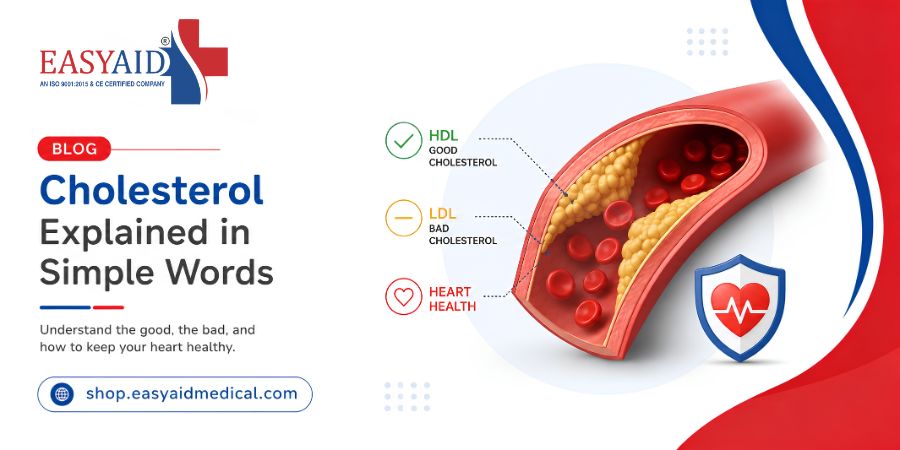
Cholesterol Explained in Simple Words
If you’ve ever had a routine health check-up, chances are you’ve seen cholesterol numbers on your lab report. For many people, the word “cholesterol” immediately sounds negative, often associated with heart problems or unhealthy eating. But the truth is much more nuanced.
Cholesterol is not inherently bad. In fact, your body needs it to perform several essential functions. The key lies in understanding the different types of cholesterol, how they work, and how lifestyle habits influence overall cholesterol balance.
This guide on cholesterol explained breaks down the topic in simple, everyday language. Whether you’re trying to understand a blood test report or simply want to improve your health knowledge, this article will help you make sense of cholesterol without the medical jargon.
What is cholesterol?
Cholesterol is a waxy, fat-like substance found in the blood and cells that helps the body build hormones, produce vitamin D, and support cell function.
Your body naturally produces cholesterol, primarily in the liver. You also get cholesterol from certain foods.
Despite its reputation, cholesterol is essential for life. Problems generally arise when cholesterol levels become imbalanced.
Why Does the Body Need Cholesterol?
Cholesterol performs several important functions.
It Helps:
- Build healthy cell membranes
- Produce hormones such as estrogen and testosterone
- Support vitamin D production
- Aid digestion through bile acid production
- Maintain normal body functions
Without cholesterol, many critical processes in the body would not work properly.
Understanding Cholesterol in Simple Terms
Think of cholesterol as a transportation system.
Since cholesterol cannot move through blood on its own, it travels in packages called lipoproteins.
These lipoproteins carry cholesterol throughout the body.
The two most commonly discussed types are:
- LDL (Low-Density Lipoprotein)
- HDL (High-Density Lipoprotein)
Understanding the difference between them is one of the most important aspects of cholesterol explained.
Types of Cholesterol Explained
LDL Cholesterol (“Bad” Cholesterol)
LDL carries cholesterol from the liver to different parts of the body.
When too much LDL circulates in the bloodstream, it may contribute to plaque buildup inside blood vessels.
Key Characteristics:
- Delivers cholesterol to tissues
- Excess amounts may affect cardiovascular health
- Often referred to as “bad cholesterol”
HDL Cholesterol (“Good” Cholesterol)
HDL helps transport excess cholesterol back to the liver.
The liver can then process and remove it from the body.
Key Characteristics:
- Helps clear excess cholesterol
- Supports healthy cholesterol balance
- Often called “good cholesterol”
Triglycerides
Although not technically cholesterol, triglycerides are usually measured alongside cholesterol.
They are a type of fat used by the body for energy storage.
Important Role:
- Stores unused calories
- Provides energy between meals
- Measured during lipid profile testing
Cholesterol Types at a Glance
| Type | Common Name | Main Function |
|---|---|---|
| LDL | Bad Cholesterol | Delivers cholesterol to tissues |
| HDL | Good Cholesterol | Removes excess cholesterol |
| Triglycerides | Blood Fats | Stores energy for later use |
| Total Cholesterol | Combined Measurement | Overall cholesterol level |
This table provides a simple overview of the different cholesterol components.
Also Read – Understanding Inflammation in Simple Terms
How Cholesterol Travels Through the Body
Simple Cholesterol Flow Diagram
Liver Produces Cholesterol
            ↓
Cholesterol Enters Bloodstream
            ↓
LDL Delivers Cholesterol to Cells
            ↓
HDL Collects Excess Cholesterol
            ↓
Returns to Liver for Processing
This continuous cycle helps maintain balance in the body.
What Causes High Cholesterol?
Several factors can influence cholesterol levels.
Lifestyle Factors
Diet
Foods high in saturated fats and trans fats may influence cholesterol balance.
Physical Inactivity
A sedentary lifestyle may affect cholesterol metabolism.
Smoking
Smoking can impact cardiovascular health and cholesterol balance.
Excess Alcohol Consumption
Heavy alcohol intake may affect triglyceride levels.
Non-Lifestyle Factors
Some influences are beyond personal control.
Examples:
- Family history
- Age
- Genetics
- Certain medical conditions
Understanding these factors helps create a broader picture of heart health.
Common Signs of High Cholesterol
One of the most important things to know is that high cholesterol often causes no obvious symptoms.
Many People Feel Completely Normal
This is why routine health screenings are important.
Cholesterol levels are usually identified through blood tests rather than physical symptoms.
Understanding a Cholesterol Test
A cholesterol test is commonly called a lipid profile.
It measures:
- Total cholesterol
- LDL cholesterol
- HDL cholesterol
- Triglycerides
Healthcare professionals use these results to assess overall cardiovascular risk.
Understanding Cholesterol Reports
| Test Component | What It Measures |
| Total Cholesterol | Overall cholesterol level |
| LDL | Cholesterol delivered to tissues |
| HDL | Cholesterol removed from bloodstream |
| Triglycerides | Stored fat used for energy |
Knowing these terms can make medical reports much easier to understand.
Cholesterol and Heart Health
Cholesterol and heart health are closely connected.
Healthy cholesterol balance supports:
- Blood vessel function
- Circulation
- Cardiovascular wellness
This is why cholesterol testing is a common part of preventive healthcare.
Lifestyle Habits That Support Healthy Cholesterol Levels
1. Focus on Balanced Nutrition
A heart-conscious eating pattern often includes the following:
- Fruits and vegetables
- Whole grains
- Nuts and seeds
- Healthy fats
- Lean protein sources
2. Stay Physically Active
Regular movement supports overall cardiovascular wellness.
Examples include:
- Walking
- Cycling
- Swimming
- Strength training
3. Prioritize Sleep
Poor sleep habits may affect overall metabolic and cardiovascular health.
Consistent sleep schedules support wellness.
4. Manage Stress
Long-term stress can influence several aspects of health.
Helpful techniques include:
- Mindfulness
- Meditation
- Exercise
- Time management
Cholesterol and Modern Lifestyle
Today’s lifestyle can influence cholesterol patterns.
Common Challenges
- Long sitting hours
- Processed food consumption
- Reduced physical activity
- High stress levels
Small daily improvements often make a meaningful difference over time.
Common Myths About Cholesterol
Myth 1: All Cholesterol Is Bad
False.
The body requires cholesterol to function properly.
Myth 2: Only Older Adults Need to Worry About Cholesterol
False.
Cholesterol awareness is important for adults of all ages.
Myth 3: Thin People Cannot Have High Cholesterol
False.
Cholesterol levels can be influenced by genetics and other factors, regardless of body size.
Myth 4: Cholesterol Comes Only From Food
False.
The liver naturally produces cholesterol.
When Should You Talk to a Healthcare Professional?
You should consult a healthcare professional if you have concerns about cholesterol levels, family history of heart disease, or questions about your lipid profile results.
Professional guidance helps you understand your personal health situation more accurately.
The Importance of Preventive Health Check-Ups
Routine screenings help people:
- Understand their cholesterol profile
- Monitor changes over time
- Make informed lifestyle decisions
- Improve healthcare awareness
Preventive healthcare is one of the most effective tools for long-term wellness.
Conclusion
Understanding cholesterol doesn’t have to be complicated. As this guide on cholesterol explained shows, cholesterol is a vital substance that supports many important body functions.
The key is maintaining balance between different types of cholesterol and adopting healthy lifestyle habits that support overall cardiovascular wellness.
By learning how cholesterol works, understanding blood test reports, and prioritising preventive healthcare, you can make more informed decisions about your long-term health.
FAQs
1. What is cholesterol in simple words?
Cholesterol is a waxy substance in the body that helps build cells, produce hormones, and support essential functions.
2. What is the difference between HDL and LDL cholesterol?
HDL helps remove excess cholesterol from the bloodstream, while LDL carries cholesterol to tissues throughout the body.
3. Can cholesterol be high without symptoms?
Yes. High cholesterol often has no noticeable symptoms and is usually detected through blood tests.
4. Why is cholesterol important?
Cholesterol helps the body produce hormones, vitamin D, and substances needed for digestion.
5. How can I support healthy cholesterol levels?
Balanced nutrition, physical activity, quality sleep, stress management, and regular health check-ups all contribute to overall cardiovascular wellness.