








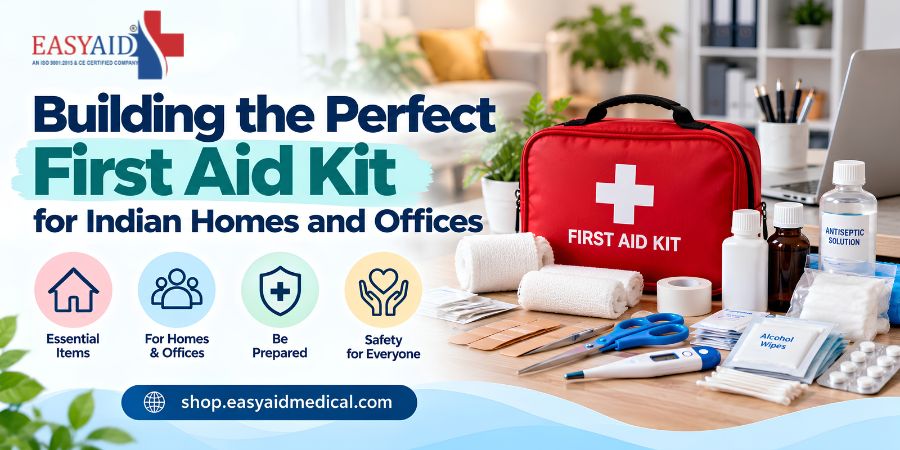
Building the Perfect First Aid Kit for Indian Homes and Offices
A small cut while cooking, a scraped knee, a minor burn at work or a sudden sprain can happen when you least expect it. In these moments, the first few minutes matter.
That does not mean every household or office needs a cupboard full of medicines and medical equipment. What you need is a clean, organised first aid kit with basic supplies that can help manage minor injuries until the person recovers or receives professional medical care.
This first aid kit essentials list is designed for Indian homes and offices. It covers the basic supplies worth keeping ready, how to organise them and when a first aid kit is no longer enough.
A first aid kit is for immediate, basic care. It is not a replacement for a doctor, emergency department or professional first-aid training.
WHO’s Basic Emergency Care programme focuses on recognising and responding to time-sensitive illness and injury while arranging appropriate medical care.
Why Every Home and Office Should Have a First Aid Kit
First aid is the immediate care given after an injury or sudden illness, before definitive medical treatment is available.
A properly stocked kit can help with everyday situations such as:
- Minor cuts and scrapes
- Small wounds
- Minor burns
- Nosebleeds
- Blisters
- Minor sprains
- Splinters
- Basic wound dressing
- Protection while providing first aid
The kit should be easy to find and easy to understand.
For offices, it should be kept in a clearly identified location that employees can access quickly. Indian government guidance for workplace and laboratory settings also emphasises keeping first-aid equipment available and making emergency contact information accessible.
First Aid Kit Essentials List for Indian Homes
Let’s start with the supplies most households can reasonably keep ready.
1. Adhesive Bandages
Adhesive bandages are probably the first item people think about when building a first aid box, and for good reason.
They are useful for small cuts, scratches and superficial wounds.
Keep different sizes rather than buying only one type. Fingers, knuckles, knees and other areas may require different shapes or sizes.
What to look for:
- Individually packed bandages
- Different sizes
- Good skin adhesion
- Clean packaging
- Suitable material for sensitive skin
Government of India’s first-aid guidance includes sterile adhesive dressings in different sizes among basic first-aid supplies.
2. Sterile Gauze Pads
Gauze is useful when a wound is too large for a simple adhesive bandage or when you need to absorb blood and cover the area.
Keep a few different sizes in the kit.
Choose sterile, individually packed gauze where possible and leave it sealed until needed.
3. Roller or Crepe Bandage
A roller bandage can be useful for securing a dressing or providing support when appropriate.
It should be wrapped firmly enough to stay in place without restricting circulation.
If the fingers or toes become numb, cold, unusually pale or blue, loosen the bandage and seek appropriate medical advice.
4. Medical Adhesive Tape
Medical tape helps secure gauze and other dressings.
Keep at least one roll in your first aid box.
When choosing tape, consider whether the intended user has sensitive skin. Avoid placing adhesive directly over a wound unless the product is specifically designed for it.
5. Disposable Medical Gloves
Gloves are easy to forget, but they are one of the most useful items in a first aid kit.
They provide a barrier between the caregiver’s hands and blood or other body fluids.
Keep gloves in their original packaging and replace any that are damaged or opened.
WHO first-aid materials recommend barrier protection when providing care where exposure to blood or body fluids is possible.
6. Antiseptic or Wound-Cleaning Supplies
Your kit should contain an appropriate wound-cleaning option.
For many minor wounds, clean running water is an important part of cleaning. Don’t assume that a strong antiseptic is automatically better.
Avoid pouring household chemicals or unapproved substances into open wounds.
India’s NCDC guidance for emergency wound care recommends cleaning small wounds with saline, bottled water or clean running water, depending on the circumstances.
7. Digital Thermometer
A digital thermometer is useful for checking temperature when someone feels feverish or unwell.
It is especially practical for families with children, older adults or people who regularly need temperature monitoring.
Keep the thermometer clean and check its batteries periodically.
8. Scissors
A clean pair of scissors can be used to cut:
- Medical tape
- Gauze
- Bandages
- Clothing around an injury when necessary
Keep them inside the kit rather than using the same scissors for unrelated household tasks.
9. Tweezers
Tweezers can be useful for removing a small, superficial splinter when it can be removed easily.
Do not dig into the skin to remove a deeply embedded object.
If a splinter is deep, very painful or difficult to remove, seek medical help.
10. Safety Pins
Safety pins can be useful for securing certain types of bandages or triangular bandages.
Keep them closed and stored safely.
They are inexpensive, take up very little space and can be useful in an office or travel kit as well.
11. Instant Cold Pack
A cold pack can be useful for temporary relief after some minor bumps or sprains.
Follow the instructions supplied with the product.
Do not place an extremely cold pack directly against the skin for prolonged periods. Use a cloth barrier when appropriate.
12. First Aid Instruction Guide
Having supplies is only half the preparation.
A simple first-aid instruction guide can help the caregiver remember basic steps during a stressful situation.
WHO and ICRC’s Basic Emergency Care resources are designed to help first-contact providers recognise and respond to acute illness and injury.
For serious emergencies, however, call for professional medical help rather than trying to manage the situation with a first aid kit.
What to Keep in the First Aid Box, India: Home Edition
If you want a simple answer to what to keep in first aid box, India, start with this checklist:
☐ Adhesive bandages
☐ Sterile gauze pads
☐ Roller/crepe bandage
☐ Medical adhesive tape
☐ Disposable gloves
☐ Wound-cleaning supplies
☐ Digital thermometer
☐ Scissors
☐ Tweezers
☐ Safety pins
☐ Cold pack
☐ First-aid instruction guide
☐ Emergency contact information
You can add items based on your family’s needs.
For example, a household with young children may want additional child-sized bandages. A home caring for an elderly person may benefit from keeping basic monitoring equipment and appropriate wound-care supplies available.
What Should Be in an Office First Aid Kit?
An office first aid kit should be slightly more structured because it may be used by different people.
A basic workplace kit can include:
- Adhesive bandages
- Sterile gauze
- Roller bandages
- Medical tape
- Disposable gloves
- Antiseptic wipes or appropriate wound-cleaning supplies
- Scissors
- Tweezers
- Cold packs
- Eye protection or eye-care supplies appropriate to the workplace
- First-aid instructions
- Emergency contact information
The exact contents should reflect the workplace.
An office with a kitchen, workshop, laboratory or manufacturing area may have different risks from a standard desk-based workplace.
Indian government guidance has also identified first-aid boxes, protective equipment and eye-irrigation arrangements as relevant safety provisions in workplace settings.
Keep the Office Kit Easy to Find
Don’t lock the kit inside a drawer that only one employee can access.
Employees should know:
- Where the kit is kept
- Who is responsible for checking it
- Which emergency number to call
- Where the nearest medical facility is
For larger workplaces, designated first-aid personnel and appropriate training may also be required depending on the nature and applicable requirements of the workplace.
First Aid Kit for Indian Homes: Optional Additions
Some products don’t need to be in every basic kit, but they may be useful depending on your household.
ORS
ORS can be useful when oral rehydration is required, but it should be used according to appropriate guidance.
It should not be treated as a universal remedy for every episode of weakness, vomiting or diarrhoea.
Burn-Care Supplies
Homes where cooking-related burns are a concern may keep appropriate burn-care supplies available.
For a minor thermal burn, cooling the area with cool running water is generally recommended. WHO advises against applying ice, butter or other household substances to burns.
Large, deep or serious burns require medical evaluation.
Eye-Care Supplies
If your household or workplace has a higher risk of eye exposure to dust, chemicals or other irritants, appropriate eye-irrigation supplies may be useful.
For chemical exposure, prompt flushing and medical evaluation may be required.
Disposable Underpads and Other Care Supplies
Households caring for elderly or bedridden family members may need additional products outside a traditional first aid kit, such as gloves, wound dressings, adult diapers or underpads.
These should generally be kept in a separate home healthcare supplies area rather than mixing everything into one small first aid box.
Medicines in a First Aid Kit: Keep It Simple
Many people turn a first aid box into a mini-pharmacy.
That isn’t always a good idea.
If you keep medicines at home, store them according to their instructions and check expiry dates regularly.
Avoid putting prescription medicines into a general first aid box unless they have been specifically prescribed for a particular household member and are being stored appropriately.
Be careful about giving medicines to another person simply because they helped someone else with similar symptoms.
Children, older adults, pregnant people and people with existing health conditions may require different advice.
A first aid kit should mainly help you manage an immediate situation safely rather than encourage unnecessary self-medication.
How to Use the Kit for a Minor Cut
Knowing what you have is useful. Knowing what to do with it matters more.
For a minor cut:
1. Clean Your Hands
Wash your hands before treating the wound. Use gloves if appropriate.
2. Control Bleeding
Apply firm, steady pressure with clean gauze or a clean dressing.
3. Clean the Wound
After bleeding is controlled, rinse a minor wound with clean running water.
4. Cover It
Use an appropriate sterile dressing or adhesive bandage.
5. Keep Checking
Look for increasing redness, swelling, worsening pain, pus or fever.
NCDC guidance similarly recommends hand hygiene, direct pressure for bleeding and cleaning small wounds before covering them.
When Should You Go Beyond First Aid?
A first aid kit is useful for minor injuries. It is not a substitute for emergency medical care.
Seek professional medical attention when:
- Bleeding is heavy or does not stop with firm pressure
- A wound is deep or widely open
- A foreign object is embedded
- There is a suspected fracture
- A burn is large or deep
- There is a serious head injury
- The person has difficulty breathing
- The person loses consciousness
- There is severe chest pain
- An animal bite has occurred
- A wound shows signs of infection
WHO’s emergency-care framework stresses early recognition of serious conditions and timely escalation for appropriate care.
Don’t let having a well-stocked box create false confidence.
How to Store Your First Aid Kit
The best first aid kit is one you can find within seconds.
Store it:
- In a dry place
- Away from direct sunlight
- Away from excessive heat
- In a clearly labelled container
- Out of young children’s reach
- In a location known to the family or staff
Avoid storing the kit in a damp bathroom unless the container and its contents are specifically protected from moisture.
For offices, place it somewhere visible and accessible.
First Aid Kit Maintenance Checklist
A first aid box needs maintenance.
Check it every few months and after significant use.
Check:
☐ Expiry dates
☐ Damaged packaging
☐ Used bandages
☐ Low glove stock
☐ Missing gauze
☐ Dried-out wipes
☐ Damaged scissors
☐ Thermometer batteries
☐ Emergency contact details
☐ First-aid instructions
WHO notes that emergency health kits are standardised around essential medical supplies for defined situations, reinforcing the importance of keeping supplies organised and appropriate for their intended use.
For a household or office, the kit doesn’t need to be huge. It needs to be current and practical.
A Simple First Aid Kit Shopping Checklist
If you’re building your kit from scratch, this is a convenient starting point.
Wound Care
☐ Adhesive bandages
☐ Sterile gauze
☐ Crepe/roller bandage
☐ Medical tape
☐ Wound-cleaning supplies
Protection
☐ Disposable gloves
☐ Hand hygiene supplies
Basic Tools
☐ Scissors
☐ Tweezers
☐ Safety pins
Monitoring
☐ Digital thermometer
Comfort & Support
☐ Cold pack
☐ Appropriate burn-care supplies
Information
☐ First-aid instructions
☐ Emergency contact numbers
☐ Nearest hospital details
Home vs Office First Aid Kit
| Item | Home | Office |
|---|---|---|
| Adhesive bandages | ✓ | ✓ |
| Sterile gauze | ✓ | ✓ |
| Medical tape | ✓ | ✓ |
| Crepe bandage | ✓ | ✓ |
| Disposable gloves | ✓ | ✓ |
| Digital thermometer | ✓ | Optional |
| Scissors | ✓ | ✓ |
| Tweezers | ✓ | ✓ |
| Cold pack | Useful | ✓ |
| Eye-care supplies | Optional | Depends on workplace |
| Emergency contacts | ✓ | ✓ |
| First-aid guide | ✓ | ✓ |
This isn’t a mandatory universal list. The final contents should reflect the risks and needs of the people using the kit.
5 FAQs About First Aid Kits
1. What should I keep in a first aid box in India?
A basic first aid box can contain adhesive bandages, sterile gauze, medical tape, a crepe or roller bandage, disposable gloves, wound-cleaning supplies, scissors, tweezers, a digital thermometer, safety pins and a cold pack. Add products according to your family’s or workplace’s specific needs.
2. How often should I check my first aid kit?
Check the kit every few months and after it has been used. Replace expired, damaged or depleted supplies. Items such as sterile dressings should remain sealed until required.
3. Should medicines be kept in a first aid box?
Some households choose to keep basic medicines, but a first aid box should not become an unorganised medicine cabinet. Follow medicine labels and professional advice, and keep prescription medicines for the person they were prescribed for.
4. What should an office first aid kit contain?
An office kit should generally include bandages, sterile gauze, medical tape, gloves, wound-cleaning supplies, scissors, tweezers, cold packs and first-aid instructions. Workplace-specific supplies may be needed depending on the risks associated with the work environment.
5. When should I go to a hospital instead of using a first aid kit?
Seek professional medical care for uncontrolled bleeding, deep wounds, serious burns, suspected fractures, major injuries, embedded objects, serious animal bites, loss of consciousness, breathing difficulty or other potentially life-threatening symptoms. A first aid kit is intended for immediate basic care, not definitive treatment.
Final First Aid Kit Checklist
Before you put the box away, make sure you have the basics covered:
☐ Bandages
☐ Sterile gauze
☐ Crepe/roller bandage
☐ Medical tape
☐ Disposable gloves
☐ Wound-cleaning supplies
☐ Thermometer
☐ Scissors
☐ Tweezers
☐ Safety pins
☐ Cold pack
☐ First-aid instructions
☐ Emergency contacts
A first aid kit doesn’t need to be complicated. It needs to be complete enough for common minor injuries, easy to access and regularly maintained.
For Indian homes and offices, building the kit around everyday needs is more useful than filling a box with products you may never use.
If you’re ready to build or refresh your first aid kit, explore Easyaid Medical’s range of bandages, gloves, wound-care products and essential medical supplies and choose the products that match your household or workplace needs.
Medical Disclaimer: This article is intended for general health awareness and educational purposes. First aid is not a substitute for professional medical diagnosis or treatment. For serious injuries, uncontrolled bleeding, major burns, breathing difficulties, loss of consciousness or other emergencies, seek immediate medical assistance.