








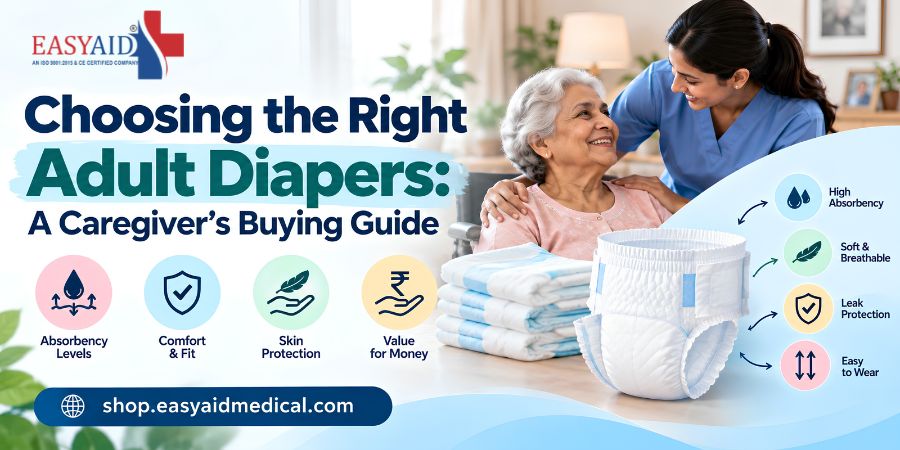
Choosing the Right Adult Diapers: A Caregiver’s Buying Guide
Choosing adult diapers for a parent, elderly family member or patient can feel confusing at first. There are different sizes, styles and absorbency levels, and the product that works well for one person may not work equally well for another.
The right choice usually comes down to a few practical questions:
- How much leakage needs to be managed?
- Can the person use the toilet independently?
- Are they mobile, partially mobile or bedridden?
- How long will the diaper need to be worn?
- What size fits comfortably?
- Does the caregiver need something that is easy to change?
This adult diapers guide explains these factors in simple terms so caregivers can make a more informed purchase.
Adult diapers are absorbent continence products designed to contain urine and, depending on the product, faecal matter. WHO includes disposable adult diapers and protective underwear among assistive products for continence care.
They are designed to support everyday care and comfort. They do not treat the underlying cause of incontinence.
When Are Adult Diapers Useful?
Adult diapers may be useful for people experiencing urinary or faecal incontinence, limited mobility or situations where reaching the toilet is difficult.
They can be particularly practical for:
- Elderly people with reduced mobility
- Bedridden patients
- People recovering from surgery or illness
- People who need assistance with toileting
- People experiencing urinary incontinence
- Night-time leakage
- Long journeys or situations where toilet access is limited
For older adults, incontinence can occur alongside other age-related challenges. WHO’s integrated care guidance for older people includes urinary incontinence among conditions that may require assessment and management.
If incontinence starts suddenly, becomes significantly worse or is accompanied by pain, fever, blood in the urine or other unusual symptoms, speak with a healthcare professional rather than relying only on absorbent products.
Types of Adult Diapers
Before deciding which product to buy, understand the main types available.
1. Adult Diaper Pants
Adult diaper pants are designed to look and feel more like regular underwear.
They are generally easier to pull up and down, making them useful for people who can stand or walk with some assistance.
They may be suitable for:
- Mobile elderly adults
- People with mild to moderate leakage
- Daytime use
- People who prefer an underwear-like design
The exact absorbency varies between products, so always check the manufacturer’s specifications.
2. Adult Tape-Style Diapers
Tape-style adult diapers have adjustable fastening tabs.
They can be especially useful when the wearer has limited mobility or is bedridden because the caregiver can change the product without requiring the person to stand.
They may be suitable for:
- Bedridden patients
- People requiring caregiver assistance
- Moderate to heavy incontinence
- Situations where frequent repositioning is difficult
The adjustable fastening can also make it easier to achieve a secure fit.
3. Adult Diaper Inserts or Pads
Absorbent inserts and pads are another option for people with lighter leakage.
They may be used inside suitable underwear or fixation pants, depending on the product design.
WHO’s assistive product specifications distinguish between different absorbent continence products based on their intended use and level of urine or faecal loss.
The key is to choose a product according to the actual level of leakage rather than automatically choosing the largest or most absorbent option.
How to Choose Adult Diapers Size
One of the most common mistakes caregivers make is choosing adult diaper size based only on the person’s weight.
The better approach is to check the waist or hip measurement specified by the manufacturer.
Different brands can have different sizing ranges, so a medium from one brand may not fit exactly like a medium from another.
Step 1: Measure the Waist or Hip
Use a flexible measuring tape.
Depending on the manufacturer’s instructions, measure around the waist or the fullest part of the hips.
Keep the tape comfortably against the body without pulling it tightly.
Write down the measurement before shopping.
Step 2: Check the Brand’s Size Chart
Compare the measurement with the specific product’s size chart.
Common sizes may include:
- Small
- Medium
- Large
- XL
- XXL
However, these labels are not standard across every manufacturer.
Always follow the product’s own measurement guide.
Step 3: Consider Body Shape
Two people can have a similar waist measurement but different body shapes.
Pay attention to:
- Waist
- Hip
- Thigh fit
- Leg opening
- Overall body shape
The diaper should sit securely without creating excessive pressure.
Step 4: Check the Fit After Wearing
A good fit should feel secure without being excessively tight.
Signs that the diaper may be too small include:
- Red marks around the waist or thighs
- Difficulty fastening
- Gaps around the legs
- Frequent leakage despite adequate absorbency
- Visible discomfort
A diaper that is too large can also leak because gaps may form around the waist or legs.
So when learning how to choose adult diapers size, remember one simple rule:
Measure first. Check the manufacturer’s size chart. Then judge the fit.
How to Choose the Right Absorbency
Size and absorbency are two different things.
A person can wear the correct size but still experience leakage if the product does not have enough absorbency for their needs.
Consider:
Light Leakage
For occasional or light urine leakage, a smaller absorbent pad or lighter product may be sufficient.
Moderate Leakage
A higher-absorbency diaper may be more appropriate if leakage occurs several times during the day.
Heavy Leakage
For heavy urinary leakage, longer wearing periods or night-time use, look for a product specifically designed for higher absorbency.
However, “maximum absorbency” is not automatically the best option for everyone.
A bulky product may be uncomfortable if the person’s needs are relatively light.
Choose according to actual use.
Daytime vs Night-Time Adult Diapers
The product needed during the day may not be the same as the product needed overnight.
During the day, a person may be:
- Walking
- Sitting
- Travelling
- Using the toilet
- Changing the product more frequently
At night, the person may remain in the same position for several hours.
For night-time use, caregivers may therefore look for a product with appropriate absorbency, secure fit and comfortable construction.
WHO guidance on urinary incontinence notes that absorbent products can be tailored to different activities and situations, with different products potentially being appropriate for daytime and night-time use.
Regardless of absorbency, do not leave a soiled diaper on longer than necessary.
What Features Should You Look For?
Once you know the required type, size and absorbency, compare product features.
Absorbent Core
The absorbent core is responsible for taking in and retaining urine.
A good product should distribute moisture effectively rather than allowing it to collect in one area.
Leak Guards
Elasticated leg barriers or leak guards can help reduce leakage around the legs.
They are particularly useful when the wearer moves frequently or when the product needs to contain a larger amount of fluid.
Waist Fit
The waistband should stay in place without causing unnecessary pressure.
For tape-style diapers, adjustable fastening can help caregivers achieve a better fit.
Breathable Material
Some products use breathable outer materials designed to allow better air circulation.
This can improve comfort, particularly when the product is worn for extended periods.
Wetness Indicator
Some adult diapers include a wetness indicator that changes appearance when the product needs attention.
This can be useful for caregivers who need a quick visual indication.
Softness
The inner surface remains in contact with the skin, so softness matters.
For elderly or sensitive skin, caregivers should pay attention to comfort and regularly check the skin for redness, irritation or breakdown.
Adult Diapers for Bedridden Patients
Choosing diapers for a bedridden patient requires a slightly different approach.
A tape-style diaper is often more convenient when the person cannot stand because the caregiver can change it while the patient is lying down.
When selecting a product, consider:
- Correct waist or hip size
- Required absorbency
- Leak protection
- Ease of changing
- Skin comfort
- Fastening system
- Expected frequency of changes
The caregiver should also have easy access to clean diapers, disposal bags, wipes or appropriate cleaning supplies.
Adult diapers are only one part of bedridden care. Regular repositioning, skin checks, hygiene and appropriate medical care remain important.
Adult Diapers for Elderly People Who Can Walk
For an elderly person who remains mobile, diaper pants may be more convenient.
They can usually be pulled on similarly to underwear, depending on the person’s mobility.
Before choosing pants, consider whether the person can:
- Stand independently
- Lift each leg safely
- Pull clothing up and down
- Communicate when the product needs changing
If they need significant assistance, a tape-style product may be easier for the caregiver.
Common Adult Diaper Buying Mistakes
Buying a Bigger Size to Prevent Leakage
A bigger diaper does not necessarily mean better protection.
If the leg or waist area does not fit properly, gaps can cause leakage.
Choosing Only by Price
A cheaper product may not always be the most suitable option if it requires more frequent changes or causes discomfort.
Consider the cost per useful wear rather than only the price of one pack.
Ignoring the Size Chart
“Large” does not mean the same measurement across every brand.
Always check the manufacturer’s sizing information.
Choosing Maximum Absorbency for Everyone
More absorbency is not always necessary.
Choose according to the person’s actual leakage level and expected wearing time.
Waiting Too Long to Change
A wet or soiled diaper should be changed promptly.
Extended contact with moisture and irritants can contribute to skin problems, particularly in people with fragile skin.
Buying a Large Quantity Before Testing the Fit
If you are trying a new brand or style, consider purchasing a smaller quantity first.
Once you know the size and style work well, buying larger packs can be more practical.
How Often Should Adult Diapers Be Changed?
There is no single fixed interval that works for everyone.
Change frequency depends on:
- Amount of urine or stool
- Product absorbency
- Time of day
- Patient’s skin condition
- Mobility
- Whether the product is soiled
A diaper should be checked regularly and changed when wet or soiled.
For people with sensitive or fragile skin, caregivers should be especially attentive to moisture and irritation.
During every change, gently clean and dry the skin. Avoid aggressive rubbing.
If redness, sores, persistent irritation or broken skin develops, seek medical advice.
How to Make Adult Diaper Use More Comfortable
Comfort often comes down to small details.
Make Sure the Fit Is Correct
The diaper should stay in place without excessive tightness.
Keep the Skin Clean and Dry
Clean the skin gently after each change and dry it properly.
Change Promptly
Don’t wait until the diaper is completely saturated if it is already wet or uncomfortable.
Choose the Right Product for the Situation
A daytime product, night-time product or higher-absorbency product may each serve a different purpose.
Respect the Person’s Dignity
Incontinence can be uncomfortable or embarrassing for some people.
Caregivers should handle changes discreetly and respectfully.
WHO’s guidance on continence care emphasises the importance of products that support dignity, comfort and quality of life for users and caregivers.
Adult Diaper Buying Checklist
Before placing your order, run through this quick checklist:
☐ Waist/hip measurement taken
☐ Manufacturer’s size chart checked
☐ Diaper type selected
☐ Required absorbency considered
☐ Daytime or night-time use identified
☐ Leak protection checked
☐ Skin comfort considered
☐ Wetness indicator checked, if required
☐ Product quantity considered
☐ Smaller pack tested if trying a new product
If all these points are covered, you are much more likely to choose a product that works comfortably for the person who will be wearing it.
Where to Buy Adult Diapers Online
Once you know the required size, type and absorbency, buying online can make repeat purchases easier for caregivers.
Before ordering, check the product details carefully, especially:
- Size
- Waist/hip measurement
- Absorbency
- Number of pieces
- Product type
- Intended use
If you’re still comparing options, start with the product category rather than ordering based only on the product name.
Explore EasyAid Medical’s Adult Diapers category to find suitable options for elderly care, incontinence management and everyday home healthcare needs.
FAQs
1. How do I choose the right adult diaper size?
Measure the user’s waist or hip according to the manufacturer’s instructions and compare the measurement with that brand’s size chart. Do not rely only on labels such as M, L or XL because sizing can vary between brands.
2. Which is better: adult diaper pants or tape-style diapers?
It depends on the user’s mobility. Diaper pants can be convenient for people who can stand or walk, while tape-style diapers may be easier for bedridden patients who need caregiver assistance during changes.
3. How do I know if an adult diaper is too tight?
Red marks around the waist or thighs, difficulty fastening, discomfort and excessive pressure can indicate that the diaper is too tight. Check the manufacturer’s size chart and consider the next size if the measurements require it.
4. How often should an adult diaper be changed?
There is no universal fixed interval. Check the diaper regularly and change it when it becomes wet or soiled. The required frequency depends on absorbency, leakage, the user’s skin condition and how long the product is being worn.
5. Are adult diapers suitable for bedridden patients?
Yes. Adult diapers can be used as part of continence care for bedridden patients. Tape-style products can be convenient for caregiver-assisted changes while the patient is lying down. However, regular hygiene, skin checks and appropriate medical care are also important.
Final Thoughts
Choosing adult diapers becomes much simpler when you stop looking at the pack size first and start with the person’s actual needs.
Think about mobility, measurement, absorbency, fit and wearing time. A product that fits correctly and matches the level of leakage is usually more useful than simply choosing the biggest or most absorbent option.
For caregivers, the goal is straightforward: make everyday continence care more comfortable, hygienic and manageable while respecting the user’s dignity.
If you’re ready to compare products, browse the Adult Diapers category at Easyaid Medical and choose the size and type that best matches your care requirements.
Medical Disclaimer: This article is intended for general health awareness and educational purposes. Adult diapers help manage incontinence but do not treat its underlying cause. If incontinence is new, worsening or associated with pain, fever, blood in urine or other concerning symptoms, consult a qualified healthcare professional.